
In his 2015 Publishers Weekly article Where Reference Fits in the Modern Library, Brian Kenney wrote: “So what do people want from us? They want help doing things, rather than finding things.” 11 years later, this statement rings truer than ever. We have reached a critical point in library services where the demand for digital literacy training can no longer be ignored. Digital literacy is not a luxury or a novelty; it is a necessity in the world we live in today.

Around three years ago when I was still working for an independent bookstore, I began to consider transitioning into the library field. I inquired about volunteering at my local library in the Bay Area and was soon requested to pilot a new volunteer-led service called the Digital Docent program. The volunteer coordinator talked me through the situation: staff were being overwhelmed with questions related to tech help and e-resources, and they needed to find a solution fast. As I was the youngest, most technologically fluent volunteer available, I was the woman for the task.
From the outset, the program was intended to be a weekly time slot in which patrons could make one-on-one appointments for assistance with library digital resources. I expected to be working primarily with Libby, Kanopy, Hoopla, PressReader…the typical library fare. When I found myself teaching a patron how to use a mouse on my first day, I realized the reality would be quite different. More often than not, these appointments involved teaching rudimentary technological skills—such as sending emails, printing documents, applying for jobs, or accessing information online—to senior patrons and patrons without home access to the internet. Time and again, I got to witness the moment where someone felt newly confident in their abilities and understood the vast digital world that had opened up before them.
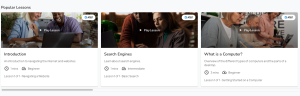
I was amazed to see such an impressive assortment of introductory guided videos on DigitalLearn, the Public Library Association’s (PLA) digital literacy hub. Through a partnership with AT&T, they have been able to invest in the improvement and expansion of their available collection of self-directed tutorials (PLA, n.d.); they even offer Spanish translations now! As I was exploring the site, I found lessons that would have perfectly addressed many of the types of questions I received throughout those Digital Docent sessions: What is Email?, Working with Attachments, Getting Started on a Computer, and so many more (PLA, 2026).
Libraries are more than repositories of information, more than gathering places, more than recreational hubs. They are all of these things, yes, but they are also spaces intended to advance lifelong learning. We have the ability to take an active role in creating learning opportunities for our communities, and I hope that librarians everywhere would feel motivated and inspired enough to do so because these technological skills have the potential to change the trajectories of our patrons’ lives.
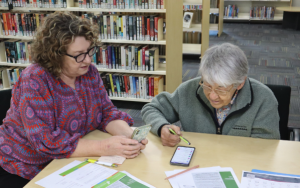
Online sites like DigitalLearn are an excellent starting point for digital literacy efforts that can be remarkably effective when paired with in-person engagement or instruction that reinforces learning. The library where I work now hosts bi-weekly Drop-In Tech Help sessions where patrons can ask any technology-related questions to our Digital Media and Technology Librarian. As I’ve walked past the open door while these sessions take place, I’ve seen lively conversations, involved practice with technology, and above all—consistent attendance. This demand for digital literacy training is real, and it is deeply important to the work we do.
References:
Coronado Public Library. (2026). Drop-in tech help. https://coronado.librarycalendar.com/event/drop-tech-help-30157
Kenney, B. (2015, September 11). Where reference fits in the modern library: Today’s reference user wants help doing things rather than finding things. Publishers Weekly. https://www.publishersweekly.com/pw/by-topic/industry-news/libraries/article/68019-for-future-reference.html
Public Library Association. (n.d.). Digital literacy. https://www.ala.org/pla/initiatives/digitalliteracy
Public Library Association. (2026). Digital literacy hub: Gain skills and confidence for today’s digital world. https://www.digitallearn.org/