
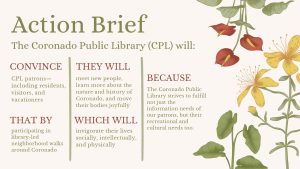
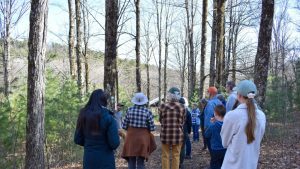
IMAGINE THIS: A group of library patrons and community members gather out front of the library once a month and set out together on a walk through the meandering streets of Coronado with a guide that points out local flora and fauna, gives informational tidbits about the town, and facilitates connections.
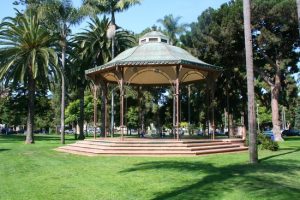
Guided walks are not a novel concept, but they are certainly not yet the typical fare for public library programming. I believe that they should be! Walking has been shown to boost immunity, reduce the risk of developing diseases, and promote healthy bodies and minds (Harvard Health Publishing, 2023). Movement for the sake of movement matters. Beyond this, walking offers us the opportunity to get outside in the world and to engage with our surroundings and the people in our communities.
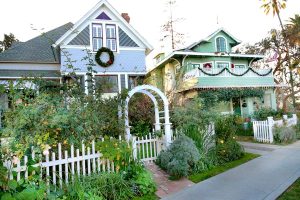
At the Coronado Public Library, we see a lot of elderly patrons, vacationers, and families. Walking is an activity that all of these community sectors could benefit from. Elder patrons looking for low-impact exercise and accessible entertainment would find both through this program. Vacationers are always finding their way to the library building anyways; why not show them around and offer them an even more immersive introduction to the city? Lastly, families are constantly in search of new, free entertainment opportunities for the whole family to take part in, and these neighborhood walks would fit the bill perfectly.
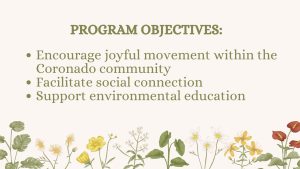
MISSION & INSTITUTIONAL CONTEXT:
The Coronado Public Library’s mission statement declares that it aims to “meet the informational, recreational, and cultural needs of the community and to actively promote reading, life-long learning, and the pursuit of knowledge” (Coronado Public Library, 2026). The library serves a mid-size coastal community within a reasonably walkable town. Many of the regular patrons we see walk to the library already.
We have been seeing consistently good turnout at events that involve community gatherings—concerts, book clubs, instructional cooking classes, crafting sessions. We are witnessing a time in which our patrons are actively seeking events that get them out of the house, meeting new people, and stimulating their minds. Coordinated neighborhood walks would accomplish all of these goals and more. Any programming that elicits joy can enhance the library’s capacity to serve as a space of reprieve and escape from the challenges of everyday life (DuVernay, 2024).
By forming partnerships with complementary local groups to enrich these walks, we can further accommodate these patrons’ recreational and cultural needs. We can draw on our existing connection with the Bridge and Bay Garden Club in Coronado to coordinate some walks to be led by a representative from the club with extensive knowledge of local plant varieties.
INSPIRATIONAL EXAMPLES:
- The San Francisco Public Library hosts neighborhood walks that introduce participants to unique architectural features (San Francisco Public Library, 2026).
- The ALA Programming Librarian site recommends 9 thoughtful ways for libraries to incorporate walking into their programming and services (Lenstra, 2020).
- The Los Angeles Public Library holds a monthly neighborhood nature walk (Los Angeles Public Library, 2025).
- In the summer of 2019, the Tacoma Library in Washington hosted regular informational walks across the city (Tacoma Library, 2019).
- The Deming Library in Washington hosted a weekly walking group in 2022 to encourage people to meet their neighbors and form a new healthy habit (Whatcom County Library System, n.d.).
- The Chatham Public Library in New York teamed up with Columbia Land Conservancy to hold a monthly walking club (Columbia Land Conservancy, n.d.).
GUIDELINES & POLICIES:
- Individuals of all fitness levels are encouraged to attend.
- Registration is not required since space is not limited. Registration only helps staff to anticipate turnout.
- Walks will follow wheelchair-accessible routes in order to make the gatherings open to differently-abled participants. If anyone wishing to participate requires specific accommodations not mentioned in the event listing, they will be invited to reach out prior to the event so that we can make adjustments to accommodate their needs.
- Participants should wear breathable, comfortable clothing and shoes. They are also encouraged to bring a personal water bottle.
IMPLEMENTATION TIMELINE: 8 WEEKS
- Weeks 1–2: Obtain approval from Library Director for the program. Plan out potential dates and walking routes.
- Weeks 3–4: Once approved, communicate with Bridge and Bay Garden Club to coordinate a mutually beneficial partnership. Develop marketing materials (virtual and physical flyers, public-facing program information).
- Weeks 5–6: Distribute flyers throughout the library and to neighboring community organizations (Spreckels Center, Coronado Community Center, etc.). Send digital flyer and event information to local schools, senior centers, and businesses.
- Week 7: First neighborhood walk! Remain open to participant feedback and suggestions for future iterations.
- Week 8: Conduct evaluation of the first walk—what went well and what could be improved? The first walk is only the beginning of the program, essentially a beta test of what’s to come. As discussed in Taming Technolust: Ten Steps for Planning in a 2.0 World, beta versions of new programs or services should be our friends (Stephens, 2012). In embracing the bugs and flaws that come with any first showing of something, we open ourselves up to feedback that can shape the service into what it should look like for this library’s specific community.
MARKETING & PROMOTION:
Digital and physical flyers will be created to promote the monthly neighborhood walks. The digital flyers will be sent out to local schools, businesses, and senior centers in order to spread the word to interested parties. The physical flyers will be displayed at the circulation desk, reference desk, children’s desk, and in the teen section of the library. The digital flyer and additional information will be posted across the library’s existing social media channels on Instagram and Facebook. We should also aim to create a few humorous, reel-style videos promoting the walks to be posted on these platforms to increase engagement. We want to send the message that these monthly neighborhood walks will serve as a positive force in the lives of those who participate, allowing them a closer connection with their community, natural surroundings, and personal wellbeing.
STAFF TRAINING & READINESS:
All staff will be brought up to speed with the objectives of the program, and interest will be gauged for participation. We have a number of exercise and nature enthusiasts on staff who would likely love the opportunity to be involved in this project and already possess an impressive amount of knowledge regarding local flora and fauna and routes around the town. Since not every walk will necessarily be hosted by an external guide, some might feature staff leaders who would like the chance to host. For staff not directly involved in the program, we should work to ensure that they are at least familiar enough with its details to convey helpful information when prompted. A thorough email detailing all relevant information about the program will be sent out to all staff.

EVALUATION & FUTURE EXPANSION:
In addition to the anecdotal feedback gathered throughout the first walk, a post-walk virtual survey will be distributed to any participants who registered online for the event. This survey will help us understand what worked for the participants, what didn’t, and what types of things they might like to see in future walks. In this way, we can work on developing a shared meaning of what success looks like for this program with the users. This format of community-led planning will shift the power back into the hands of the community, allowing them to directly shape the future of this program (Lenstra & Barbakoff, 2024). Any staff that were involved in the first walk will also be solicited for their honest feedback. In requesting these personal opinions and stories from both staff and users, we can measure the progress of the program over time by comparing these responses (Casey & Stephens, 2008).
If the initial walks are received well by the community, we could look to expand partnerships in the future to further diversify the walks. We could potentially reach out to San Diego Audubon Society, Sierra Club San Diego, San Diego Natural History Museum, and the Coronado Historical Association.
Here’s what I personally would love to see transpire within these walks: intergenerational conversation, budding connections, and above all, joy—joyous movement, joyous kinship, and joyous programming.
References:
Casey, M. & Stephens, M. (2008, April 15). Measuring progress. Tame the Web. https://tametheweb.com/2008/04/15/measuring-progress/
Columbia Land Conservancy. (n.d.). Library walking club. https://columbialand.org/event/library-walking-club-9/
Coronado Public Library. (2026). About the library. https://coronadolibrary.org/157/About-the-Library
DuVernay, J. (2024, June 12). There is joy for all: Tips for joyous library programming. ALA Programming Librarian. https://programminglibrarian.org/articles/there-joy-all-tips-joyous-library-programming
Harvard Health Publishing. (2023, December 7). 5 surprising benefits of walking. Harvard Medical School. https://www.health.harvard.edu/healthy-aging-and-longevity/5-surprising-benefits-of-walking
Lenstra, N. (2020, January 24). 9 ways to take a walk with the library. ALA Programming Librarian. https://programminglibrarian.org/articles/9-ways-take-walk-library
Lenstra, N. & Barbakoff, A. (2024, March 1). Working hand in hand: How to conduct community-led planning. American Libraries. https://americanlibrariesmagazine.org/2024/03/01/working-hand-in-hand/
Los Angeles Public Library. (2025). Neighborhood nature walk with Cindy. https://www.lapl.org/events/neighborhood-nature-walk-cindy
San Francisco Public Library. (2026). Activity: Glen Park neighborhood walk. https://sfpl.org/events/2026/10/21/activity-glen-park-neighborhood-walk
Stephens, M. (2012, May 30). Taming technolust: Ten steps for planning in a 2.0 world. Tame the Web. https://tametheweb.com/2012/05/30/taming-technolust-ten-steps-for-planning-in-a-2-0-world-full-text/
Tacoma Library. (2019, June 24). Downtown walking club. https://www.tacomalibrary.org/blogs/post/downtown-walking-club/
Whatcom County Library System. (n.d.). Moving together: Deming Library walking group. https://wcls.libcal.com/event/9110975#
Caitlin, I love this idea so much! I had not heard of libraries hosting informational walks before. This would be so fun across seasons too. My library hosts storytimes at nature centers, but I like the idea of having walks for all ages. It would be especially good for anyone new to the neighborhood to make social connections and learn about the city.
Thank you, Christina! Oooh storytime at a nature center sounds awesome! What a great way to ground kids in their environment.