Hyperlinked Symposium: Core Thoughts

Throughout this course, my understanding of libraries has shifted from seeing them primarily as places that provide information to seeing them as community spaces that respond to people’s changing needs. Hyperlinked library service has shown me that libraries are not separate from their communities but instead are connected to them, shaped by them, and responsible for adapting alongside them.

3 Aha! Moments

  1. Libraries are about people, not just information.

One of my biggest realizations was that providing information is only one part of what libraries do. People come into libraries with complicated needs that may have little to do with finding a book. They may need internet access, a safe place to spend time, help navigating technology, or simply someone who will listen to them. This changed how I think about the role of librarians. Good library service is not just about answering a question; it is about understanding the person asking it.

  1. The library’s voice should sound human.

Michael Stephens’ idea of getting rid of the “PR voice” really stood out to me. Libraries sometimes try so hard to sound professional that they can become distant and impersonal. I realized that communication can still be professional while being warm, honest, and genuine. Building trust with users means communicating like real people and being willing to acknowledge challenges, mistakes, and uncertainty.

  1. Libraries cannot solve every problem alone.

Learning about homelessness and the challenges libraries face when supporting vulnerable community members made me realize how important partnerships are. Librarians should not be expected to become social workers, mental health professionals, or outreach specialists. Instead, libraries can build relationships with organizations and professionals who have that expertise. This allows the library to remain a welcoming space while connecting people with the services they actually need.

2 Ideas I Want to Explore Further

  1. What does a truly “sanctuary” library look like?

I want to explore how libraries can create policies that protect both patrons and staff while remaining welcoming and equitable. In particular, I am interested in behavior-based policies, partnerships with social workers and community organizations, and ways libraries can respond to homelessness without treating people experiencing homelessness as a problem.

  1. How can libraries expand the idea of digital access?

Digital access is more than simply providing computers and Wi-Fi. Users also need digital skills, privacy, reliable connectivity, and support navigating an increasingly digital world. I want to explore how libraries can become stronger digital sanctuaries where people feel safe asking for help without feeling embarrassed or judged.

Reflection 5: Infinite Learning

Instead of being viewed simply as content providers, librarians are becoming engagement developers who help people learn, create, and connect with information (Mathews, 2013). I think this reflects how libraries are changing from places that primarily provide access to materials into active learning environments.

Makerspaces are great examples where both patron and librarian can learn to use new technologies.

The idea of librarians being “always-in-beta” also resonated with me. Librarians need to continually learn and adapt as technology and the ways people access information change (Stephens, 2014). Professional development programs such as Learning 2.0 and 23 Things demonstrate how librarians can build confidence with new technologies while developing their own skills (Stephens, 2014). To me, this suggests that being a librarian does not mean knowing everything; it means being willing to keep learning.

I also connected with the idea of messy learning. Learning does not always happen through a clear, step-by-step process. Frustration, mistakes, and trial and error can be important parts of developing deeper understanding (Block, 2014). However, learners still need support along the way. Scaffolding allows educators and librarians to provide guidance without taking away the learner’s opportunity to explore and solve problems independently (Block, 2014).

Finally, I liked the discussion of libraries as spaces for collaboration and creativity. Examples such as Chattanooga Public Library’s fourth floor show how libraries can provide opportunities for making, experimenting, and learning rather than simply quiet places to study (Stephens, 2014). Learning doesn’t solely have to be for patrons, librarians themselves can also use these opportunities to learn as well.

References

Block, J. (2014, January 7). Embracing messy learning.

Mathews, B. (2013, September 5). Curating learning experiences: A future role for librarians?.

Stephens, M. (2014, November 26). YLibrary: Making the case for the library as space for infinite learning. State Library of Queensland YLibrary Project..


Innovation Roadmap: Community Voices 

Innovation Roadmap: Community Voices 

What is the Idea?

The Community Voices Lab is a new library service that combines a Human Library program with a small digital storytelling studio. Community members can participate in Human Library events by sharing personal experiences in guided conversations or record short podcasts and oral histories that become part of the library’s local digital collection. The goal is to preserve local stories while encouraging empathy and understanding between people from different backgrounds. I was inspired by the library I currently work at, which has had similar events in the past, focused on telling immigrant stories and stories centered around the lgbtq community, such as Meet Your Neighbors. But this program is intended to be more permanent and updated from time to time. 

This service is designed for teens, older adults, immigrants, veterans, first-generation college students, and other community members whose stories are often overlooked. The library would provide simple recording equipment, editing software, and staff support so participants can comfortably share their experiences. Human Library events would remain focused on face-to-face conversations, while the recording studio would allow participants to preserve stories for future generations if they choose.

Rather than focusing on technology for its own sake, the Community Voices Lab uses technology as a tool to strengthen relationships, preserve local history, and encourage lifelong learning.

Mission & Institutional Context

The library’s mission is to provide equitable access to information, encourage lifelong learning, and strengthen the local community. While traditional collections remain essential, today’s libraries also serve as gathering places where people build relationships and share experiences.

Our community includes residents from many different backgrounds who may rarely have opportunities to interact with one another. At the same time, many local stories disappear because there is no simple way to preserve them. The Community Voices Lab addresses both needs by creating opportunities for meaningful conversations while building a digital archive of community voices.

This innovation aligns with Stephens’ argument that libraries should move beyond simply adopting new technology and instead focus on meaningful participation and community engagement (Stephens, Taming Technolust). It also reflects the planning-first mindset discussed in Technoplans vs. Technolust by beginning with community needs instead of technology.

Action Brief Statement

Community Action Brief

Convince community members that by participating in the Community Voices Lab they will discover that their personal stories matter and help create a stronger, more connected community because libraries exist to preserve knowledge, encourage understanding, and give everyone a voice.

Staff Action Brief

Convince library staff that by facilitating conversations and digital storytelling they will strengthen community relationships and expand the library’s role as a trusted civic space because libraries succeed when they connect people, not just collections.

Where I Found Inspiration

Guidelines & Policies

  • Participation is voluntary for all storytellers and listeners.
  • Written consent is required before recording or publishing any stories.
  • Participants may choose whether their recordings are public, archived for research, or kept private.
  • Respectful conversation guidelines will be shared before every Human Library event.
  • The library will provide accessibility accommodations, including captions, transcripts, wheelchair-accessible spaces, assistive listening devices, and interpreters when available.
  • Staff will protect participant privacy and follow library confidentiality policies. 

Policy Development
Policies should be developed collaboratively by library administrators, public service staff, legal advisors, accessibility specialists, and members of a community advisory committee to ensure the program reflects local needs and values.

Ethical Considerations

  • Protect participant privacy and informed consent.
  • Respect intellectual property and ownership of recorded stories.
  • Ensure equitable access regardless of age, language, disability, or technology experience.
  • Create procedures for handling sensitive conversations or emotional situations.

Timeline

Marketing & Promotion

Internal Promotion

  • Staff meetings and internal newsletters.
  • Training sessions introducing the program.
  • Digital displays and posters throughout the library.

Community Outreach

  • Library website and email newsletter.
  • Facebook, Instagram, and community social media pages.
  • Local newspapers and radio stations.
  • Partnerships with schools, senior centers, historical societies, veterans’ organizations, and cultural groups.
  • Flyers distributed through community organizations.

Staff Training & Readiness

Library staff will play a key role in creating a welcoming environment and supporting participants.

Training Topics

  • Human Library facilitation techniques.
  • Active listening and respectful communication.
  • Trauma-informed customer service.
  • Audio recording and podcast basics.
  • Copyright, consent, and privacy policies.
  • Accessibility best practices.

Who Will Be Trained

  • Public service librarians.
  • Adult and youth services staff.
  • Volunteers assisting with events.
  • Technology specialists.

Training will be provided by experienced library staff, local media professionals, accessibility advocates, and community partners.

Evaluation

Success Stories

Instead of only reporting attendance, the library will highlight stories demonstrating increased understanding, new friendships, and preserved community history. Testimonials like this one from the Human Library Organization help to reinforce the positive impact of community driven stories.

Future Growth

Future phases may include:

  • Multilingual storytelling projects
  • Student oral history collaborations
  • Mobile recording kits
  • Community podcast series
  • Digital exhibits featuring local voices

The long-term goal is for the Community Voices Lab to become a permanent community archive that reflects the diversity, history, and experiences of the people the library serves.

References

Stephens, M. (n.d.). Taming technolust.

Stephens, M. (n.d.). Technoplans vs. technolust.

Wentz, E. (2013). The Human Library: Sharing the community with itself.

Human Library Organization. (n.d.). Retrieved from https://humanlibrary.org

Reflection 4: The Power of Stories

The biggest thing I took away from this module is that librarians don’t have to control every part of a program. The Human Library works because conversations happen naturally, and storytelling projects are stronger when community members help shape them. That challenged the way I used to think about library programming. Instead of trying to plan every detail, librarians can create opportunities for meaningful conversations and let those moments develop on their own. As I move toward a career in librarianship, I hope to help create programs that bring people together and encourage understanding. These readings reminded me that while books will always matter, some of the most meaningful stories in a library come from the people who walk through its doors.

The Human Library was the idea that stood out to me the most. Instead of checking out books, people “check out” volunteers who share their personal experiences and perspectives (Wentz, 2013). Many of these “living books” have faced stereotypes or discrimination, so having honest conversations with them helps break down assumptions. Research shows these conversations encourage people to think about their own biases and appreciate different perspectives (Arne-Skidmore, 2021). To me, the Human Library is a great example of how libraries can help people understand each other instead of just encouraging tolerance.

Here is a recent video from CBS Sunday Morning talking about the Human Library. I couldn’t get the video to embed so here’s the link: https://www.youtube.com/watch?v=rTU22ydBxYg

The readings also showed how libraries can make people feel included through thoughtful programs. At Yarra Libraries in Australia, programs like Sensitive Storytime and Sensitive Santa were created for neurodiverse children and their families (Stephens, 2019). I liked this example because it shows that inclusion is about more than giving everyone the same access. It’s about making sure people actually feel welcome and comfortable.

I also found the discussion about digital storytelling interesting. Jason Evans Groth pointed out that while our phones make it easy to record stories, technology shouldn’t get in the way of real conversations (Stephens, 2019). Instead, tools like podcasts can help preserve community stories while keeping the focus on the people sharing them. Technology works best when it helps tell someone’s story instead of becoming the center of attention.

Arne-Skidmore, E. (2021, April 8). New study on the impact of the Human Library

Stephens, M. (2019). Office hours: With a little twist & power of the pod

Wentz, E. (2013, April 26). The Human Library: Sharing the community with itself

Reflection 3: New Models

One idea that stood out to me from the readings comes from Palaces for the People, where sociologist Eric Klinenberg argues that strong communities depend on their social infrastructure, the public spaces that bring people together and foster meaningful connections (Gaetani, 2018). Today’s libraries are expanding that role by using food to address not only physical hunger, but also cultural understanding, health literacy, and community belonging.

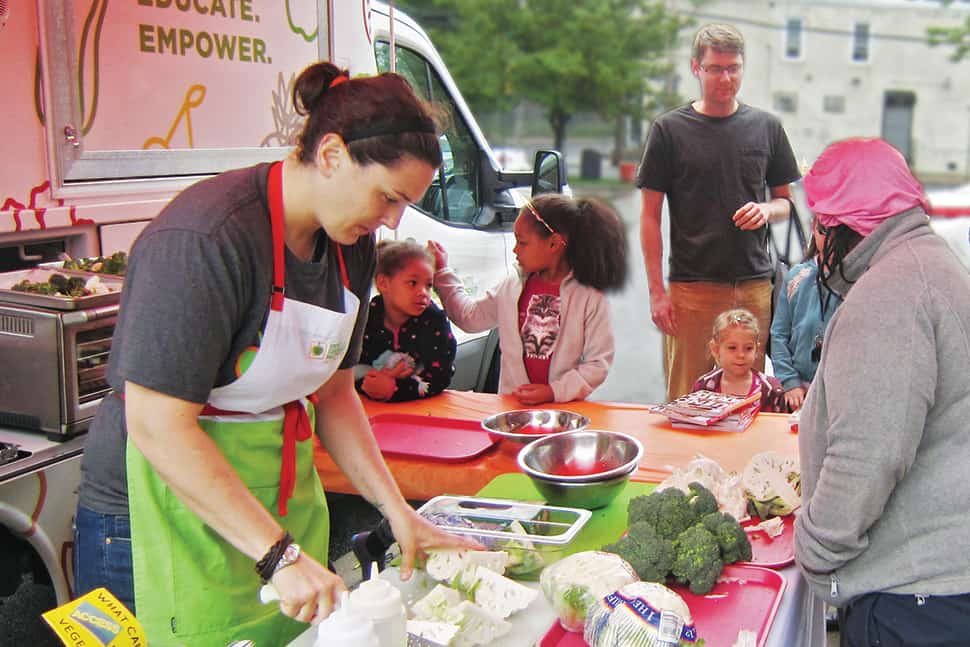
The examples from this week’s readings showed how food can become a powerful tool for education and connection. In Camden, New Jersey, the Camden County Library System created Books and Cooks, a mobile kitchen that teaches nutrition while helping immigrants practice English and share their cultural traditions (Ewen, 2018). Conversations about recipes naturally become conversations about family, identity, and community. Similarly, Chattanooga Public Library’s Flavor Lab teaches teens practical cooking skills while encouraging collaboration and healthy habits, and Redwood City Public Library’s La Cocina de Libros combines health education with creative outreach programs like “Food for Fines” (Ewen, 2018).

I was also inspired by the Kitchener Public Library’s virtual cooking series, which partnered with local restaurants during the pandemic to introduce patrons to different cultures through food (CBC News, 2021). Even though participants were physically apart, preparing meals together created a sense of comfort and community. It reminded me that libraries can build connections even when people cannot gather in person.

These examples challenged my own assumptions about what library service looks like. I have often thought of libraries as places centered primarily on books and information. Now I see them as organizations that actively identify community needs and respond with creative, human-centered solutions. Whether they are teaching cooking skills, promoting healthier lifestyles, or creating spaces where people can share their cultures, libraries are building what I think of as structural empathy, designing services that make communities stronger before crises occur. This week’s readings reinforced that the future of librarianship is about far more than managing collections. It is about creating opportunities for people to connect, learn, and care for one another. Sometimes that begins with a book, but sometimes it begins with sharing a meal. 

References

CBC News. (2021, December 28). How a restaurant-library partnership made food and culture accessible.
Ewen, L. (2018, September 4). Libraries use mobile kitchens to teach food literacy.
Gaetani, M. (2018, November 11). Q&A with Eric Klinenberg.

Reflection 2: Hyperlinked Environments

Public libraries are often measured by statistics such as circulation numbers and visitor counts, but those numbers cannot capture their true impact. As Christian Lauersen (2021) argues, statistics show how libraries are used, not what they mean to the people they serve. The modern library is both a sanctuary, a welcoming place of safety and belonging that encourages creativity, learning, and personal growth.

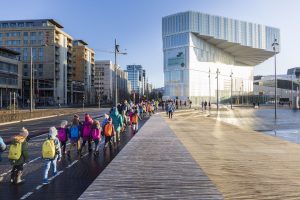
The idea of the library as a sanctuary resonated with me most. Libraries provide one of the few public spaces where people can gather, learn, or simply exist without the expectation of spending money. During times of crisis, this role becomes even more important. Julia Pyatetsky (2015) describes how European libraries supported Syrian refugees by providing supplies, expanding multilingual collections, and creating welcoming environments that promoted inclusion. Similarly, libraries such as Oslo’s Deichman Bjørvika and the Beijing Library demonstrate how thoughtful architecture can create peaceful, inspiring spaces that make everyone feel welcome. These examples show that libraries build empathy not only through services but also through the spaces they create.

Deichman Bjørvika in Oslo

At the same time, libraries are places of possibility. Lauersen’s vision of libraries as spaces for creativity and perspective is reflected in programs that encourage people to become creators rather than simply consumers. Deichman Bjørvika offers recording studios, makerspaces, and creative technology, while Hong Kong’s Run Run Shaw Library invites community members to help preserve local history through collaborative digital projects. These examples highlight how libraries empower people to learn new skills, contribute knowledge, and engage with their communities.

The readings also connected to my own professional goals by showing how libraries actively address social issues such as loneliness and isolation. Programs like Nova Scotia’s Caring Calls Project, which checked in regularly with older adults during the pandemic, and Vancouver Island Regional Library’s technology outreach demonstrate that caring for people is just as important as providing information. These services remind me that librarians themselves are often the strongest connection between a library and its community. As I continue my journey toward librarianship, I want to focus on creating welcoming spaces, encouraging meaningful connections, and sharing stories of impact. Libraries should be measured not only by what they circulate, but by the lives they improve and the communities they strengthen.

Croissant, M. (2021, September 1). This library was just named the best in the world.

International Federation of Library Associations and Institutions. (2024, October 7). IFLA/Baker & Taylor Public Library of the Year Award 2024 announced.

Lauersen, C. (2021, April 19). A haven in our community: The impact and value of public libraries.

Morehart, P. (2021, July 8). 2021 International Innovators: ALA Presidential Citations honor forward-thinking global libraries.

Pyatetsky, J. (2015, November 24). Refugees supported by public libraries in Europe

Reflection 1: Hyperlinked Communities

Modern libraries have become community anchors that combine technology with empathy to create spaces where people can connect, learn, and feel supported. Howard Rheingold’s idea that communities grow through meaningful conversations helped me understand that libraries are not just providing information, they are creating opportunities for relationships and belonging (Stephens, 2025).

What resonated with me most was the idea that technology should connect people rather than simply promote services (Stephens, 2025). In Libraries Are Bridging the Digital Divide, libraries extended Wi-Fi through routers mounted on buildings, transformed bookmobiles into mobile hotspots, and partnered with community networks to provide internet access in underserved areas. These examples show that technology is most effective when it is paired with a genuine commitment to helping people. Michael Stephens’ reminder to ask whether technology is reaching people or merely broadcasting to them reinforced this idea. I especially appreciated the example from Ghana, where the library not only created a digital library app during the pandemic but also invited young people to share their personal stories through an online writing competition. Instead of simply delivering information, the library encouraged community participation.

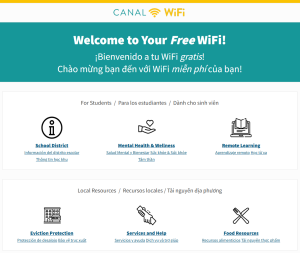
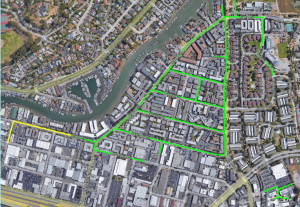
One example that stood out to me was the Canal neighborhood in San Rafael, California, where the library partnered with a nonprofit to create a free community Wi-Fi network. This project gave thousands of students access to online learning while also connecting residents with healthcare, housing, and employment resources. It demonstrated that libraries can build empathy directly into their services by identifying community needs and creating practical solutions (Williams & Muller, n.d.).

These readings also challenged my assumptions about professionalism in libraries. I once believed librarians needed to maintain a formal distance from the public. However, Stephens argues for “radical trust” by involving communities in honest conversations and believing in people’s ability to contribute positively. Jina DuVernay’s emphasis on creating joyful, welcoming experiences further changed my perspective. She reminds us that librarians do not need to separate professionalism from warmth and enthusiasm.

Moving forward, I want to replace the traditional “PR voice” with communication that is genuine, approachable, and human. This week’s materials showed me that the strongest libraries are not simply places where information is stored, they are places where trust, technology, and community come together to improve people’s lives.

References

Stephens, M. (2025). Beyond buzzwords: Ten invitations to build library connection and community (2025 ed.)  

Williams, A., & Muller, C. (n.d.). Libraries are bridging the digital divide  

DuVernay, J. (2024, June 12). There is joy for all: Tips for joyous library programming 

Assignment X: Rethinking Connectivity and the Digital Divide


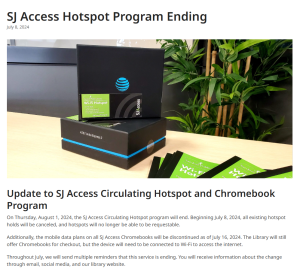
I chose to explore the topic of the digital divide because I recently learned that San José Public Library discontinued its hotspot lending program and no longer allows patrons to check out mobile Wi-Fi devices. Although this change occurred about two years ago, I was still surprised to learn about it. It made me wonder how libraries can continue to uphold their mission of promoting connectivity and bridging the digital divide when access to technology remains a challenge for many community members. As I explored the readings, I realized that the digital divide is no longer simply about providing internet access, it has evolved into a much more complex issue involving digital literacy, usability, and empowerment.

One theme that has really stayed with me throughout these readings is the digital divide and how much it has evolved over the last decade. Before exploring these materials, I often thought of the digital divide as simply a lack of access to computers or the internet. What stood out to me most is how the divide has become much more complex and, in many ways, more invisible to those who are already connected. As West (2014) explains, the traditional “can’t get access” category is shrinking, but it is increasingly being replaced by a “don’t get it/can’t use it” category that affects people facing language barriers, physical limitations, or cognitive challenges.

One fact that particularly resonated with me was that 92% of offline adults report that they are not interested in getting online (West, 2014). Initially, I found this surprising. However, as I reflected on it, I realized that many people have never been shown how technology could positively impact their daily lives. If someone does not see a meaningful reason to engage with technology, such as staying connected with grandchildren or accessing important services, the fear and uncertainty surrounding technology may outweigh any perceived benefits (West, 2014).

As I thought more about these issues, I found myself questioning how libraries balance technological innovation with the pressing human needs that exist within their communities. While libraries are often encouraged to invest in expensive discovery tools and emerging technologies, many patrons are struggling with challenges such as food insecurity, housing instability, or financial hardship (Stephens, 2016). This tension raises important questions about priorities and how libraries can best serve their communities.

I was also intrigued by Stephens’ (2016) discussion of Open+ self-service library models. On one hand, extending library hours through self-service access seems like a practical way to maximize taxpayer investment and improve access. On the other hand, I worry about what may be lost when staff are not present. For many vulnerable patrons, the library offers more than resources, it provides human connection, guidance, and support. While technology can expand access, it cannot always replace the value of personal interaction (Stephens, 2016).

These readings have significantly shaped my perspective on libraries, learning, and community. I now view libraries as essential components of the social safety net, providing both technological resources and the human support necessary to help people navigate an increasingly digital world (West, 2014). The concept of libraries as community “nodes” particularly resonated with me. Libraries function as hubs that provide not only Wi-Fi, but also the electricity, storage, safety, and support systems that help communities thrive (Internet Society, 2021).

My understanding of learning has also expanded. Learning is no longer simply about teaching someone how to use a mouse or navigate a website. Instead, it is about empowerment, helping individuals move from being passive consumers of information to active participants who can communicate, create, and engage in civic life (West, 2014). This perspective highlights the important role libraries play in fostering digital citizenship and community engagement.

I can see these ideas reflected in several innovative practices discussed throughout the readings. One example is the use of bookmobiles as roaming Wi-Fi hotspots, bringing internet access directly to underserved communities (Internet Society, 2021). Another is the partnership in San Rafael’s Canal neighborhood, where Wi-Fi access points were attached to streetlights, helping thousands of students connect to online learning opportunities (Internet Society, 2021). On a global scale, programs in Zimbabwe have evolved from internet cafés into computer literacy initiatives that have trained hundreds of teachers, demonstrating the transformative impact of digital access and education (Internet Society, 2021).

I also appreciate the ways libraries are reimagining service delivery. Replacing traditional reference desks with tablet-carrying librarians who can meet patrons where they are reflects a more flexible and user-centered approach to service (Stephens, 2016). Equally inspiring are examples of radical kindness, such as empowering staff to waive fines for vulnerable patrons and creating initiatives like the One Kind Word Project to foster compassion and connection within the community (Stephens, 2016).

Ultimately, these readings reinforced my belief that libraries are uniquely positioned to bridge not only technological gaps but also social and economic ones. The digital divide is no longer solely about access to devices or internet connections. It is about empowerment, inclusion, and ensuring that every person has the opportunity to participate fully in an increasingly digital society. Libraries continue to play a critical role in making that vision a reality. 

References

Internet Society. (2021). Libraries and community networks bridging the digital divide.

Stephens, M. (2016). Balancing compassion and innovation in modern libraries. In The wholehearted librarian.

West, J. (2014). The 21st century digital divide: Access, usability, and empowerment. http://librarian.net/talks/rlc14.

About Me

Hi everyone!

My name is Nathan Lee and I am currently living in the Bay Area. I got my B.A. in Psychology from San Francisco State and just finished my third semester here at SJSU. I chose to pursue an MLIS when I realized that I enjoyed working in customer service and wanted to use my skills to better serve the community. I’m hoping I can stay in the Bay Area and work at a public library. Currently, I work as a Library Associate at RCPL, manning the front desk and helping patrons with any of their needs. I also work at a bakery making lots of sourdough focaccia. As for my current reading, I’m working through Brandon Sanderson’s Stormlight Archive and am on the third book. I’m also reading Orwell’s 1984! Outside of work I like to play video and board games, workout, cook, and hike. I just finished playing through Pragmata and I highly recommend it, although the ending made me cry like never before ;_;. I’ve also built a few custom keyboards for myself and am tentatively looking at leather working as my next hobby. I look forward to being in this class with you all!