
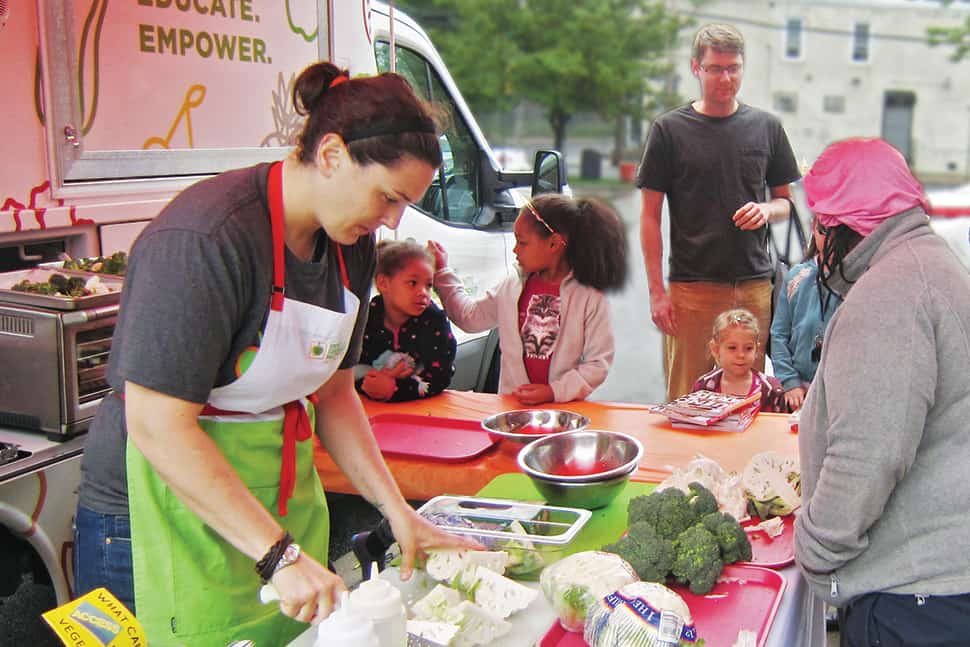
One idea that stood out to me from the readings comes from Palaces for the People, where sociologist Eric Klinenberg argues that strong communities depend on their social infrastructure, the public spaces that bring people together and foster meaningful connections (Gaetani, 2018). Today’s libraries are expanding that role by using food to address not only physical hunger, but also cultural understanding, health literacy, and community belonging.
The examples from this week’s readings showed how food can become a powerful tool for education and connection. In Camden, New Jersey, the Camden County Library System created Books and Cooks, a mobile kitchen that teaches nutrition while helping immigrants practice English and share their cultural traditions (Ewen, 2018). Conversations about recipes naturally become conversations about family, identity, and community. Similarly, Chattanooga Public Library’s Flavor Lab teaches teens practical cooking skills while encouraging collaboration and healthy habits, and Redwood City Public Library’s La Cocina de Libros combines health education with creative outreach programs like “Food for Fines” (Ewen, 2018).
I was also inspired by the Kitchener Public Library’s virtual cooking series, which partnered with local restaurants during the pandemic to introduce patrons to different cultures through food (CBC News, 2021). Even though participants were physically apart, preparing meals together created a sense of comfort and community. It reminded me that libraries can build connections even when people cannot gather in person.
These examples challenged my own assumptions about what library service looks like. I have often thought of libraries as places centered primarily on books and information. Now I see them as organizations that actively identify community needs and respond with creative, human-centered solutions. Whether they are teaching cooking skills, promoting healthier lifestyles, or creating spaces where people can share their cultures, libraries are building what I think of as structural empathy, designing services that make communities stronger before crises occur. This week’s readings reinforced that the future of librarianship is about far more than managing collections. It is about creating opportunities for people to connect, learn, and care for one another. Sometimes that begins with a book, but sometimes it begins with sharing a meal.
References