
Public libraries are often measured by statistics such as circulation numbers and visitor counts, but those numbers cannot capture their true impact. As Christian Lauersen (2021) argues, statistics show how libraries are used, not what they mean to the people they serve. The modern library is both a sanctuary, a welcoming place of safety and belonging that encourages creativity, learning, and personal growth.
The idea of the library as a sanctuary resonated with me most. Libraries provide one of the few public spaces where people can gather, learn, or simply exist without the expectation of spending money. During times of crisis, this role becomes even more important. Julia Pyatetsky (2015) describes how European libraries supported Syrian refugees by providing supplies, expanding multilingual collections, and creating welcoming environments that promoted inclusion. Similarly, libraries such as Oslo’s Deichman Bjørvika and the Beijing Library demonstrate how thoughtful architecture can create peaceful, inspiring spaces that make everyone feel welcome. These examples show that libraries build empathy not only through services but also through the spaces they create.
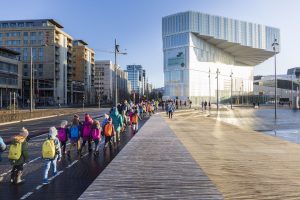
Deichman Bjørvika in Oslo
At the same time, libraries are places of possibility. Lauersen’s vision of libraries as spaces for creativity and perspective is reflected in programs that encourage people to become creators rather than simply consumers. Deichman Bjørvika offers recording studios, makerspaces, and creative technology, while Hong Kong’s Run Run Shaw Library invites community members to help preserve local history through collaborative digital projects. These examples highlight how libraries empower people to learn new skills, contribute knowledge, and engage with their communities.
The readings also connected to my own professional goals by showing how libraries actively address social issues such as loneliness and isolation. Programs like Nova Scotia’s Caring Calls Project, which checked in regularly with older adults during the pandemic, and Vancouver Island Regional Library’s technology outreach demonstrate that caring for people is just as important as providing information. These services remind me that librarians themselves are often the strongest connection between a library and its community. As I continue my journey toward librarianship, I want to focus on creating welcoming spaces, encouraging meaningful connections, and sharing stories of impact. Libraries should be measured not only by what they circulate, but by the lives they improve and the communities they strengthen.
Croissant, M. (2021, September 1). This library was just named the best in the world.
International Federation of Library Associations and Institutions. (2024, October 7). IFLA/Baker & Taylor Public Library of the Year Award 2024 announced.
Lauersen, C. (2021, April 19). A haven in our community: The impact and value of public libraries.
Morehart, P. (2021, July 8). 2021 International Innovators: ALA Presidential Citations honor forward-thinking global libraries.
Pyatetsky, J. (2015, November 24). Refugees supported by public libraries in Europe