Libraries are keepers of stories, among our many connective roles, but we’re not the only ones. The concept of humans as “living books” resonated with me this week, as well as the supportive role libraries can play. People are the keepers of their own stories, and initiatives like the Human Library welcome and elevate storytellers from all walks of life. Their “living books” are people who are part of marginalized communities including the unhoused, LGBTQ+, disabled, BIPOC, religious, and others that are stereotyped and misunderstood. These books volunteer to be available for checkout, engaging in conversations that can open hearts and challenge prejudices. Founded in Denmark in 2000, the Human Library has now expanded to community venues in over 80 countries around the world from public libraries to farmers markets, from festivals to coworking spaces. The versatility of the Human Library model allows for activations in diverse spaces and neighborhoods, all with the common goal of bringing people together.
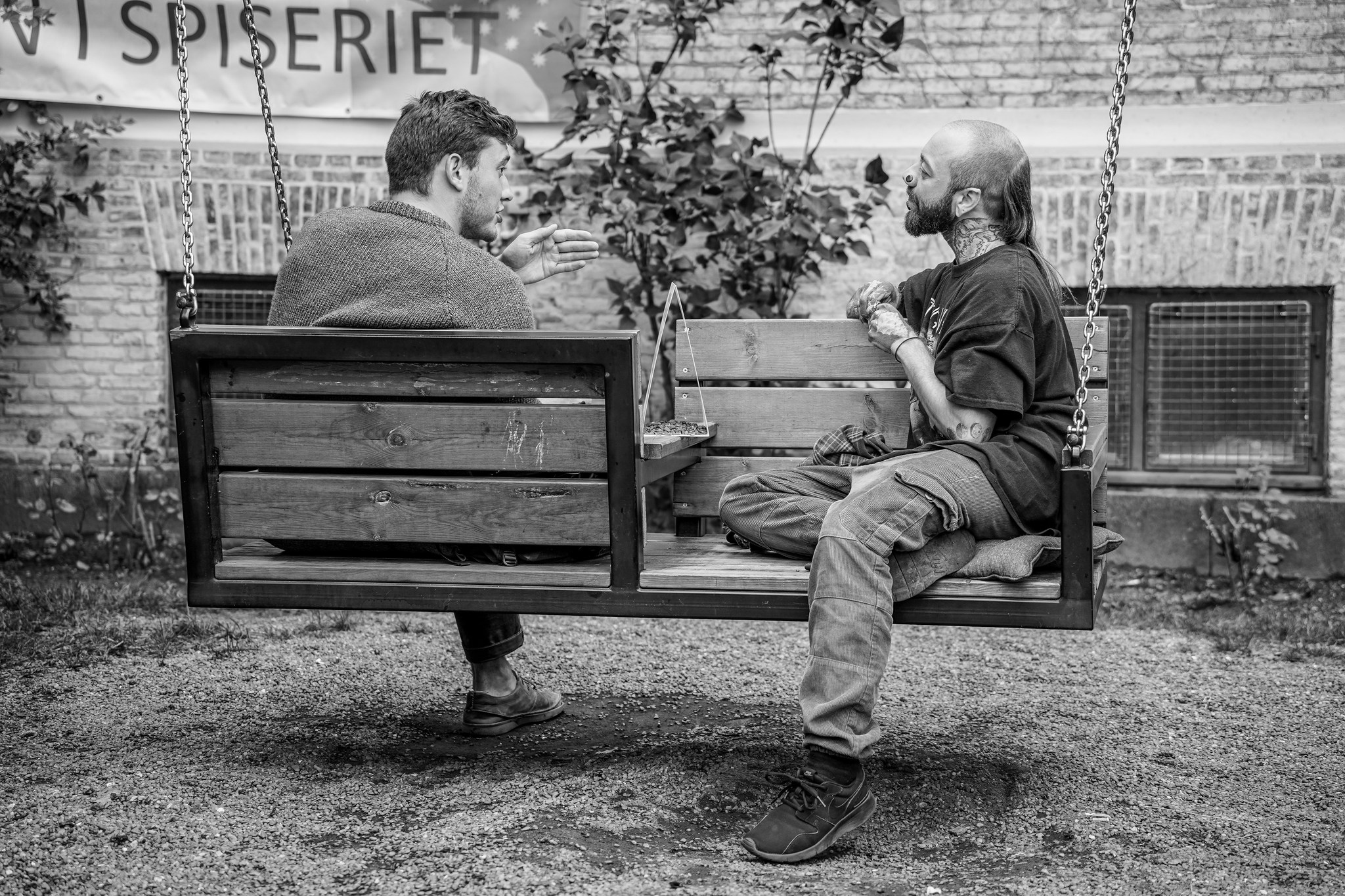
Photo from HumanLibrary.org
The city of Wollongong in Australia turned the concept into a Living Books program that highlights and connects community members who share their unique life stories. Their “living books” come from diverse backgrounds from double amputees to refugees and are updated regularly. Listening to and asking about the lived experiences of neighbors transforms storytelling into a dynamic conversation and relational process with the potential of more than a one-off experience. Wollongong recommends the program for students, community groups and the general public, and the possible venues include but are not limited to the public library.
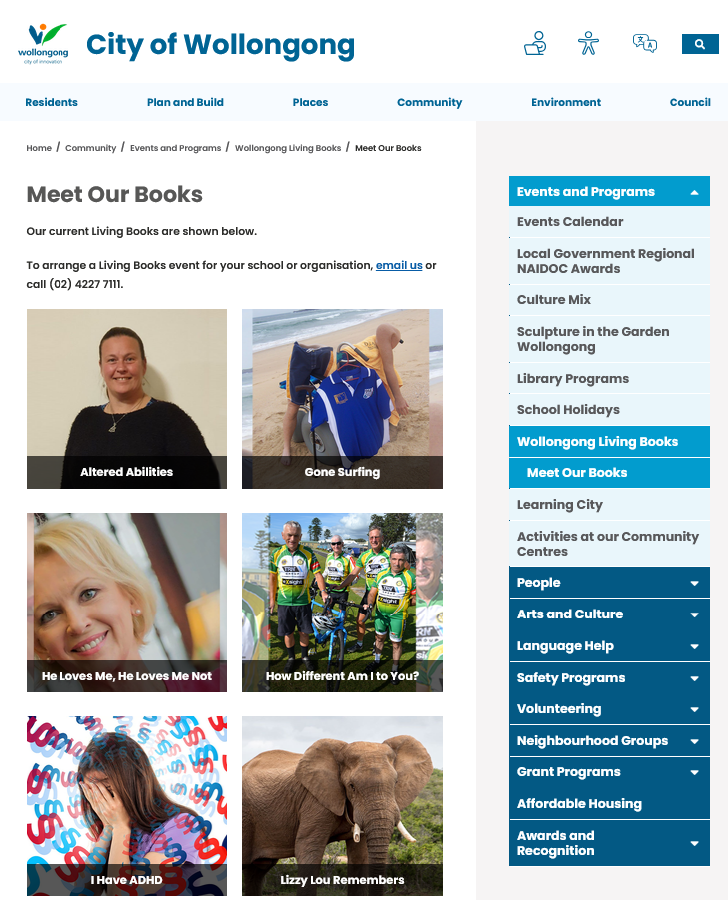
Screenshot of the City of Wollongong Living Books bookshelf on July 27, 2026
Another storytelling initiative that happens outside of but is supported by a library is The Korean American Story, an oral history project that records the stories across generations of the Korean diaspora in the U.S. They create videos and live events that capture and share stories past and present, bridging continents, languages, immigration journeys, and communities of Koreans. The organization invites and uplifts stories from Korean American people, paying particular attention to overlooked groups like queer and trans Koreans. The recorded materials are preserved as part of the Korean American Digital Archive (KADA) within the Korean Heritage Library at the University of Southern California (USC) in Los Angeles. The university library and archives strengthens the reach and duration of these personal and cultural stories.
These storytelling practices touch different organizational settings where information professionals work, from public librarians supporting programs like the Human Library or Living Books to university archivists safeguarding oral histories from community organizations. I believe becoming a hyperlinked librarian requires de-centering the library sometimes and centering important community-led work that emphasizes inclusion, connection, and transformation. We can play support roles in platforming powerful stories that unfold through peoples’ lives, recognizing the value of these “living books.”
References
Human Library Organization. (2023, April 25). The Human Library. YouTube. https://www.youtube.com/watch?v=rxukgiVqb5A
Human Library Organization. (n.d.). About The Human Library. humanlibrary.org/about/
Korean American Story. (2024, June 4). Legacy Project | Queer Joy: Editorial Cut. YouTube. https://www.youtube.com/watch?v=rxukgiVqb5A
Korean American Story. (n.d.). Legacy project. https://www.koreanamericanstory.org/legacy-project
Public Libraries Online. (2013, April 26). Human library. https://publiclibrariesonline.org/2013/04/human_librar/
Wollongong City Libraries. (n.d.). Living books. https://wollongong.nsw.gov.au/my-community/events-and-programs/living-books
Wollongong City Libraries. (n.d.). Meet our books. https://wollongong.nsw.gov.au/my-community/events-and-programs/living-books/meet-our-books
I love that you included the much-needed diversity in the power of human stories in the Library. I really liked your point about “de-centering the library” and supporting community-led storytelling. The Human Library is such a creative way to help people connect with others they might never meet otherwise, and I think those conversations can have a lasting impact. Your examples also reminded me that libraries aren’t just places that preserve history. They can also help create it by giving people a space to share their own experiences.