Recently, I had the pleasure of visiting with a local artist in my community, Leon. My partner and I spent an hour or so chatting with him and looking at his art. His art had previously been displayed at our local public library which is how my partner, who works at the library, initially connected with him (OIPL, 2025). I loved hearing about how Leon approaches his work and reflections on his life/career. It was fascinating to hear how many years ago he was commissioned to paint art that was turned into album covers, including an album by the Styx.
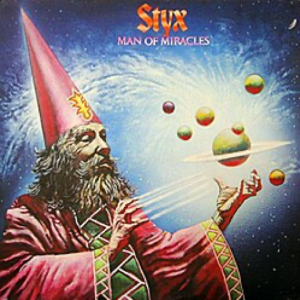
Image Source: Wikipedia
This conversation was such a wonderful, real life experience to me of the power of stories. It also reinforced my interest in human libraries. Having the time and space to sit down and talk with someone, who is open and willing to share, is such an incredible way to learn and connect. I was delighted to read that one was held on Bainbridge Island, which is in my home state of Washington (Wentz, 2013)
Human Libraries and Intellectual Freedom
This semester I am also taking a class on intellectual freedom, which has covered topics about barriers to information, including censorship and book challenges. Human libraries jumped out at me as a way for libraries to provide information that some are trying to censor or challenge. Wentz (2013) wrote that “[t]hose who volunteer to be ‘human books’ are ‘people with a particular personal experience or perspective on life’.” Bringing in people to talk about their real life experience and knowledge on topics and issues allows patrons such a unique way to obtain information. While the study was small, Arnie-Skidmore (2021) found that attendance at Human Library events had a “lasting positive impact.”
Human Libraries and Participatory Services
Human libraries seem like they go hand-in-hand with participatory services. While Wentz (2013) recommends the formation of a planning committee to make decision about the event, I think community members can be brought into this process as well. They can help guide potential topics of interest and help recruit books. Also, what “books” are, and aren’t, comfortable sharing within topics will help shape each event. Since patrons are involved as both the books and readers, they can also evaluate the program. Readers may even be inspired after their experience to volunteer as a book as a future event. This was the case of a reader in Arne-Skidmore (2021) Based on how popular these events seem, I’m sure others would feel called to do so as well.
References
Arne-Skidmore, E. (2021, April, 8). New study on the impact of the human library. Human Library. https://humanlibrary.org/new-study-on-the-impact-of-the-human-library/
OIPL. (2025). December 2025. Orcas Island Public Library. https://www.orcaslibrary.org/art-at-orcas-island-public-library/leon-rosenblatt
Wentz, E. (2013, April 26). The human library: Sharing the community with itself. Public Libraries Online. https://publiclibrariesonline.org/2013/04/human_librar/