Infinite Learning Reflection

Professional Learning Experiences

Part of the reason I started an MLIS was because I wanted to learn more than my jobs were able to provide me at the time. Looking back, I think this mostly related to new responsibilities and career advancement. But there is so much to professional learning beyond that. I was really drawn to the sub-module of Professional Learning Experience because I was interested in seeing what kinds of opportunities and ideas are out there that I may unaware of related to professional learning. Especially things that I could advocate for in future positions.

Surprisingly, the part of this module that ended up sticking with me the most  was the personal learning network example. I loved the idea of making one for myself. Since I am not currently working, this seemed like a great opportunity for me to reflect on previous professional experiences, including some I may have overlooked. It would also give me the opportunity to reflect on the formal and casual learning experiences I have now.

My Personal Learning Network

Professional

While I may not have had a lot of career advancement opportunities, looking back at the almost six years I worked in libraries I did have many learning opportunities

  • All Staff Learning Days at the public library
  • Webinars and trainings, especially from Ryan Dowd
  • Attended a conference out of state
  • Monthly public service staff meetings

I also had support from many coworkers and other information professionals

  • My supervisor at the public library encouraged the use of off-desk time to watch webinars we thought would be helpful
  • Board member at the law library asked if there were any professional development opportunities I thought would be beneficial
  • Time on the help desk with librarians allowed me to ask them questions and learn about their career experiences. They were always open and happy to talk
  • Fellow librarians through WACLL (did NOT take advantage of this as much as I should have)
  • Coworkers from other departments, especially IT staff

Formal Education

Current Classes

  • The Hyperlinked Library
    • Personal reflection blogging
    • Following personal interests in major assignments
    • Exposure to services and programs from libraries around the world
    • Ideas surrounding using tech intentionally
    • Experiences and thoughts from other students
    • Positive outlook on the state of libraries and services
    • Posts on the main Hyperlinked Library page
  • Intellectual Freedom
    • Reading through libraries policies
    • Readings covering current events
    • Upcoming assignment: Librarian interview covering course topics (I’m using this as an opportunity to connect with an old coworker of mine!)
    • Professor shares relevant webinars and videos, like The Librarians documentary and this free Masterclass

Looking ahead

  • Picking electives based on personal/professional interest: next semester I’m taking a civil literacy class which I’m excited about
  • ePortfolio: chance to reflect on my formal education and thoughts on the information profession
  • I’m enrolled in a 200hr yoga teacher training that starts in January

Casual/Personal  

I learn through many hobbies and personal interests

  • Yoga practice
  • Listening to podcasts
  • New hobby! Playing D&D
  • I am trying to get back into strength training
  • Taking care of an aging cat

Recently moving has also brought many learning opportunities

  • Had to change all of my insurance
  • Living with a partner for the first time
  • New community
    • Meeting many new people
    • New dynamic of living small town
  • New environment/living on an island
    • Less infrastructure to rely on
    • Adjusting routines and practices
  • New dynamic: Spending time and talking with off-island friends feels more intentional
Power of Stories Reflection

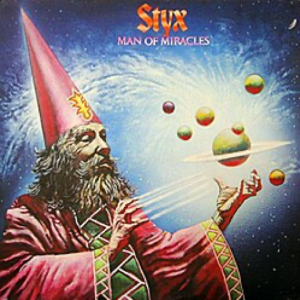
Recently, I had the pleasure of visiting with a local artist in my community, Leon. My partner and I spent an hour or so chatting with him and looking at his art. His art had previously been displayed at our local public library which is how my partner, who works at the library, initially connected with him (OIPL, 2025). I loved hearing about how Leon approaches his work and reflections on his life/career. It was fascinating to hear how many years ago he was commissioned to paint art that was turned into album covers, including an album by the Styx.

Image Source: Wikipedia

This conversation was such a wonderful, real life experience to me of the power of stories. It also reinforced my interest in human libraries. Having the time and space to sit down and talk with someone, who is open and willing to share, is such an incredible way to learn and connect. I was delighted to read that one was held on Bainbridge Island, which is in my home state of Washington (Wentz, 2013)

Human Libraries and Intellectual Freedom

This semester I am also taking a class on intellectual freedom, which has covered topics about barriers to information, including censorship and book challenges. Human libraries jumped out at me as a way for libraries to provide information that some are trying to censor or challenge. Wentz (2013) wrote that “[t]hose who volunteer to be ‘human books’ are ‘people with a particular personal experience or perspective on life’.” Bringing in people to talk about their real life experience and knowledge on topics and issues allows patrons such a unique way to obtain information. While the study was small, Arnie-Skidmore (2021) found that attendance at Human Library events had a “lasting positive impact.”

Human Libraries and Participatory Services

Human libraries seem like they go hand-in-hand with participatory services. While Wentz (2013) recommends the formation of a planning committee to make decision about the event, I think community members can be brought into this process as well. They can help guide potential topics of interest and help recruit books. Also, what “books” are, and aren’t, comfortable sharing within topics will help shape each event. Since patrons are involved as both the books and readers, they can also evaluate the program. Readers may even be inspired after their experience to volunteer as a book as a future event. This was the case of a reader in Arne-Skidmore (2021) Based on how popular these events seem, I’m sure others would feel called to do so as well.

References

Arne-Skidmore, E. (2021, April, 8). New study on the impact of the human library. Human Library. https://humanlibrary.org/new-study-on-the-impact-of-the-human-library/

OIPL. (2025). December 2025. Orcas Island Public Library. https://www.orcaslibrary.org/art-at-orcas-island-public-library/leon-rosenblatt

Wentz, E. (2013, April 26). The human library: Sharing the community with itself. Public Libraries Online. https://publiclibrariesonline.org/2013/04/human_librar/

New Models Reflection

What stuck out to me in the New Models module were all the programs focusing on food and cooking. I think they are great examples of libraries connecting patrons with relevant information in new and creatives way. I love the cooking workshops with the Chef in Resident in Chronicle 5 WCVB (2024). By adding a kitchen during a renovation, the Boston Public Library really committed to this new library service, with the clear intention of learning and creating. From offering programs teaching cooking basics, or providing an expert to ask questions to, this program provided resources for people of all ages and skill levels. The Books and Cooks program at Redwood City Public Library was cool as well. I loved that their kitchen was mobile and could travel between the branches and other community centers (Ewen, 2018). It was also great to see how this program fostered partnerships between the library and community members and organizations, including a local chef and food bank.

A Personal Reflection

Exploring this module really made me realize how often I am drawn to programs I wish I could attend. Or, I wish younger me could have attended. As someone who never took a Home Economics class in school, and who couldn’t confidently do anything besides boil water before their mid-twenties, I would have loved the opportunity to learn how to cook at my local library. I feel like I’ve been able to teach myself quite bit over the years, but I find there is something so reassuring in having access to feedback when learning the basics of a skill. Cutting and chopping are such fundamental skills in cooking, and I feel like I still struggle with them.

I had also never thought of food/culinary literacy as a type of literacy before, but it makes sense. ALA Literary Clearinghouse (n.d.) defines food literacy as the “knowledge, skills, and behaviors that contribute to well-balanced diets, taking into account structural factors such as access, security, and sustainability.” This definition is broad a requires a wide range of skills and knowledge. One needs basic literacy skills for reading recipes and nutrition labels, and more specialized knowledge to be able to interpret them. This knowledge ranges from knowing cooking terminology, to understanding the relationships between food and health, and understanding the types of food you can practically access. The more I think about it, the more complex culinary literacy is.

Libraries as an Institution

Library services shifting toward topics and skills such as culinary literacy also perfectly showcases the role libraries play in supporting their community. In an interview, author Eric Klinenberg said that “libraries have become a crucial part of the safety net, the educational system, and the local democracy as well” (Gaetani, 2018). These programs provide great examples of this role. Food is a basic necessity, and library programs providing food in food deserts definitely contribute to a community’s safety net. Cooking classes and other programs teaching culinary literacy contribute to a community’s education system.

References

ALA Literacy Clearinghouse (n.d.) Food literacy. American Library Association. https://literacy.ala.org/food-literacy/

Chronicle 5 WCVB. (2024, June 18). Libraries are evolving into community centers with multi-services center [Video]. YouTube. https://www.youtube.com/watch?v=tCvR7P42MKA&t=245s

Ewan, L. (2018, Sept. 4). A moveable feast. American Libraries.  https://americanlibrariesmagazine.org/2018/09/04/movable-feast-library-mobile-kitchens/

Gaetani, M. (2018, Nov. 11). Q & a with Eric Klinenberg. Sandford University: Center For Advanced Study in the Behavioral Science. https://casbs.stanford.edu/news/qa-eric-klinenberg

Hyperlinked Environment Reflection

As I explored the Hyperlinked Environments module, one thing that stuck with me was The Hive branch of Spokane Public Library. As someone born and raised in Washington, it was exciting to see a #hyperlinked example from my home state. Also, and more importantly, The Hive seems like such a wonderful space, and a perfect example of a hyperlinked environment!

Spokane Public Library advertises The Hive as “a non-traditional library centered around arts education and free, public event space” (Spokane Public Library, n.d.). Without any books or public computers, The Hive helps the public expand their understanding of what library spaces can be. It was built intentionally for meeting, connection, and learning.

The Hive and the Four-Space Model

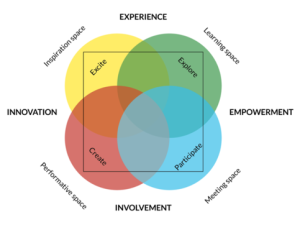
The four-space model, as explained by Skot-Hansen (2017), is a model for public library spaces to be built on four different, overlapping intentions: inspiration, learning, meeting, and performing. I see many of these intentions and their overlaps in The Hive.

Photo from Skot-Hansen (2017)

The Hive is, at its core, a meeting space. It has multiple events spaces for residents to reserve, free of charge. These spaces have been used by a wide variety of groups, including knitting and other art clubs, and social justice campaigns (Urban Library Council, 2021). When reading about The Hive, I immediately thought of my friend group that is always looking for new places to meet and play board games. It can be a burden for someone to always host, and having a free event space like this would be perfect.

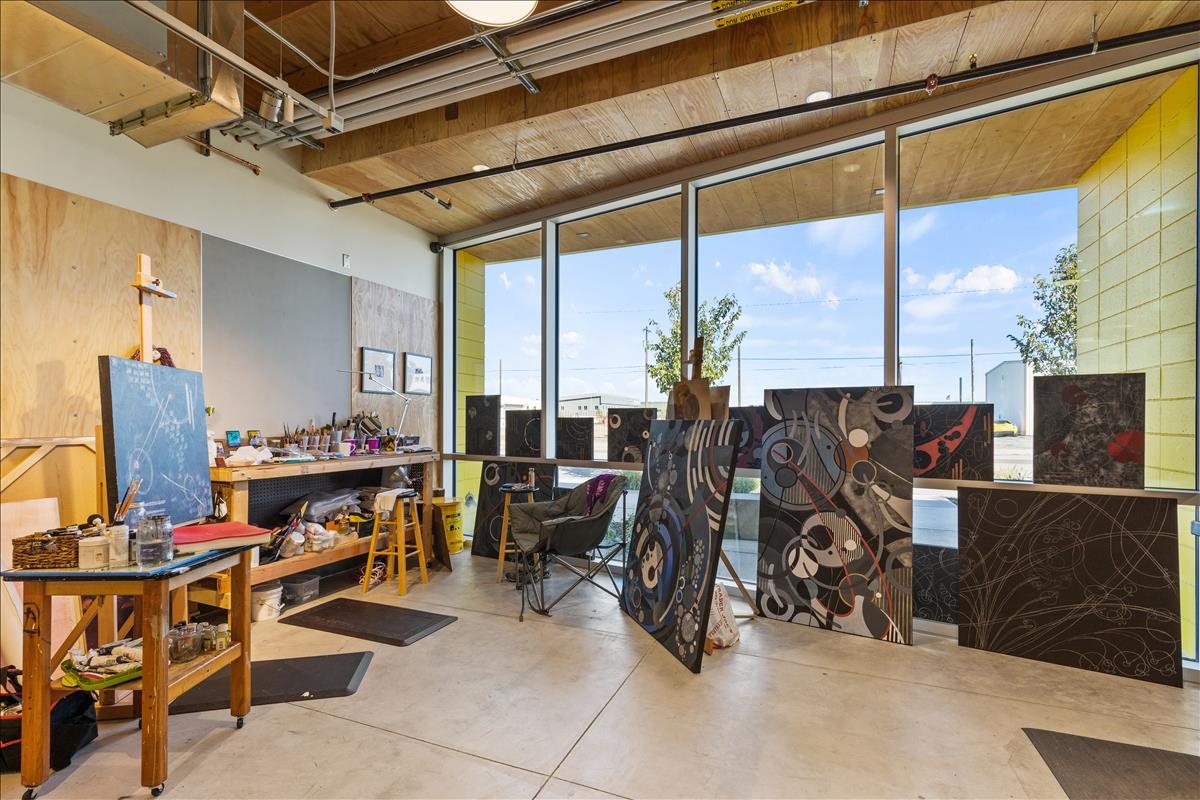
The Hive is also a space for learning, creating, and exploring. On top of meeting rooms, The Hive has a public art studio, and four art studios dedicated to an artist-in-residence program. The studios were created as a space for artists to explore ideas and pursue new projects. As part of their residency, artists participate in open-studio times and lead a community art program of their creation. The Hive also hosts other educational library programs, like genealogy classes (Spokane Public Library, n.d.).

https://www.urbanlibraries.org/assets/The-Hive-39.jpgPhoto from Urban Library Council (2021)

Partnerships

As I read more about The Hive, I learned it started as a partnership between Spokane Public Schools and Spokane Public Library. The space was created with the needs of both organizations in mind. The Library was able to build “a location for 21st century public library services” (Spokane Public Library, 2021). The Schools was able to build a space for their teacher trainings and a headquarters for their Virtual Learning division. There was community buy-in from the start, as the space was funded by a voter-approved bond issue (Urban Library Council, 2021).

This kind of partnership seems like a great idea for public libraries to explore. Creating and sharing a communal space helps facilitate closer relationships. It give a chance to really understand and support each other’s’ missions and values. It could also be helpful in times of tight budgets. When asking for public funding, I think there could be power in a two-in-one proposition. A multi-purpose, community centered space sure seems like a great investment to me.

References

Skot-Hansen, D. (2017, August). Library development: from collection to connection. University of Copenhagen, Faculty of Humanities.

Spokane Public Library. (n.d.) The Hive ®. Spokane Public Library. https://www.spokanelibrary.org/hive/

Spokane Public Library. (2021, August 9). Spokane Public Library Opens First Building from 2018 Library Bond Issue and Selects The Hive™ Artists-in-Residence [Press Release]. https://www.spokanelibrary.org/wp-content/uploads/08092021_HiveOpening_PressRelease.pdf

Urban Library Council. (2021). The Hive. Urban Libraries Council. https://www.urbanlibraries.org/innovations/the-hive

Hyperlinked Communities Reflection

One idea that resonated with me in this module was holistic care in libraries. I first heard this idea in Stephens (2025) when Michael mentioned the idea of libraries meeting their community in a holistic way. On top of the information needs, libraries should, if possible, also address the base needs of a community. I saw similar ideas echoed in Greenwood (2022), which talked about a new strategic framework that addressed the health and well-being of patrons Victoria, Australia. This framework provided three focus areas for library services and partnerships: social connection, mental well-being, and physical health (Greenwood, 2022).

Greenwood (2022) has an image from a food relief and vaccination pop-up event at Yarra Libraries. I thought this was such a wonder idea. As I started writing this blog post I intended to reflect on the topics such social workers in libraries and library partnerships with local organizations, but I kept getting pulled a different direction.

Growing Up Online

I grew up during a time when social media was really taking off. It was popular, but we didn’t have nearly as much of an understanding of it as we do now. I spent hours a day scrolling on sites like Instagram, often watching videos by what I now know as workout influencers. As someone who likes sports and working out, it was really exciting to see examples of workout routines. I was able to get ideas of exercises I could try and their correct form. Or, what I was told was the correct form, or the right number of sets so that I too could look like that.

As I reflected on holistic care, I latched onto the idea of how complicated the information landscape has become for health and wellness. It never even crossed my mind as a teen that the information I was taking in might not be correct, or that there was any kind of ulterior motive for posting content.

Library Programs and Services.

It’s hard not to look back and wish that I could have attended a media or digital literacy program for teens. These skills feel so important when it comes to health and well-being.

Not surprisingly, when I did a quick Google search to see what libraries are doing today I found great examples like Oakland Public Library’s blog post #TeenTopic: Digital Literacy and resources from ALA Programming Librarian.

It also made me really happy to see programs like CLOUD901 (Memphis Public Library, n.d.). Not only is a it a safe space for building skills, but it’s also a space for exploration and self-expression. What a great example of holistic care for teens!

References

Greenwood, C. (2022). Healthy library, healthy life. INCITE, 43(6), 24. Australian Library and Information Association.

Memphis Public Library (n.d.). CLOUD901 teen learning lab. Memphis Public Library. https://www.memphislibrary.org/cloud901/

Stephens, M. (2025). Hyperlinked Communities [Video]. Panopto. https://sjsu-ischool.hosted.panopto.com/Panopto/Pages/Viewer.aspx?id=3eacdb23-84fd-49e5-9975-aef3014b3ed2

Assignment X: Chaos and the Library

One concept of the Hyperlinked Library that stood out to me was “inevitably, there will always be some amount of chaos” (Stephens, 2019). I noticed myself wince a little when I first heard it, which surprised me. As I started to reflect on what I thought chaos meant, it began to make more sense. I realized I was only thinking of chaos in a negative way. In terms of library work, all of my initial thoughts were library issues. I thought of book bans and other challenges to intellectual freedom, librarians forced into social worker type roles, and cuts to funding at local and federal levels. These are all large-scale, overwhelming things.

Moving forward, I thought it would help to reframing what chaos means. I decided to look up the definition for “chaos” to ground the term. The definition that jumped out at me was “the inherent unpredictability in the behavior of a complex natural system” (Merriam-Webster, n.d.). This definition is neither positive or negative, nor does it specify any kind of size. The examples given were actually vastly different: the atmosphere, boiling water, and a beating heart (Merriam-Webster, n.d.). “Inherent unpredictability” also reminded me of something I heard in Transformation Lab (2009). In the video, that phrase “unorthodox branding” was used for to describe the messaging for the Mindspot library service. While unorthodox and unpredictable aren’t necessarily the same thing, I think there is some overlap. For Mindspot, library staff looked to the youth for new, outside of the box ideas. There is inherent unpredictability in brainstorming with different groups of people, and the youth were sought out for exactly that.

That definition continues to fit well as I think more about the Hyperlinked Library Model. Libraries serve the information needs of their community. These communities are full of people with different ideas, beliefs, wants, and needs. It makes sense that some amount of chaos would be inevitable with conflicting wants and clashing ideas. If chaos is inevitable, it is best for libraries to try to work with it, even embrace it when possible. Participatory services seems like a great way of doing so. As Casey (2011) writes, “[t]he participatory library engages and quires its entire community and seeks to integrate them into the structure of changes” (p. 2). In deliberately seeking out community and integrating them into the library, a level of chaos is invited and accepted. Libraries are open to and are prepared to respond to it.

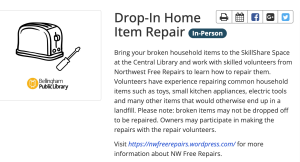
Using my reframed understanding, I think chaos shows up in a number of places in practice. My first thought was popular library programs and all the people they bring, like families on story time days, and lines at book sales that bring a little chaos. While these still have a hint of negativity to be me since I associate them with a hectic environment, I believe there is positive there too. Busy parents may have the opportunity to connect with friends they don’t get to see very often. At book sales, people are excited about what they might find and are showing wonderful support for their library. The library is a space for chaos. But events don’t even have to be super crowded to bring chaos. One of my favorite programs at the public library I used to work at was the drop-in home item repair program. It was fun working at the help desk and looking up to see someone walking around with toasters and lamps, and hearing the sound of tools. Those are experiences I couldn’t have predicted having when I applied for that job.

Image source: https://bellinghampubliclibrary.libcal.com/event/16692161 

As this class progresses, and my professional career develops, I hope I can continue to reflect on chaos. I want to explore the more positive aspects and process some of the negatives I’ve experienced. It may be help to use a strategy like mindfulness. Accepting and embracing the chaos will be a practice in and of itself. One I will come back to again and again.

References

Casey, M. (2011). Revisiting participatory service in trying times- A TTW guest post by Michael Casey. Tame the Web. https://tametheweb.com/2011/10/20/revisiting-participatory-service-in-trying-times-a-ttw-guest-post-by-michael-casey/

Merriam-Webster. (n.d.) Chaos. Merriam-Webster.com dictionary. https://www.merriam-webster.com/dictionary/chaos

Stephens, M. (2019). The hyperlinked library: Exploring the model [PowerPoint]. Panopto. https://sjsu-ischool.hosted.panopto.com/Panopto/Pages/Viewer.aspx?id=a0569381-4d66-4e0a-a7fa-aab3010a8f3e

Transformation Lab. (2009, April 20). Mindspot the movie: The library as a universe [Video]. YouTube. https://www.youtube.com/watch?v=ixsOLvLSARg

Introductory post!

Hello all!

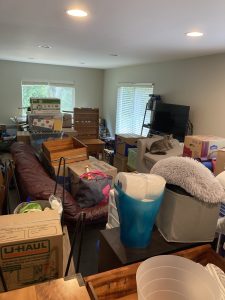
My name is Marissa Tavener. I am currently going through a pretty large life change. I lived in Bellingham, WA for about 10 years, but moved a little over a week ago (on Friday the 14th!). I moved to Bellingham at 18 years old for my undergrad and started my career there after graduating in 2020. I worked at the City’s public library for a number of years, first as a page and then a public services clerk. This is where I fell in love with library work and what inspired me to pursue an MLIS in 2024. I also always worked a second part-time job at the Whatcom County government. I worked for a few different departments over the years doing filing and records management work, and even served as the interim law librarian for their public law library. While I was able to manage two part-time jobs, and eventually school, for a while, I ultimately burned out due to the intensity of public service. I recently made the tough decision to leave my jobs to take care of myself. I just moved to beautiful Orcas Island where I now live with my partner! While unpacking is proving to be a little overwhelming, I am excited to focus on school now and see what comes in this new chapter of my life.

I am taking this class for a couple of reasons. For starters, I took INFO 200 with Michael which I really enjoyed. I found his enthusiasm for the library field contagious and appreciated the flexibility the class provided in exploring individual interests. I thought this was exactly the type of class I needed as I focus more on school. Also, as I finish up my MLIS, I am hoping to take electives that allow me to engage with the theoretical aspects of library work I originally fell in love with. I am also taking an intellectual freedom class this semester.  

My area of interest has admittedly changed over the years. Currently I am exploring the idea of government documents librarianship. I took a government information sources class last year which I really enjoyed. I loved seeing all of the types of information the government creates and maintains. I particularly liked learning about the organization of information in the courts and legal systems. This was something I was able to engage with as a law librarian too. I also value the open access aspect of public sector information. Though, at its core, I like organizing and knowing where to find information. This is what initially inspired me to apply to be a page, and what makes records management work appealing. At this time, I am not super interested in moving for a job. So, as long as I find a job that allows me to engage with cores aspects of library work I like (and doesn’t overwhelm me with public service), I am open to other opportunities that present themselves.

Looking forward to this semester!

Marissa

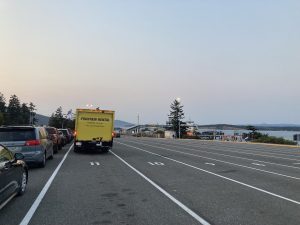
Moving truck in line to get on the ferry 

My cat, Karel, “helping” me unpack