Infinite Learning Reflection

Professional Learning Experiences

Part of the reason I started an MLIS was because I wanted to learn more than my jobs were able to provide me at the time. Looking back, I think this mostly related to new responsibilities and career advancement. But there is so much to professional learning beyond that. I was really drawn to the sub-module of Professional Learning Experience because I was interested in seeing what kinds of opportunities and ideas are out there that I may unaware of related to professional learning. Especially things that I could advocate for in future positions.

Surprisingly, the part of this module that ended up sticking with me the most  was the personal learning network example. I loved the idea of making one for myself. Since I am not currently working, this seemed like a great opportunity for me to reflect on previous professional experiences, including some I may have overlooked. It would also give me the opportunity to reflect on the formal and casual learning experiences I have now.

My Personal Learning Network

Professional

While I may not have had a lot of career advancement opportunities, looking back at the almost six years I worked in libraries I did have many learning opportunities

  • All Staff Learning Days at the public library
  • Webinars and trainings, especially from Ryan Dowd
  • Attended a conference out of state
  • Monthly public service staff meetings

I also had support from many coworkers and other information professionals

  • My supervisor at the public library encouraged the use of off-desk time to watch webinars we thought would be helpful
  • Board member at the law library asked if there were any professional development opportunities I thought would be beneficial
  • Time on the help desk with librarians allowed me to ask them questions and learn about their career experiences. They were always open and happy to talk
  • Fellow librarians through WACLL (did NOT take advantage of this as much as I should have)
  • Coworkers from other departments, especially IT staff

Formal Education

Current Classes

  • The Hyperlinked Library
    • Personal reflection blogging
    • Following personal interests in major assignments
    • Exposure to services and programs from libraries around the world
    • Ideas surrounding using tech intentionally
    • Experiences and thoughts from other students
    • Positive outlook on the state of libraries and services
    • Posts on the main Hyperlinked Library page
  • Intellectual Freedom
    • Reading through libraries policies
    • Readings covering current events
    • Upcoming assignment: Librarian interview covering course topics (I’m using this as an opportunity to connect with an old coworker of mine!)
    • Professor shares relevant webinars and videos, like The Librarians documentary and this free Masterclass

Looking ahead

  • Picking electives based on personal/professional interest: next semester I’m taking a civil literacy class which I’m excited about
  • ePortfolio: chance to reflect on my formal education and thoughts on the information profession
  • I’m enrolled in a 200hr yoga teacher training that starts in January

Casual/Personal  

I learn through many hobbies and personal interests

  • Yoga practice
  • Listening to podcasts
  • New hobby! Playing D&D
  • I am trying to get back into strength training
  • Taking care of an aging cat

Recently moving has also brought many learning opportunities

  • Had to change all of my insurance
  • Living with a partner for the first time
  • New community
    • Meeting many new people
    • New dynamic of living small town
  • New environment/living on an island
    • Less infrastructure to rely on
    • Adjusting routines and practices
  • New dynamic: Spending time and talking with off-island friends feels more intentional
Power of Stories Reflection

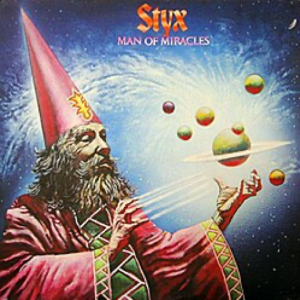
Recently, I had the pleasure of visiting with a local artist in my community, Leon. My partner and I spent an hour or so chatting with him and looking at his art. His art had previously been displayed at our local public library which is how my partner, who works at the library, initially connected with him (OIPL, 2025). I loved hearing about how Leon approaches his work and reflections on his life/career. It was fascinating to hear how many years ago he was commissioned to paint art that was turned into album covers, including an album by the Styx.

Image Source: Wikipedia

This conversation was such a wonderful, real life experience to me of the power of stories. It also reinforced my interest in human libraries. Having the time and space to sit down and talk with someone, who is open and willing to share, is such an incredible way to learn and connect. I was delighted to read that one was held on Bainbridge Island, which is in my home state of Washington (Wentz, 2013)

Human Libraries and Intellectual Freedom

This semester I am also taking a class on intellectual freedom, which has covered topics about barriers to information, including censorship and book challenges. Human libraries jumped out at me as a way for libraries to provide information that some are trying to censor or challenge. Wentz (2013) wrote that “[t]hose who volunteer to be ‘human books’ are ‘people with a particular personal experience or perspective on life’.” Bringing in people to talk about their real life experience and knowledge on topics and issues allows patrons such a unique way to obtain information. While the study was small, Arnie-Skidmore (2021) found that attendance at Human Library events had a “lasting positive impact.”

Human Libraries and Participatory Services

Human libraries seem like they go hand-in-hand with participatory services. While Wentz (2013) recommends the formation of a planning committee to make decision about the event, I think community members can be brought into this process as well. They can help guide potential topics of interest and help recruit books. Also, what “books” are, and aren’t, comfortable sharing within topics will help shape each event. Since patrons are involved as both the books and readers, they can also evaluate the program. Readers may even be inspired after their experience to volunteer as a book as a future event. This was the case of a reader in Arne-Skidmore (2021) Based on how popular these events seem, I’m sure others would feel called to do so as well.

References

Arne-Skidmore, E. (2021, April, 8). New study on the impact of the human library. Human Library. https://humanlibrary.org/new-study-on-the-impact-of-the-human-library/

OIPL. (2025). December 2025. Orcas Island Public Library. https://www.orcaslibrary.org/art-at-orcas-island-public-library/leon-rosenblatt

Wentz, E. (2013, April 26). The human library: Sharing the community with itself. Public Libraries Online. https://publiclibrariesonline.org/2013/04/human_librar/

New Models Reflection

What stuck out to me in the New Models module were all the programs focusing on food and cooking. I think they are great examples of libraries connecting patrons with relevant information in new and creatives way. I love the cooking workshops with the Chef in Resident in Chronicle 5 WCVB (2024). By adding a kitchen during a renovation, the Boston Public Library really committed to this new library service, with the clear intention of learning and creating. From offering programs teaching cooking basics, or providing an expert to ask questions to, this program provided resources for people of all ages and skill levels. The Books and Cooks program at Redwood City Public Library was cool as well. I loved that their kitchen was mobile and could travel between the branches and other community centers (Ewen, 2018). It was also great to see how this program fostered partnerships between the library and community members and organizations, including a local chef and food bank.

A Personal Reflection

Exploring this module really made me realize how often I am drawn to programs I wish I could attend. Or, I wish younger me could have attended. As someone who never took a Home Economics class in school, and who couldn’t confidently do anything besides boil water before their mid-twenties, I would have loved the opportunity to learn how to cook at my local library. I feel like I’ve been able to teach myself quite bit over the years, but I find there is something so reassuring in having access to feedback when learning the basics of a skill. Cutting and chopping are such fundamental skills in cooking, and I feel like I still struggle with them.

I had also never thought of food/culinary literacy as a type of literacy before, but it makes sense. ALA Literary Clearinghouse (n.d.) defines food literacy as the “knowledge, skills, and behaviors that contribute to well-balanced diets, taking into account structural factors such as access, security, and sustainability.” This definition is broad a requires a wide range of skills and knowledge. One needs basic literacy skills for reading recipes and nutrition labels, and more specialized knowledge to be able to interpret them. This knowledge ranges from knowing cooking terminology, to understanding the relationships between food and health, and understanding the types of food you can practically access. The more I think about it, the more complex culinary literacy is.

Libraries as an Institution

Library services shifting toward topics and skills such as culinary literacy also perfectly showcases the role libraries play in supporting their community. In an interview, author Eric Klinenberg said that “libraries have become a crucial part of the safety net, the educational system, and the local democracy as well” (Gaetani, 2018). These programs provide great examples of this role. Food is a basic necessity, and library programs providing food in food deserts definitely contribute to a community’s safety net. Cooking classes and other programs teaching culinary literacy contribute to a community’s education system.

References

ALA Literacy Clearinghouse (n.d.) Food literacy. American Library Association. https://literacy.ala.org/food-literacy/

Chronicle 5 WCVB. (2024, June 18). Libraries are evolving into community centers with multi-services center [Video]. YouTube. https://www.youtube.com/watch?v=tCvR7P42MKA&t=245s

Ewan, L. (2018, Sept. 4). A moveable feast. American Libraries.  https://americanlibrariesmagazine.org/2018/09/04/movable-feast-library-mobile-kitchens/

Gaetani, M. (2018, Nov. 11). Q & a with Eric Klinenberg. Sandford University: Center For Advanced Study in the Behavioral Science. https://casbs.stanford.edu/news/qa-eric-klinenberg