Author: Vivian Nguyen (Page 1 of 2)
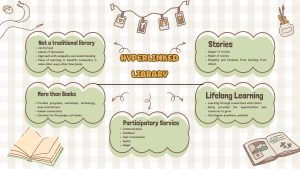
Welcome to the Machi Library! In Japan, these are spaces that exist in other existing establishments for people to read, host events, and connect with each other.
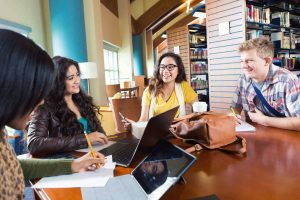
Photo from teachervision
Learning does not necessarily have to take place in a classroom, or even inside a building; it can happen in unexpected places: a parking lot makerspace, a park, or even in a teenager’s garage. Learning has no boundaries on where and how learning can occur, or who can participate, making it a lifelong process.
Learning in Generosity
Williams’ article (2014) about a Kansas teenager who created a prosthetic hand using a library’s 3D printer shows that learning can bee seen in the passion and generosity of other people, sparked by curiosity and access to equipment and information rather than a strict curriculum. Mason Wilde, a 16-year-old from Louisburg High School, used a 3D printer at the Johnson County Library, and created prosthetic hand that can open and close for third grader Matthew Not only did it create a challenge for Mason Wilde to work on, but it also created a friendship and mentorship between the two boys. An accessible library resource turned into a lifelong program for the both of them. Library programs and resources are not just accessible to use, but they also allow for someone’s own initiative and passion to take charge.
Additionally, by providing free access to the equipment of the public to use without having to prove themselves “worthy” or “knowledgeable enough” to use, the library builds trust and confidence in patrons and their capabilities.
Learning with Connections
The video at DOKK1 in Aarhus, Denmark (2016) also reinforces the idea that learning can take place without an instructor. Aarhus University and ELIG.org partner to provide technology equipment, creative learning, making and coding workshops. Through these workshops, the university is able to connect participants with others, allowing them to learn from each other outside of the traditional classroom. Additionally, these connections can continue to exist outside the workshops, providing students with a lifelong friendship and learning opportunity. This shows that the benefits and opportunities that can come from library programs are often times more than the instant, visible benefits.
This module changed how I saw the role of a librarian. I’ve mostly thought of myself as someone answering questions, and a “teacher” of some sort, with the tech help workshops and ESL classes that I have done. However, with this module, I realize that the role of a librarian or library staff can also include being a facilitator, simply providing the public with the necessary tools to embark on their own learning journey.
References
Aarhus DOKK1. (2016). Creative learning, making and coding at DOKK1 [Video]. YouTube. https://www.youtube.com/watch?v=G-lCxenhWSk
Williams, M. R. (2014). Kansas teen uses 3-D printer to make hand for boy. The Kansas City Star. https://www.kansascity.com/news/local/article337980/Kansas-teen-uses-3-D-printer-to-make-hand-for-boy.html
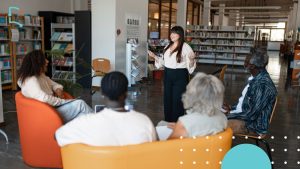
Photo from LibrarIN
Libraries are no longer just keepers of stories; they are now part of the story themselves. For years, the library’s role was to collect, organize, and store information and materials, ready for patrons to come find what they need. Today, the library’s responsibilities have expanded beyond the shelves; they now include life experiences, community voices, and relationships that form when people interact within a shared space. This change in responsibilities means that library staff are asked to practice active listening, empathy, and the willingness to create a welcoming space for stories.
The Human Library
An example of this change is The Human Library, where patrons “check out” a person “with a particular personal experience or perspective on life” instead of a book (Wentz, 2013). These human books converse with other members of the community, or the “readers”. During this time, readers are able to ask questions, seek advice, and learn about other life perspectives. Aarne-Skidmore’s (2021) research on the Human Library model shows that participants exhibit an increase in empathy and reduced bias. StoryCorps, a nonprofit founded in 2003, partnered with public libraries to “record, preserve and share personal stories” (Eberhart, 2018). They also provide an app to make it easier for libraries and other groups to add voices and experiences from their own communities, and participants even have the option of uploading their recordings to the Library of Congress to archive.
Although I have no experience with an “actual human library”, I have had the opportunity to talk to many different people in my library career. People came from many different racial and socioeconomic backgrounds than I, telling me their life story and lived experiences. Through these interactions, I’ve noticed that not only have I become more empathetic in my interactions with patrons, but also in my interactions outside of the library as well, with friends, family, and strangers.
Staying Relevant
Libraries are no longer just information storage, and patrons are no longer just consumers of stories. The patrons have become the stories themselves, and libraries have become a place for diverse populations to participate in unique programming. This counters the traditional perception of libraries being quiet reading places with lots of books (Paxaman, 2019). It is the power of free information, inclusiveness, and diversity that keeps public libraries relevant.
New Possibilities
With the roles of libraries changing in order to stay relevant in times where its traditional roles are being challenged, more possibilities are opened in terms of reaching out to diverse communities with unique needs. This means actively seeking out voices that have been historically underrepresented, such as elders whose histories risk being lost, immigrants navigating a language barrier and new community, and anyone who has felt unheard in traditional spaces. Libraries are now being defined as the people they welcome and the possibilities they open through stories and the freedom of information. If they continue to head in this direction, they will remain as one of the few places where someone else’s story can change the way we perceive the world and each other.
References
Aarne-Skidmore, E. (2021). New study on the impact of the Human Library. Human Library Organization. https://humanlibrary.org/new-study-on-the-impact-of-the-human-library/
Eberhart, G. M. (2018). Sharing people’s stories: StoryCorps partners with public libraries. American Libraries Magazine. https://americanlibrariesmagazine.org/blogs/the-scoop/sharing-peoples-stories/
Paxaman, M. (2019). Challenged but not dying, the public libraries are more relevant than ever. Jutland Station.
Wentz, E. (2013). The Human Library: Sharing the community with itself. Public Libraries Online. http://publiclibrariesonline.org/2013/04/human_librar/
Photo from Adobe Stock Photos
The technological landscape is constantly changing, affecting people of all ages. Kelly (2018) article on children growing up with Amazon’s Alexa can be an alternative for screen time, however it can negatively affect children’s development due to the lack of social interaction. Now with the introduction of generative AI, many industries have been impacted, including the library and information science field. However, just because the technology and the opinions around it change, it does not change the library’s job on providing literacy.
Generative AI in the Library
Generative AI can help with things like “automation of everyday tasks”, “new ways to engage with information”, “lower cost internet connectivity”, and “new forms of creativity” (IFLA, 2024). However, AI also comes with risks, such as misinformation, cyberattacks, deepfakes, and infringing on the rights of creators. The Krupp library at Bryant University isn’t definitively labeling ChatGPT as good or bad, but is using it as an “opportunity to look at it through the lens of information literacy” (Papini, 2023). They see ChatGPT as “just one AI tool” in a sea of disruptive technologies, and are dedicated to educating users on when and how to use the tool.
Griffey (2019) makes a similar point, that the impact of AI technology relies on the people that use and create them. This emphasizes the library’s role regarding digital literacy. Instead of rushing to adopt new technologies uncritically and unethically to seem trendy, it is essential that library professionals uphold one of its core responsibilities: spreading digital literacy (New Media Consortium, 2017). Libraries are in a position to educate the public on the safe way to use AI: how to evaluate the information, identify misinformation, and understand the pros and cons of AI, giving them the ability and knowledge to decide for themselves whether to move forward with the technology or not. Libraries can bridge the gap between user and technology, and can offer human instruction and context that no digital tool can.
The Role of Libraries
New horizons in technology will keep evolving, and amidst all the changes, the role of libraries in the technological landscape does not change. For decades, libraries have taught people how to search for and think critically about information and technology, and generative AI is simply another tool that has been added to that responsibility. The library must stay true to its core purpose: providing literacy, access, and human connection, so that no matter what happens, people will have a place they trust to learn more.
References
Griffey, J. (2019, March 1). AI and machine learning. American Libraries Magazine. https://americanlibrariesmagazine.org/2019/03/01/ai-machine-learning-libraries/
International Federation of Library Associations and Institutions. (2024). IFLA Trend Report 2024.
Kelly, S. (2018, October 16). Growing up with Alexa: A child’s relationship with Amazon’s voice assistant. CNN. https://www.cnn.com/2018/10/16/tech/alexa-child-development/index.html
New Media Consortium. (2017). NMC Horizon Report > 2017 Library Edition.
Papini, A. (2023, January 27). ChatGPT: A library perspective. Krupp Library, Bryant University. https://library.bryant.edu/chatgpt-library-perspective
Welcome to Stuffed Animal Summer Camp, a week long program where kids and their stuffed animals can participate in various activities together!
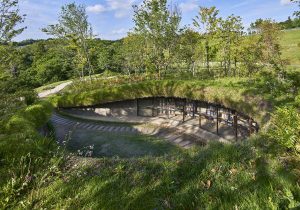
“Library in the earth” in Kisarazu City, Chiba Prefecture, Japan
Being library professionals in the U.S, we may forget that there is another world of international libraries that foster social connection and belonging based on a different set of needs and a different cultural backdrop.
Architecture in Libraries
Libraries offer a wide range of resources outside of books. Some examples of other services and materials that libraries offer include: laptops, WiFi hotspots, tax help, and citizenship test prep classes. They also serve as third spaces. To match these services, Helsinki’s central library, Oodi, has incorporated the new roles of the library into their building design (Cord, 2018). The Oodi library is organized across three floors, each with a different focus: the third floor being the “traditional library” with reading spaces and 100,000 books, the second floor acting as a space for creativity, and includes studios, music rooms, 3D printers sewing machines and other equipment, and the first floor has a café, restaurant, cinema, information points and a space curated by the EU to foster social interactions.
The Locomotive Hall (LocHal) is a library that was built inside an 80-year-old converted train shed (Schwab, 2019). It provides thousands of books, seating areas, an exhibition space, and other space for people to hold programs. The renovated space now features floor-to-ceiling windows that provide tons of natural light, creating a welcoming and comfortable space for people to learn new skills. Despite not being built from all new materials, the space still serves its purpose of meeting its community’s needs.
More than Just Books and Programs
Libraries can also be used to meet a community’s economic and agricultural needs. The Liyuan library located in Jiaojiehe, China, is essentially a steel and glass box, and the exterior is covered in fruit-tree twigs. It also doubles as a tourist attraction, bringing in tourists who then spend money for the villages’ restaurants, parking fees, and donations, contributing to the village’s economy (Perlez, 2015). The Jagodina Public Library has collaborated with the Agricultural Advisory Service of Serbia to host agricultural lectures in Glogovac Village, focusing on “Significance of agrochemical analysis of soil and lowering soil acidity” and “Potato and pepper protection” (Rajik, 2016). These lectures were helpful for the farmers of Glogovac, as well as other nearby villages. Both these libraries show that libraries don’t need to have fancy architecture or follow popular programming trends. It’s important for libraries to fulfill the community’s most basic needs.
What Makes a Library
Libraries are more than the physical materials or trendy programs provided. They are also the building itself, which provides a safe and welcoming space for people to interact, create, and learn. They don’t require expensive architecture or flashy programming to make an impact. A library doesn’t have to resemble the Oodi library to be transformational, but rather they should be intentional on how it responds to the surrounding community’s needs, people, and culture. For some communities, that may mean a new building with various technologies provided, and for others, it may be hosting agricultural workshops in a small village. As library professionals based in the U.S., it’s easy to get caught up with domestic trends, but we must remember to look beyond our borders. Doing so will allow us to learn from our neighbors, and to implement new strategies and ways of thinking into our own work.
References
Cord, D. (2018). Helsinki invests in its people with a library that reinvents the genre. This is Finland. https://finland.fi/life-society/helsinki-invests-in-its-people-with-a-library-that-reinvents-the-genre/
Perlez, J. (2015). An innovative library lifts the fortunes of a Chinese town. The New York Times. https://www.nytimes.com/2015/07/07/world/asia/enticed-by-a-library-tourists-browse-a-chinese-village.html
Rajik, J. (2016). Jagodina Public Library & AgroLib Ja project. http://jagodinalibrary.blogspot.com/
Schwab, K. (2019). The library of the future is an 80 year-old converted train shed. Fast Company. https://www.fastcompany.com/90316219/the-library-of-the-future-is-in-an-80-year-old-converted-train-shed
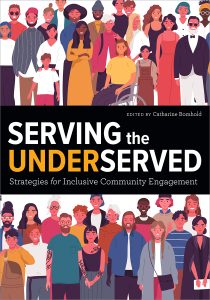
“Serving the Underserved” by Catharine Bomhold
Libraries provide a plethora of services. They not only hold a collection of materials for patrons to access, they also provide community. Peter Block’s definition of communities as “human systems given form by conversations that build relatedness” gives a new perspective to a librarian’s job. They do not just curate materials, they also curate a sense of belonging and social connections.
Underserved and Excluded Communities
Stephens’ (2016) concept of “reaching all users” stood out to me and made me think about who uses the library and what type of people our community truly contains. It’s easy to design programs for people we already know will show up, but it’s harder to serve to those who may feel like they don’t belong in libraries, including teens, immigrants navigating a language barrier, and the unhoused population. Lauersen’s (2018) article on belonging in libraries reiterates this idea. He talked about how people may have hidden biases against marginalized and underserved groups based on privilege and stereotypes. Libraries are places that, in theory, should be free from this type of mindset. As librarians, we must be aware of how our upbringing may have an effect on our services and interactions. Tareq Nurul Hasan (2022) quotes Angela Savage, CEO of Public Libraries Victoria (PLV), stating that libraries are “free, non-judgemental, trusted, and accessible to everyone”. Libraries are safe spaces where people who may face discrimination elsewhere, can feel welcome.
Libraries and Wellbeing
Having library work experience myself, the idea of the library being a safe, non-judgemental space really resonated with me, especially in the context of health and wellness. Libraries can help those struggling with mental health or addiction cope, as they provide calm environments and non-judgemental interactions with others (Hasan, 2022). Surveys conducted by PLV and State Library Victoria on 34,000 library users showed that 92% consider the library a safe place, and 60% said that the library contributed to their mental health and wellbeing. To further this study, Greenwood (2022) states that “libraries can play a critical role in improving some of the determinants of health… through programs and services that equip communities with the necessary skills, information and confidence needed to manage their own health and wellbeing.” Libraries can act as a bridge, and connect the community with health and wellbeing organizations and professionals.
Inclusive Efforts in the Library
With so many people relying on the library for various reasons, we as library professionals must serve our communities with understanding and compassion. It is important to bring qualities such as empathy, emotional intelligence, and compassion into work (Garcia-Febo, 2018). We must also be intentional in our services and interactions, make an effort to notice the excluded groups within our community and actively rethink our services and policies to be more inclusive of all community members.
References
Garcia-Febo, L. (2018, November 1). Serving with love: Embedding equality, diversity, and inclusion in all that we do. American Libraries. https://americanlibrariesmagazine.org/2018/11/01/serving-with-love/
Greenwood, C. (2022). Healthy library, healthy life.
Hasan, T. N. (2022). Free, non-judgemental, accessible. SBS. https://www.sbs.com.au/language/bangla/en/article/free-nonjudgmental-and-accessible-how-your-local-library-is-a-sanctuary-of-health-and-wellness/t15blzsi9
Lauersen, C. (2018). Do you want to dance?
https://christianlauersen.net/2018/06/07/inclusion-and-belonging-in-libraries-and-beyond/
Stephens, M. (2016). Reaching all users. In The heart of librarianship (p. 41)

Stock photo of children visiting the library from iStock
Libraries serve as a “third space”, places that are open free of charge, where anyone can access WiFi, computers, and more without membership fees or purchasing obligations. Beyond the physical resources, libraries are also spaces that foster community connection and learning. As society evolves, so do people’s information needs and interests. In order to continue being effective, libraries must adapt to these changes in order to service their communities. This means building trust by involving the public in library operations, offering diverse resources and programs, and eliminating barriers that prevent people from using the library to its fullest potential.
Building Public Trust
Libraries and their resources will meet the needs of their communities best if they involve said communities in their decision making processes. Trust is a crucial part in building connections with library members and providing excellent user services. Without trust and honesty, it is unlikely that any relationship or connection between the library and its members will be formed (Schmidt, 2013). It is important that the library makes the reason why it makes certain decisions public. This necessity can be seen when the Seattle Public Library (SPL) decided to allocate $2 million dollars to rebrand without consulting their community (Kenney, 2013). When the library administration released a survey for people to vote on the rebrand, there was immense criticism and pushback. People preferred the money to fund new materials and other resources, and in the end SPL administrators pulled the plug on the decision. However, at that point, hundreds of thousands of dollars had already been spent.
Serving a Diverse Community
One of the public library’s main goals is to be an equitable resource to all community members, regardless of background or circumstance. This includes groups that may be more “difficult” to accommodate, such as teenagers and people experiencing homelessness.
Librarians and informational professionals need to realize that advocating for teenagers in the library means recognizing that they are legitimate library patrons with the right to access the library’s resources and services. They should not tolerate disruptive behavior, which should be addressed appropriately. Banning teenagers in the library or restricting access to popular services will instead discourage teens from utilizing the space, and if libraries do not accommodate the youth, it is hard to keep them as patrons in adulthood (Casey & Stephens, 2008). Libraries should determine the needs of their teenage community, and have materials and resources accessible to them. For example, the Santa Clara County Library offers video games checkouts for a variety of consoles, including the Nintendo Switch 2, the PS5, and XBOX (Santa Clara Library, n.d.). The Dr. Martin Luther King, Jr. Library in San Jose also has a dedicated TeenHQ, often hosting teen events and offers spaces such as a game lounge, a MakerSpace Studio, and recording studio (San Jose Public Library, n.d.).
Serving the unhoused also poses a difficult challenge. Libraries have become a second daytime shelter, because many shelters are often loud and crowded. They also provide a safe space to use resources such as bathrooms, WiFi, and outlets without the harassment of authorities. However, because many of the unsheltered suffer from mental illness or drug addiction, staff often find themselves undertrained and lacking support, as they are essentially working as informal social workers (Ryan, 2023). In a response to this issue, some libraries have started to hire social workers. The San Francisco Library was the first library in the U.S. to hire a social worker, and in a span of eight years, over 150 people found permanent housing, while 800 received other services (Urada, et al., 2022). Library administrators should assess the needs of communities and make staffing decisions accordingly in order to commit their goal of being inclusive and equitable. Additionally, all library staff should also be given training that allows them to engage with this community in an empathetic and understanding manner, while also knowing when to step back if the situation seems dangerous.
Eliminating Barriers to the Library
In order to ensure that community members have equitable and free access to resources, libraries eliminate all barriers that may prevent people from utilizing the library. This includes charging late fines. Libraries that eliminated late fines saw an increase in patron satisfaction and participation, and staff morale (Gerber, 2022). 26% of them also saw an increase in circulation. Libraries that do charge late fees or other fines also offer additional ways to offset fees, such as donations and volunteering. An example of this can be found in the San Jose Public Library (SJPL). SJPL does not charge late fees, but will charge for lost items. The library offers two different programs to offset the fee: the Book Replacement program and the Volunteer Away Your Fine Program (San Jose Public Library, n.d.). Patrons can bring in a brand new book as payment, or volunteer. For every hour volunteered, the library will waive $20 from their total fees. These programs and the elimination of late fees help diminish the financial barriers of visiting a library, supporting the library’s mission in being accessible and equitable to all.
Reflection
Libraries are more than places to check out books, they are places of connection, learning, and community. They are community-driven spaces that provide a variety of services and resources, and as informational professionals, we must be ready to adapt to societal and informational changes. This means actively listening to the communities that we serve by providing them access to data and the decision making process, serving diverse and underprivileged communities, and eliminating barriers to the library. By doing so, we can be an open space that provides access to materials and resources in an age of increasing censorship. A library thrives when it serves its community, and to do so trust and library transparency are necessary.
References
Casey, M., & Stephens, M. (2008, May 15). Embracing service to teens. Tame the Web. https://tametheweb.com/2008/05/15/embracing-service-to-teens/
Gerber, A. (2022, September 28). Fine farewells: LJ’s 2022 fines and fees survey. Library Journal. https://www.libraryjournal.com/story/Fine-Farewells-LJs-2022-Fines-and-Fees-Survey
Howard, J. (2019). The complicated role of the modern public library. Humanities: The Magazine of the National Endowment for the Humanities. https://www.neh.gov/article/complicated-role-modern-public-library
Kenney, B. (2016, January 4). Brand awareness: Lessons from Seattle’s failed bid to rebrand its public library. Publishers Weekly. https://www.publishersweekly.com/pw/by-topic/industry-news/libraries/article/68666-brand-awareness-lessons-from-seattle-s-failed-bid-to-rebrand-its-public-library.html
LibraryIQ. (2024). Is your library using data effectively? Here’s how to know. Library Journal. https://www.libraryjournal.com/story/is-your-library-using-data-effectively-heres-how-to-know-lj240531
San José Public Library. (n.d.). TeenHQ makerspace. https://www.sjpl.org/teenhq-maker/
San José Public Library. (n.d.). Book replacement program. https://www.sjpl.org/brp/
San José Public Library. (n.d.). Volunteer away your fines. https://www.sjpl.org/vayf/
Santa Clara County Library District. (n.d.). Games. https://sccld.org/games/
Schmidt, A. (2013). The user experience: Earning trust. Library Journal.
Urada, L., Nicholls, M., & Faille, S. (2022). Homelessness at the San Diego Central Library: Assessing the Potential Role of Social Workers. International Journal of Environmental Research and Public Health, 19(14), 8449. https://doi.org/10.3390/ijerph19148449
Yoon, A., & Copeland, A. (2022). Public libraries’ service model for community open data engagement. iConference 2022, iSchools. https://www.ideals.illinois.edu/items/123084
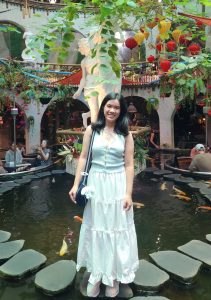
Hello, my name is Vivian and I just started the MLIS program in the spring. I recently graduated with a Bachelor’s in Japanese. Since 2019, I have worked at multiple San Jose Public Library locations, and after seeing the all the work librarians do for their communities and their impact, I was inspired to pursue this career for myself. I currently only have experience in public libraries, however I would like to expand my knowledge and hopefully gain experience in specialized libraries, specifically medical or academic libraries.
Currently, my goal is to become a public librarian who can have a positive impact on the community, but I am also open to other types of librarianship as well! I will just let life take me where it wants to go.
In my free time, I love to read. My favorite genre is fantasy, but I will read just about anything except horror! I also love learning languages, as it opens to a whole new world of culture and literature, etc. I am currently trying to continue with my Japanese studies, although it is a little difficult now that I am not actively taking classes. I also hope to learn Spanish in the future!
I look forward to working together with everyone in this course!