Photo from teachervision
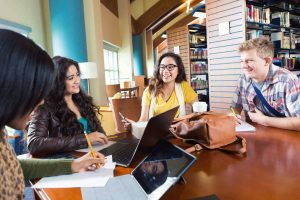
Learning does not necessarily have to take place in a classroom, or even inside a building; it can happen in unexpected places: a parking lot makerspace, a park, or even in a teenager’s garage. Learning has no boundaries on where and how learning can occur, or who can participate, making it a lifelong process.
Learning in Generosity
Williams’ article (2014) about a Kansas teenager who created a prosthetic hand using a library’s 3D printer shows that learning can bee seen in the passion and generosity of other people, sparked by curiosity and access to equipment and information rather than a strict curriculum. Mason Wilde, a 16-year-old from Louisburg High School, used a 3D printer at the Johnson County Library, and created prosthetic hand that can open and close for third grader Matthew Not only did it create a challenge for Mason Wilde to work on, but it also created a friendship and mentorship between the two boys. An accessible library resource turned into a lifelong program for the both of them. Library programs and resources are not just accessible to use, but they also allow for someone’s own initiative and passion to take charge.
Additionally, by providing free access to the equipment of the public to use without having to prove themselves “worthy” or “knowledgeable enough” to use, the library builds trust and confidence in patrons and their capabilities.
Learning with Connections
The video at DOKK1 in Aarhus, Denmark (2016) also reinforces the idea that learning can take place without an instructor. Aarhus University and ELIG.org partner to provide technology equipment, creative learning, making and coding workshops. Through these workshops, the university is able to connect participants with others, allowing them to learn from each other outside of the traditional classroom. Additionally, these connections can continue to exist outside the workshops, providing students with a lifelong friendship and learning opportunity. This shows that the benefits and opportunities that can come from library programs are often times more than the instant, visible benefits.
This module changed how I saw the role of a librarian. I’ve mostly thought of myself as someone answering questions, and a “teacher” of some sort, with the tech help workshops and ESL classes that I have done. However, with this module, I realize that the role of a librarian or library staff can also include being a facilitator, simply providing the public with the necessary tools to embark on their own learning journey.
References
Aarhus DOKK1. (2016). Creative learning, making and coding at DOKK1 [Video]. YouTube. https://www.youtube.com/watch?v=G-lCxenhWSk
Williams, M. R. (2014). Kansas teen uses 3-D printer to make hand for boy. The Kansas City Star. https://www.kansascity.com/news/local/article337980/Kansas-teen-uses-3-D-printer-to-make-hand-for-boy.html
Leave a Reply