As a self-proclaimed bookworm, this is stating the obvious, but I love stories. In a previous blog post, Hyperlinked Communities Reflection Blog: Libraries for All, I discussed the healing power of books. From a reader’s perspective, stories allow one to put themselves in another person’s shoes and to grow empathy and understanding for other people. This week’s course module about the power of stories also highlights how empowering it is from the storyteller’s perspective to be able to share their own story and connect with others.
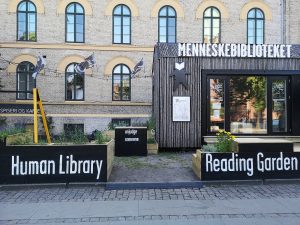
The human library takes storytelling to another level, connecting community members through stories. Originating in Denmark in 2000, human libraries consist of volunteers called human books (Wentz, 2013). Human libraries have expanded internationally, with the first event held in the United States by the Bainbridge Public Library and Santa Monica Public Library in 2008. Community members can meet with these human books and have one-on-one conversations, aligning with the mission of libraries to provide safe learning environments to share information and knowledge. Volunteers bring their unique personal experience and often have been stereotyped in some way. These conversations can pave the way for deeper understanding and connection, and like their motto provide opportunities to “unjudge” someone and challenge prejudices (Wentz, 2013).
I really enjoyed learning about the human library from this week’s readings and it got me thinking about the many different formats of storytelling. Besides the many books on library shelves, how can libraries tell the stories of their community members? I envision community whiteboards, video recordings, photographs, and artwork. What other types of library events and programming can draw people together and foster community? In what ways can libraries help their community keep, make, and share stories? In my library practice, I hope to carry forward this spirit of storytelling so that my community members feel heard and that their stories help create a diverse and inclusive library.
References:
Ronni Abergel [@RonniAbergel]. (2020, July). The Human Library, Copenhagen [Photograph]. Tripadvisor. https://www.tripadvisor.com/Attraction_Review-g189541-d21071059-Reviews-The_Human_Library-Copenhagen_Zealand.html#/media/21071059/?type=ALL_INCLUDING_RESTRICTED&albumid=-160&category=-160
Wentz, E. (2013, April 26). The human library: Sharing the community with itself. Public Libraries Online. https://publiclibrariesonline.org/2013/04/human_librar/
Hi Amanda – great post! I liked what you said about how telling a story can empower the storyteller. Often we seem to focus on the listener – how can the listener learn and grow based on the storyteller’s experiences (assuming they are listening well!). But I agree that storytelling can also be powerful from the teller’s perspective.