A few weeks ago I came across a parody story about an 89-year-old woman who secretly ran a gossip network via bookmarks hidden in books at the library. While completely fictional and exaggerated, the concept of a gossip group at the library opened my mind to all the fun, unconventional ways we can build community among adults. How can the library be a place for new ideas, stories, and exploration?

The general public commonly thinks of public libraries as a place for families and kids – the library something we grow out of, especially with every fact, story, and resource entirely available in our pockets. Adults can explore on their own. Adults don’t need to play. Adults don’t need the library anymore. The Hyperlinked Library Model tells us that this is not true. The quote from Thomas and Brown’s “A Culture of New Learning” (2011) as featured in our Module 3 lecture, “Play is the basis for cultivating imagination and innovation,” stood out to me above all other points. Michael emphasizes in the lecture plainly, “Play is important.” (Stephens, 2025).
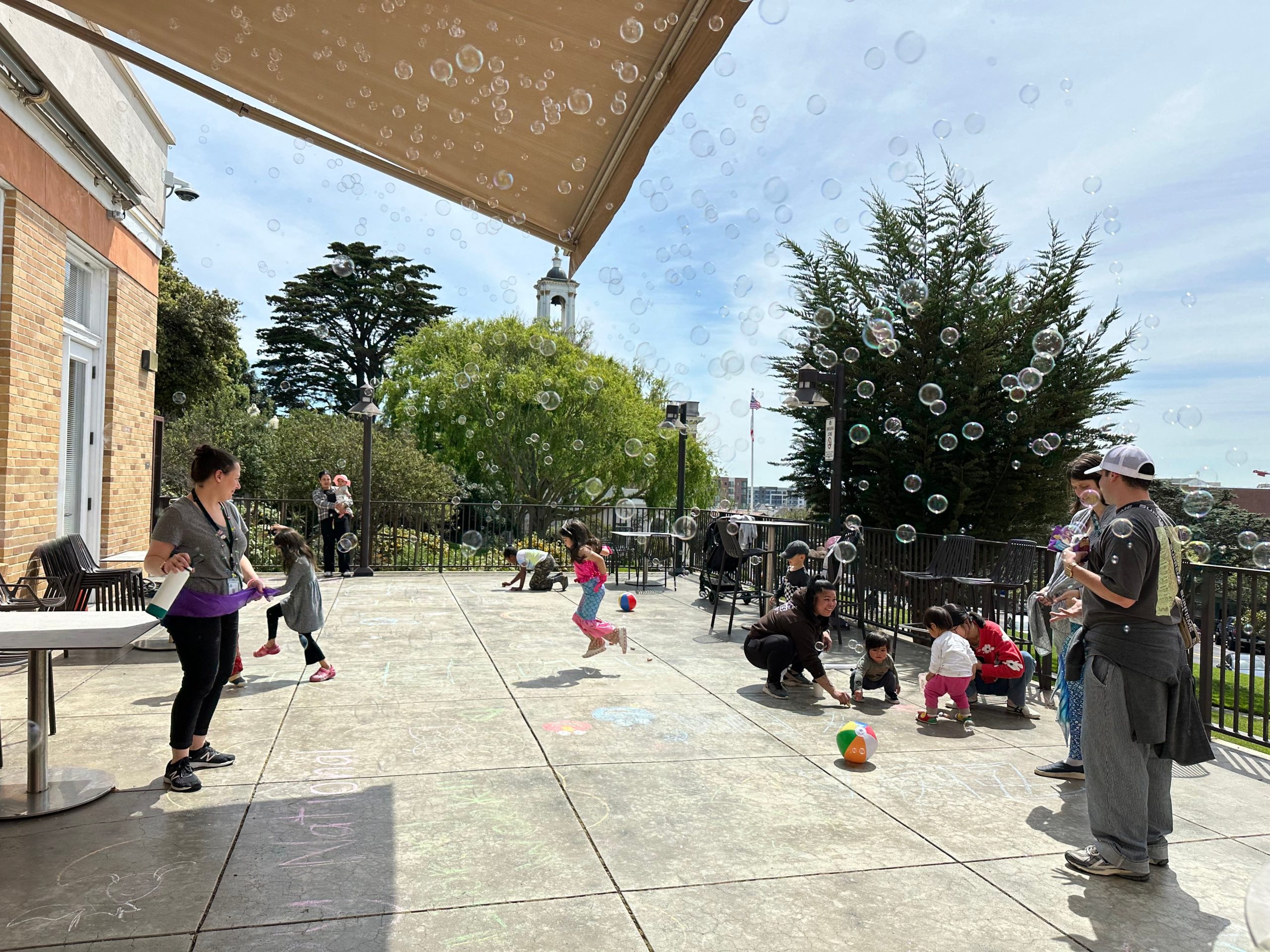
It warms my heart knowing that play isn’t gatekept by rubber balls, little hands, and chalk lines drawn in the concrete – play is just as necessary for adults for stimulation and community development as it is for kids (Lubbers et. al, 2023). Specifically in a GLAM (galleries, libraries, archives, and museums) context, play is about exploration and imagination. A study done on children’s museums and adult patrons showed that after-hours, adult-only events increased museum attendance and brought in new audiences to the museum (Kelley, 2016).
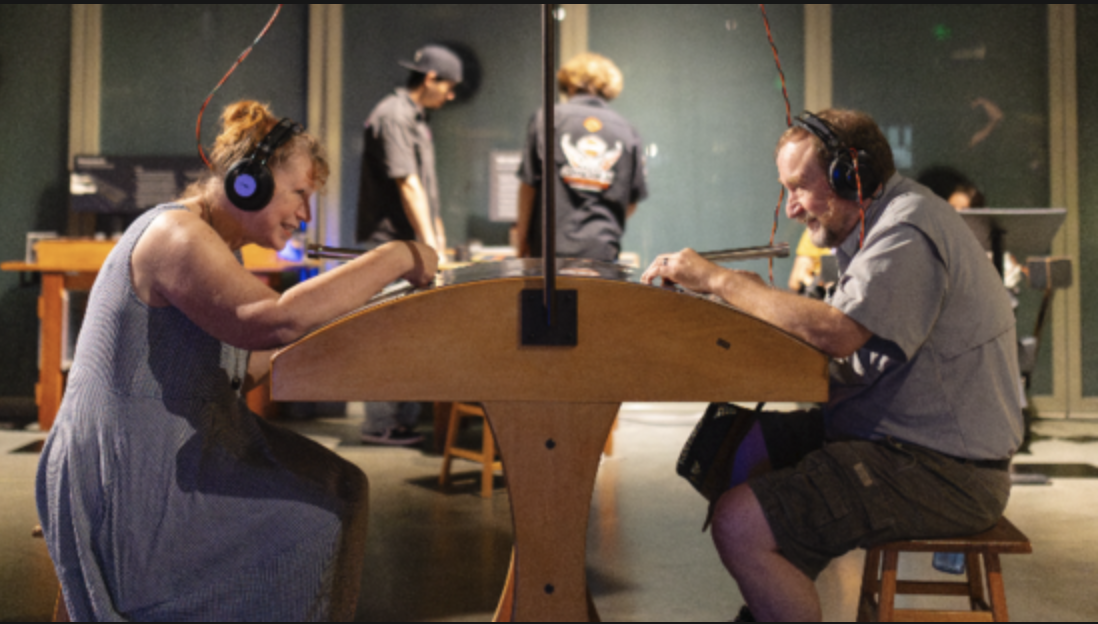
If children’s museums can slip into more adult-focused, play-focused programming, why can’t libraries? I kept thinking about how limited our view of libraries can be sometimes and how we fall into some good, but maybe too comfortable, ruts in our ideas and programming. Even with a foundational understanding and desire for ideals, being thrown into the real world of libraries meets us with the doom and gloom of reality that change is hard to implement, and sometimes it’s hard to even gauge what people want.
Before getting too idealistic about what play in the library can look like for adults (in my mind, I’m hosting Dance Dance Revolution competitions), I am reminded that change in libraries needs to be powerful and meaningful, and not just constant and definitely not just change for the sake of change (Casey & Savastinuk, 2007). Bringing myself back to earth, I ask, then, how librarians can implement the idea of play and imagination with adults.
Following the ideas of the Hyperlinked Library, the answer to this question is clear: as much as adult patrons deserve to play, so do the library professionals! We can be imaginative in the way we meet our users or in our programming ideas – bringing the library to our users (on the patio of the library, at the park, on a book bike, online, etc), truly, the library has no barriers (Stephens, 2019). So, who’s to say we can’t start a gossip network at the library like the fictional old lady? Above all, as librarians, we need to be conductors of joy for our community, being inviting, interested, and curious about our patrons, responding to their needs (DuVerynay, 2024).
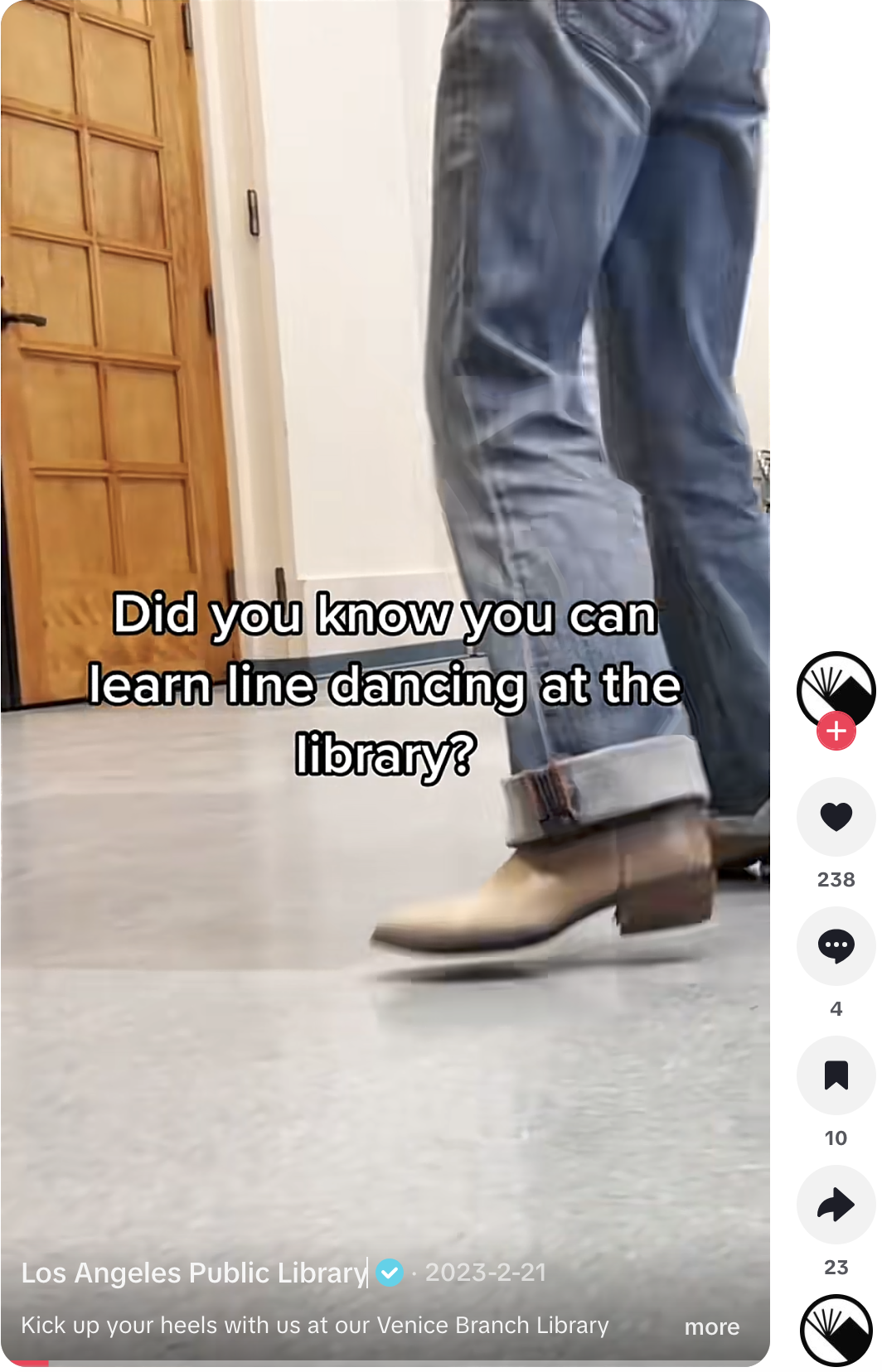
Play looks different in every community, so it’s important to be interested in what your community wants. In my professional life, I’ve seen a lot of movement from adult board game nights and mahjong afternoons. In some communities, play looks like line dancing, like at LA Public libraries! My goal for librarianship has always been to excite patrons and build community, and the framework of play is just one way to jostle adults into new ways of thinking. What is it that we’re seeking? A place to play? To explore? To exist? Whatever it is, there will always be room for it at the library.
References:
Casey, M. E., & Savastinuk, L. C. (2007). Library 2.0: A guide to participatory library service. Chapter 2: The essential Ingredients. Medford, N.J: Information Today.
DuVernay, J. (2024). There is joy for all: tips for joyous library programming. Programming Librarian. American Library Association.
Kelley, D. (2016). Play on: The importance of adult-only Play events at children’s museums. ProQuest Dissertations & Theses.
Lubbers, K., Cadwallader, J., Lin, Q., Clifford, C., & Frazier, L. D. (2023). Adult Play and Playfulness: A Qualitative Exploration of its Meanings and Importance. Journal of Play in Adulthood, 5(2). https://doi.org/10.5920/jpa.1258
Stephens, M. (2019). Wholehearted Librarianship: Finding Hope, Inspiration, and Balance. Chapter 2. American Library Association.
Stephens, M. (2025). “Historic” hyperlinked library model. https://sjsu-ischool.hosted.panopto.com/Panopto/Pages/Viewer.aspx?id=a0569381-4d66-4e0a-a7fa-aab3010a8f3e
Thomas, D., & Brown, J.S. (2011). A new culture of learning: Cultivating the imagination for a world of constant change. CreateSpace.