
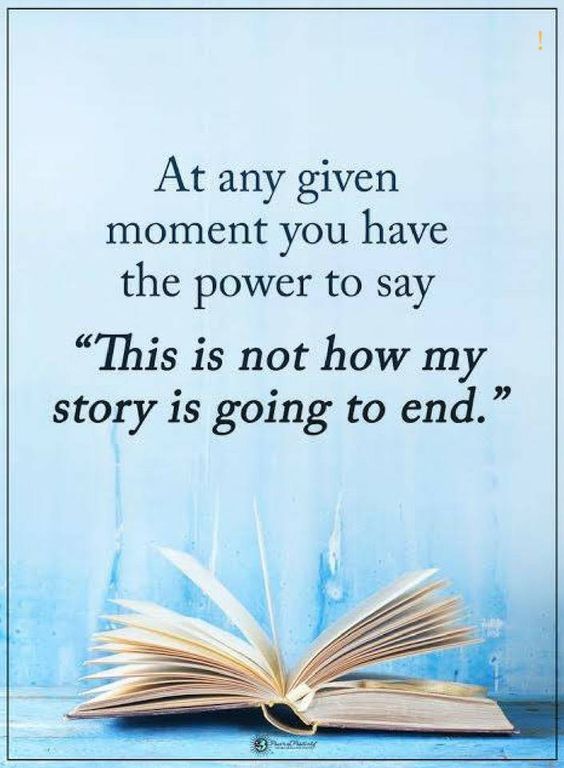
Every story has the potential to never truly have a complete ending. Even after the final words on a page, we can speculate about what happens next and how future events might continue to shape the story. I think this analogy is especially fitting for librarians because the profession continues to evolve as the world evolves. As Greenwalt (2013) explains, librarians are in it for “the long game” because they have successfully adapted through major changes, including the emergence of the web, while drawing on a long history of serving their communities. Librarians not only need to continue helping patrons learn about the world as it changes, but they must also continue learning themselves. In many ways, every new advancement becomes another chapter in the profession rather than the end of its story.
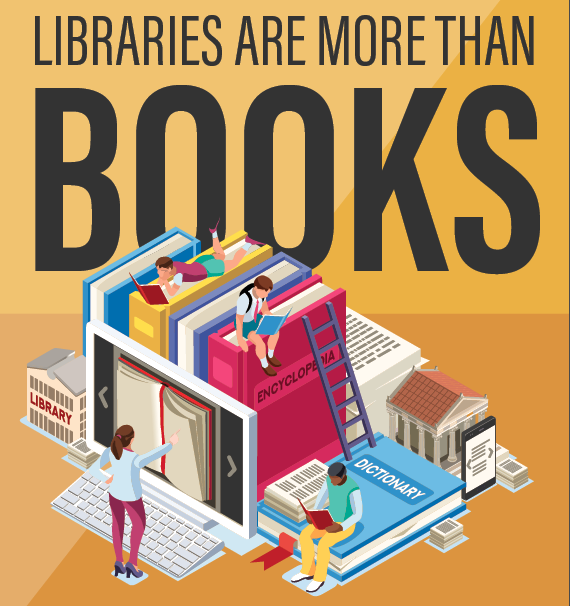
As Stephens (2014) discusses in his insights on infinite learning and the stance librarians should take, librarians are no longer viewed simply as people who tell patrons to be quiet and maintain large book collections. Instead, librarians are constantly working in a beta version, adapting and improving themselves, since there is always something to improve on. It is essential to understand that people’s ways of getting their information keep changing. According to Greenwalt (2013), in 2012, e-book sales were higher than book sales, which shows how fast people’s habits may change. Instead of considering it as a challenge, librarians should consider it as an opportunity to search for new ways of bringing information to people regardless of its format. In addition to reading, people also get their information from other sources. The Marsden Library Sensory Space demonstrates that some children, particularly those up to age 12, benefit from interactive and sensory experiences that support learning in ways traditional library spaces may not (“Marsden Library’s Sensory Space,” n.d.). To me, this shows that libraries are no longer centered only around books but around supporting many different learning styles within their communities.
In addition, shortening attention spans fueled by social media, along with artificial intelligence’s ability to summarize books and articles, continue to change how people consume information. The CBS News video Writer argues the age of reading has ended (CBS News, 2026) argues that fewer people are reading today than in previous generations. It even notes that gambling has become a more popular leisure activity than reading. Although this situation is worrying, I am confident that it does not mean that libraries have ceased to exist. I believe that it means exactly the opposite: librarians are needed more than ever to promote curiosity and information literacy.

If the task of a librarian was simply the cataloging of books, then the profession of the librarian would no longer exist. But just as customers learn throughout their life, so too do librarians need to be perpetual learners and apply this knowledge to serve their communities. Perpetual learning is what helps librarians adapt to new technologies, to new needs of their community and to new means of discovery of knowledge. Just as there is never an end to any tale, so too there is never an end to the task of a librarian. Each new technology, each new community need, each new generation of customers marks the start of a new chapter.
References
CBS News. (2026, July 9). Writer argues the age of reading has ended [Video]. YouTube. https://www.youtube.com/watch?v=QZDNd1dXiRA
Fisher, T. (n.d.). Libraries are more than just books [Image]. Roanoke Valley Family. https://roanoke.family/libraries-are-more-than-just-books/
GIVA. (n.d.). What is the meaning of the infinity symbol? [Image]. GIVA. https://www.giva.co/blogs/tales/what-is-the-meaning-of-the-infinity-symbol
Greenwalt, R. T. (2013). Embracing the long game. Public Libraries Online. https://publiclibrariesonline.org/2013/02/embracing/
LoveThisPic. (n.d.). This is not how my story is going to end [Image]. LoveThisPic. https://www.lovethispic.com/image/318969/this-is-not-how-my-story-is-going-to-end
Marsden Library’s sensory space. (n.d.). State Library of Queensland. https://plconnect.slq.qld.gov.au/blog/check-out-marsden-librarys-sensory-space
Stephens, M. (2014). YLibrary: Infinite learning. https://www.dropbox.com/scl/fi/4zt1yliwb2ffzr8euix2p/YLibraryInfiniteLearning.pdf?rlkey=m0v6lkd43ufilkp5aktawhlpr&e=1&dl=0
Great read, Aniella! I love the sentiment that our story never ends. In the world of librarianship, it is so true. I was reminiscing today with a friend about visiting our local libraries as kids (this was back in the 80s/90s) and, while books were king and there was fun programming running year round, all of those “extras” we see in libraries today simply didn’t exist. I, too, believe that libraries will never end. There is always more that we can do for our community beyond lending books. I’m excited to see where we go from here. Thank you so much for sharing!