
Change is unavoidable, and for libraries, the evidence is the evolution of technology and the idea of Library 2.0. Casey and Savastinuk (2007) introduce the concept of a continuously evolving library that adapts alongside the community in the text Library 2.0: A Guide to Participatory Library Service. Technology plays a major part in this shift, serving as one of the best examples of libraries adapting to the present. In Denning’s (2015) Forbes article “Do We Need Libraries?” he explains that there has been a shift from a seller’s market to a buyer’s market, with more information than ever available online to help users make informed decisions. He ultimately raises the question of whether libraries have a future at all, emphasizing the pressure created by rapid digital change.
Despite the introduction of the web, libraries continue to exist because information access alone is not the full picture. It has remained necessary for individuals to depend on information professionals in using technological tools. This brings into focus the importance of Library 2.0 as an approach that considers continuous adaptation based on changing user needs. It entails more than simply embracing technological developments; rather, it involves constant changes to services based on user behavior. Librarians must examine the idea of why procedures are done a certain way (within reason) and instead ask why not do it differently or how they can improve the status quo. The best example for this is extended evening hours, which was given as one of the examples in the first chapter of The Heart of Librarianship: Attentative, Positive and Purposeful Change (Stephens, 2016). The biggest takeaway from the first chapter of Stephens’ (2016) book is that librarians must lead with empathy and consider how they can serve as many patrons as possible. By changing the thought process and encouraging new strategies for serving patrons, libraries have an opportunity not only to serve current users, but also to expand and introduce new users to the library.
One strategy I would say goes with this, as I am familiar with working in streaming in the entertainment industry and maintaining large content catalogs, is the long tail concept (Nielsen Norman Group, 2021). This works similarly to catalog management for books in libraries, but the idea is you want the catalogue to be as large as you are able to support. Titles that may not initially be in demand can resurface and allow engagement to be maintained and grow beyond only the most popular titles (Nielsen Norman Group, 2021). I think this concept can also be implemented in library services overall by considering feasible ways to provide more access, such as the example of a 24/7 library. While it might not serve every current patron, it could serve some outlier users or introduce new patrons who might take advantage of these expanded services and ultimately increase engagement with the library.

(Nielsen Norman Group, 2021)
Continuing on this idea, while collections should still be supported and maintained, libraries may need to shift toward a user-focused model rather than a collection-focused model. Technology has shown us that there are various ways to provide services that help libraries adapt. One example of this is the use of Libby, Overdrive and Hoopla, among other platforms, to provide digital access to audiobooks, music, movies, and of course electronic books (Bradshaw, 2026). I personally regularly use Libby to access audiobooks and ebooks when they are available. As a busy patron, I might struggle to make it to the physical library location, and the digital access Libby provides brings the library to me. I wonder whether libraries could take a more service-first approach, where collections are built to support programming and learning initiatives. My interest lies in whether a tighter connection between programs and collections would provide a more unified experience for users. With resources available in different forms, libraries can reach their audience in ways that are convenient for everyone involved, taking into account various time and personal factors.
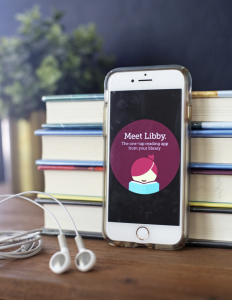
(Bradshaw, 2026)
While we realistically know libraries cannot carry all materials or provide every desired service, by continuing to expand upon current strategies and service models, libraries can be more successful in implementing Library 2.0 and avoid the fate that companies such as Blockbuster and Borders experienced. Reading about Library 2.0 made me wonder how far adaptation should go. At what point does changing services become too costly or unsustainable? How can libraries balance traditional services with new community expectations while still remaining true to their mission? These are questions every hopeful librarian should consider to successfully integrate and consider the Library 2.0.
References
Bradshaw, J. (2026, February 10). Libby 101: Everything you need to know about the Libby library app. Everyday Reading. https://everyday-reading.com/libby-library-app/
Casey, M. E., & Savastinuk, L. C. (2007). Library 2.0: A guide to participatory library service. Information Today.
Denning, S. (2015, April 28). Do we need libraries? Forbes. https://www.forbes.com/sites/stevedenning/2015/04/28/do-we-need-libraries/
Nielsen Norman Group. (2021). The long tail. https://www.nngroup.com/articles/long-tail/
Nielsen Norman Group. (2021). The long tail distribution [Illustration]. In The long tail. https://www.nngroup.com/articles/long-tail/
Stephens, M. (2016). The heart of librarianship: Attentive, positive, and purposeful change. ALA Editions.
Libby is a great example of how technology can help libraries become more responsive to user needs! I purchase for my library’s Libby collection through Overdrive Marketplace, and that platform has many great features to show library staff what patrons actually want. I especially love the tag options that allow staff to see what patrons are marking as wish list items. I work at a very small academic library, and I usually purchase anything that someone has tagged. I will just note that I don’t think Libby is always great about having long-tail items available for purchase. I think traditional services like interlibrary loan are still really important for obtaining these obscure long-tail items. Technology innovations can help in these areas too! Things like controlled digital lending and OCR capabilities all contribute to faster ILL turn around times and increased accessibility for users. In this way, I really like your point about adapting traditional services to meet new community expectations. Thanks for sharing!