In 1 of the 4 spaces of the hyperlinked library is the performative space. As Skot-Hansen mentions, the performative space allows library users to explore their creativity through the process of playing, recording, and mixing music as well as recording or editing videos (2017). This conceptualization of library spaces reminded me of San Francisco Public Library’s The Mix.
Within The Mix, teens ages 12-18 can create their own podcasts, music, or videos. The two available media studios in The Mix are equipped with multiple Digital Audio Workstations and a variety of other music-making tools. View the list of equipment and software available here.
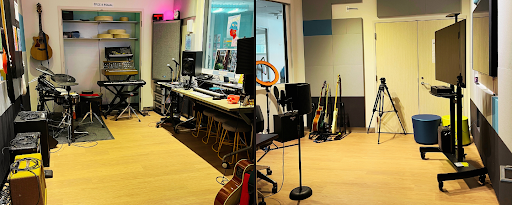
The 2 media studios at The Mix
Similarly, the central Memphis Public Library branch has a space called CLOUD901 where patrons can make some cool beats, films, and robots. CLOUD901 has been the birthplace of various award-winning films created by local teens (Grant, 2021). It is even staffed by a professional audio engineer! This got me thinking about how hyperlinked libraries have recruited and hired professional staff outside of the library world. For instance, San Francisco Public Library became the nation’s first library system to hire a full-time social worker (Shafer, 2015). Trained and able to provide psychiatric help, she can adequately address the needs of the many unhoused community members that seek shelter within library facilities. These examples show how today’s libraries are redefining what it means to serve their communities. By hiring professionals with expertise in fields such as media production, engineering, and social work, libraries are clearly evolving beyond book storage facilities. They are becoming community-centered spaces that foster creativity, learning, and all-inclusive support for patrons with diverse needs.
I’m also aware that public libraries often face limited funding so not all library systems can do what Memphis Public Library and SF Public Library did; however, I think this provides a great opportunity for libraries to be community partners. Because oftentimes, libraries cannot meet every community need alone, partnering with non-profits, local businesses, health facilities, museums, parks, etc. can strengthen the variety of support libraries can provide. A great example of this is the Magic Tooth Bus providing free dental screenings at multiple SFPL branches (Hernandez, 2024).
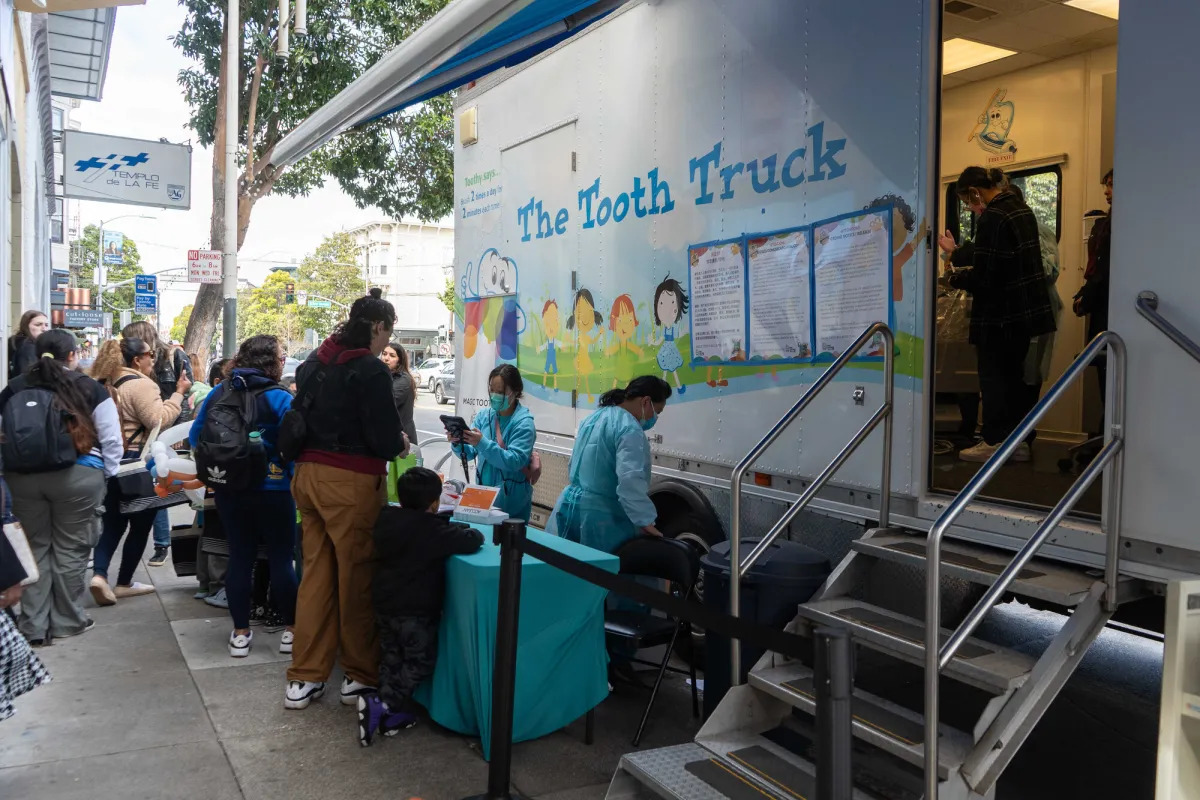
The Magic Tooth Bus at SFPL’s Mission branch
References
Skot-Hansen, D. (2017). Library Development: From Collection to Connection. https://287.hyperlib.sjsu.edu/wp-content/uploads/2025/02/4-Spaces-Model-from-Univ-Copoenhagen.pdf
San Francisco Public Library. (n.d.). Media production @ The Mix. https://sfpl.org/teens/the-mix/media-production
Grant, R. (2021, October 27). How Memphis created the nation’s most innovative public library. Smithsonian Magazine. https://www.smithsonianmag.com/innovation/memphis-created-nations-innovative-public-library-180978844/?fbclid=IwAR1KhgGc_cXHfCduhqGtJ1Wi5Y2jRho1yW1Q62QjCNC5o2Qs9eLeGnzqqIM
Shafer, S. (2014, April 11). Nation’s first library social worker helps give hope to the homeless. KQED. https://www.kqed.org/news/10341088/nations-first-library-social-worker-helps-give-hope-to-the-homeless
Hernandez, D. E. (2024, May 29). This mobile pop-up gives free dental screenings, education in S.F. El Tecolote. https://eltecolote.org/content/en/magic-tooth-bus-sf/
1 Comment
Rachel Leverenz · July 5, 2026 at 5:33 pm
Hi Tina – Great post! I loved your point that specialized non-traditional staff and programs can go a long way toward meeting community needs. Thank you for sharing the Magic Tooth Bus article. It is a great example of community partnerships. I work at a technical college that has a dental hygiene program, and this article has given me some great ideas for possible collaborations!