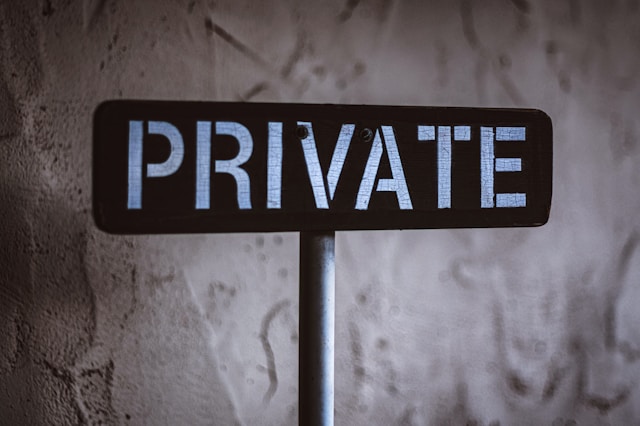
Reflection Blog: Hyperlinked Environments and Privacy
Technology has become more ingrained in our day-to-day lives. As Internet of Things (IoT) devices, online services, social media, and artificial intelligence become increasingly integrated into everyday life, it has become easier for nebulous third-party companies to collect information about our behaviors. The current shift in technology, headed by advances in artificial intelligence and big data, brings to the forefront of my mind just how important privacy boundaries can be. So, I explored the “Privacy and the Hyperlinked Library” materials for the latest Choose Your Own Adventure module.
One thing that stood out to me throughout the Pew Research Center’s readings is the discrepancy between how many people are concerned about their privacy rights and how many read and understand privacy policies and laws. Nearly 80% of American adults are at least somewhat concerned about how companies are collecting and using their data, yet approximately a third report that they have never read a privacy policy before agreeing to it (Auxier et al., 2019). Further, only about two-thirds of those who do read privacy policies typically understand at least some of the language. I suspect a lot of this is due to the type of language used in privacy policies. “Legalese” is not an accessible writing style.
I am admittedly not one of the Americans who always reads privacy policies, but I do on occasion. One of the most accessible ones out there is from Discord. Though it is lengthy, the language is simple. Some basic legal concepts are explained. Also, there are plenty of links throughout the document to allow readers to easily reference different parts of the policy and access external sites explaining more of the complex concepts. There is even a nice little summary with bullet points at the start of the document.
When a library is constructing a privacy policy for its organization and websites, staff should consider the community the library serves. Will their patrons understand long, convoluted sentences and legal terms? Or should the policy be kept short, sweet, and simple? What writing tools (such as summaries, bullet points, links, etc.) can be used to make the document understandable?
Another important consideration libraries must make is how third-party vendors and resource suppliers are handling patron information. Libraries must make it clear to patrons what information is being shared and how it is used, especially when integrating new technology. Corrado (2019) emphasized the importance of transparency when libraries use different platforms and resources. Doing so builds trust with the community and allows patrons to make informed choices. Transparency allows patrons to make informed choices about the services they use and reinforces community trust. This aspect of libraries is what sets this style of organization apart from commercial competitors.
In light of recent lawsuits against vendors such as Hoopla (Fitzgerald, 2024) and growing public concern about data privacy, it is more important than ever for libraries to be transparent about how patron information is collected, shared, and protected. Protecting patron privacy is not just about complying with laws; it is ingrained in library ethics. As the ALA (2019) Bill of Rights states:
All people, regardless of origin, age, background, or views, possess a right to privacy and confidentiality in their library use. Libraries should advocate for, educate about, and protect people’s privacy, safeguarding all library use data, including personally identifiable information.
It has grown increasingly important for libraries to protect and advocate for patron privacy rights as our libraries become more hyperlinked with technology, community partners, and unique service offerings.
References
American Library Association. (2019, January 29). Library bill of rights. https://www.ala.org/advocacy/intfreedom/librarybill
Auxier, B., Rainie, L., Anderson, M., Perrin, A., Kumar, M., & Turner, R. (2019, November 15). Americans and privacy: Concerned, confused and feeling lack of control over their personal information. Pew Research Center. https://www.pewresearch.org/internet/2019/11/15/americans-and-privacy-concerned-confused-and-feeling-lack-of-control-over-their-personal-information/
Corrado, E. M. (2020). Libraries and protecting patron privacy. Technical Services Quarterly, 37(1), 44-54. https://doi.org/10.1080/07317131.2019.1691761
Fitzgerald, J. (2024, December 10). Library service’s use of Facebook tracking pixel violates California law, suit says. Westlaw Today. https://today.westlaw.com/Document/I345768a6b71311efb5eab7c3554138a0/View/FullText.html?transitionType=Default&contextData=(sc.Default)&firstPage=true

You May Also Like

One Comment
Michael Stephens
@inasamuel I am so glad you focused on this for your reflection blog. It was a good reminder to think about privacy and it’s importance to library users. Now that I am on a library board. It is even more compelling now.