Introduction: One area that greatly resonated within the hyperlinked library realm thus far is the concept of libraries employing participatory service to foster connectedness, value, and trust with their users. According to Dr. Stephens (2012) there are three parts to this idea; engaging users to add library services, offering the chance for users to plan with libraries, and offering a mechanism for evaluation. Allowing the users to be more involved with their libraries, gives them a greater sense of ownership within their own communities. In addition, this model further instills the idea that libraries and information professionals are facilitators in promoting lifelong learning for themselves and their patrons. As libraries shift well beyond mere book collections, and are being transformed further into informational community hubs and maker spaces, allowing this kind of culture for participation and creation is vastly intriguing and appealing to the community. At the end of the day, the utmost goal of the library is to best serve and connect with its users, along with meeting their dynamic informational wants and needs.
What better way for this to occur other than having the users be involved with this integral process throughout? Their feedback is invaluable and has the capacity to better mold ideal everyday practices, programming, and services that the library is able to offer. An excellent remark I appreciated from his presentation; “Anytime we talk about technology, we’re not really talking about technology, we’re talking about how we can connect to our users, how we can connect to our users on a level of the human heart” (Stephens, 2012). How can we take this idea to the next level? What are deeper, more meaningful ways we can connect heart to heart through our libraries?
Dr. Stephens further asserts the importance of engagement from his Heart of Librarianship book in stating; “Building collections and seeking ways to engage the public and promote curiosity challenge us all…The era of participatory culture demands that cultural and information professionals play an active, visible role in our communities” (2016). Esteemed fellow librarian Michael Casey also succinctly suggests that “the importance of this participation cannot be overstated” (2011). There are a plethora of techniques to engage the public through this model yet I shall share a handful of meaningful highlights below.
*Note feel free to check out Dr. Stephen’s iconic lecture here. Fun fact: this lecture greatly inspired me to take this course.
ACCESS ACCESS (be all about it): One major requirement for user engagement is that the library needs to be chock full of a variety of desirable, innovative, interesting, and engaging materials and resources. This ranges from cutting edge useful technologies, to diverse, inclusive digital and physical collections, unique programming, and if possible incorporating maker spaces or learning commons (more on that below) that are appealing and valuable to community members. Innovative solutions capitalizing on this motif showcased in the module are tremendous examples of libraries providing robust experiences and/or access to a collection of assorted useful things.
For example, some of the neat free things the San Francisco Library can provide includes; seasonal exhibits, free passes to local museums and other amazing places (such as gardens, galleries, and even swimming pools), vehicle passes to CA state parks, access to vinyl, and even family and genealogy research (Ferrell, 2022). The popular trend of libraries providing access to a repertoire of an incredible yet versatile “collection of things” continues to grow. Toy and game libraries are becoming more widely available across the country (Free, 2020) , along with libraries offering access to things that range from “popcorn makers to ukuleles” (Rivenberg, 2022). I look forward to witnessing further where this trend will continue to evolve and the imaginative ideas and solutions community members and their libraries develop henceforth. Here’s another rad article highlighting 200 random things that aren’t books that users can check out for free from the Beaverton City Library in Oregon (Glum, 2019).
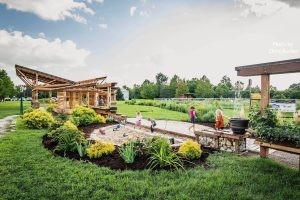
(Community gardens from Muncie Public Library in Indiana)
Innovative Maker Spaces and Learning Commons
It is remarkable to witness the numerous institutions that are creatively embracing this movement when it comes to converting libraries into maker spaces and learning commons. Observing the creativity, innovation, and participation from the communities and libraries in building these beloved yet multi functional spaces has been awe inspiring to say the very least. It is genuinely amazing to see what some of these organizations have done by listening to their patrons in providing appealing spaces, tools, and events for them to connect, learn, and enjoy. Having this adaptability and capability further allows libraries to possess tremendous value amongst the competitive internet sphere, rampant cafes, and bustling bookspaces within our modern society. These 3rd space community centers are inviting informational hubs that are catalysts for LEARNING for our users. I loved the examples provided within our modules. It was incredible to see San Francisco Public Library create “The Mix” program (Obrien, 2019) and spaces specifically designed for their teen populations along with Dokk1, the main library in Aarhus, Denmark. This massive library is a multifunctional learning commons and cultural hub, featuring maker spaces, inventive workshops and exciting local events, engaging community areas, and much more. They even have a cafe, various spaces for entertainers, and engaging playgrounds for all to enjoy.
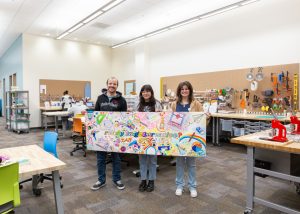
(The Makery, makerspace in Cal State San Marcos Library)
In researching makespaces, I discovered the Maker[Space] Ship which was created by the San Jose Public Library. This was an initiative developed and executed by our very own San Jose State University MLIS grad Erin Berman. Check out the brief video below, it is a splendid mobile makerspace with a variety of interesting programs, promoting access to patrons beyond library walls.
Continuous Patron Feedback
Inviting and involving user feedback in terms of planning, developing, and executing ideas or major decisions required for libraries is absolutely critical as well. As technologies and our society continues to evolve, it is imperative that information organizations continuously embark on gathering feedback from their users. This is an ONGOING, DYNAMIC, and ITERATIVE process. With our society changing, our needs and wants from our users will simultaneously change. We need to actively listen along the way.
The Los Angeles Public Library did a great job in surveying the public in asking specifically what they wanted from their organization. They inquire to their users; “We’ve been inspired by the Maker Movement so we’re asking ourselves if libraries should have makerspaces, loan out tools or even become a seed bank? Should there be an area to create your own media– like YouTube videos, book trailers, music, and more? And do people want workshops on how to fix bikes, learn Arduino or Scratch, or design video games? We also need to know whether people still want quiet areas, study rooms, meeting rooms, multipurpose rooms and performance spaces. How should the services and information in the library be organized? Would you charge late fines or offer a fine free amnesty period? Do people still want cafes at the library? There are so many exciting possibilities—we are full of ideas—but we need your help honing our focus. We can’t design the library of the future without your help—no city can. Answer our brief two minute survey and tell us your vision” (Mack, 2013). What an explicit yet inspiring example to invite direct feedback from their users, in allowing them to have power to mold the future capabilities of their own libraries.
Further Reflections
This major theme stood out to me because I feel the prospective communities that libraries serve are the bread and butter or heart and soul in all that we do. Without our patrons and communities, libraries would cease to exist. Ultimately it is our main purpose, in doing all that we can to empower, support, and aid our communities in any means possible, this is where our creativity, resourcefulness, and innovation truly shines. This pivotal idea permeates through the entire mission and values that libraries embody and execute daily within their localities. Without this mutualistic partnership, patrons feel undervalued and are less inclined to visit their library. It is through these wondrous opportunities that we are able to harness learning, human connection, curiosity, empathy, enjoyment, entertainment, kindness and much more. As librarians we are ideally beacons of both joy and knowledge. We are hopefully inspirational role models in showcasing the importance of lifelong learning. It is through these interactions, however they come to fruition that we are able to learn and inspire one another. I connect deeply with these ideals with my past, present, and future endeavors for education and librarianship. Being well versed in customer service and education has allowed me to work with and cater to a diverse range of learning styles, needs, and walks of life. Stressing this relevant experience assisted me in landing my current position at a high school library. I shall continue to discover from those that I work with and serve, doing my absolute best in inviting their stories, feedback, and participation to ensure we provide the most meaningful library experience possible when interfacing with one another.
References:
Casey, M. (2011, October 20). Revisiting participatory service in trying times – a TTW guest post by Michael Casey. Tame the Web. https://tametheweb.com/2011/10/20/revisiting-participatory-service-in-trying-times-a-ttw-guest-post-by-michael-casey/
Free, C. (2020, January 22). This growing trend lets kids check out games and dolls from a toy library. The Washington Post. https://www.washingtonpost.com/lifestyle/2020/01/22/this-growing-trend-lets-kids-check-out-games-dolls-toy-library/
Ferrell, J. (2022, September 15). 13 Awesome free things you can do with an SF public library card. Secret San Francisco. https://secretsanfrancisco.com/sf-public-library-card/
Glum, J. (2019, May 16). 200 Random things libraries will let you check out for free — From instant pots to skulls. Money. https://money.com/library-of-things-check-out-free/
Mack, C. (2013, February 17). Crowdsourced design: Why Los Angeles is asking the public to create the library of the future. Good.Is. https://www.good.is/crowdsourced-design-why-los-angeles-is-asking-the-public-to-create-the-library-of-the-future/
O’Brien, C. (2019, June 24). How San Francisco’s public libraries are embracing their changing role. Shareable. https://www.shareable.net/how-san-francisco-public-libraries-are-embracing-their-changing-role/
Rivenburg, R. (2022, August 3). What can a library card get you? Try a popcorn maker or ukulele. The Christian Science Monitor. https://www.csmonitor.com/Arts-Culture/Books/2022/0803/What-can-a-library-card-get-you-Try-a-popcorn-maker-or-ukulele
San Jose Public Library. (2016, December 20). Maker[space]ship launch! [Video]. YouTube. https://www.youtube.com/watch?v=35eUew7HvVE
Schneider, K. (2006, June 3). The user is not broken: A meme masquerading as a manifesto. Free Range Librarian. https://freerangelibrarian.com/2006/06/03/the-user-is-not-broken-a-meme-masquerading-as-a-manifesto/
SJSU School of Information. (2012, April 17). Michael Stephens: Hyperlinked libraries. [Video]. YouTube. https://www.youtube.com/watch?v=CTmZtKGHcKk&t=661s
Stephens, M. (2016). Heart of librarianship: Attentive, positive, purposeful change. American Library Association.