Hyperlinked Communities: Altadena Public Library and the Eaton Fire

My friends bought a house in Altadena in the summer of 2013 and knowing I was thinking about moving out of my parent’s house, they offered me a room to rent. The house was a Janes Cottage house built in 1925 right on Altadena Drive. I moved in and within one month, I went to the Altadena Public Library on Mariposa Street to get a library card. I visited the library to check out books, but I did not attend any events. I was working full time and did not have that much time for anything other than reading and spending time with the three friends I lived with.  

In the fall of 2019, I decided to quit my job and return to school. I had to finish five classes at Pasadena City College before I could transfer to a university. I began my classes in spring 2020 and was on campus four days per week until March when my school informed everyone that we would be moving classes online for about three weeks. I did not return to campus and eventually enrolled at Cal State LA for fall 2020. 

The Altadena Public Library sent emails letting the Altadena community that they were there to provide help, and they made a lot of things easier for their community. After the pandemic restrictions started to be lifted, I had to make the unfortunate decision to move back to my parent’s house at the end of 2021. I had one more semester left at Cal State LA and had to commute, but eventually, I graduated in May 2022. I often visited my friends, but everyone got busy and two and a half years went by quickly. 

I received a text early in the morning of January 8, 2025, telling me to evacuate immediately. When I lived in Altadena, I signed up for text alerts because periodically there were fires in the Angeles National Forest, and it was close to the house on Altadena Drive. I sent a group text to my friends to ask what was happening and if they were okay. They said there was a fire nearby and they were leaving. I sent a text telling them they will probably be able to return soon. I said this because all the other times there were fires nearby, the fires were always put out with no risk to life or structures. This did not happen this time. 

Their house was completely destroyed, and my three friends were devastated. They left every possession in their house except for important documents.  

After hours of watching news footage about the devastation the entire Altadena community suffered and thinking about all the good times we had there, and the time when it was just the four of us and a dog named Drake shuttered away from the rest of the world during a worldwide pandemic, I cried for days. My friends and Drake were alive of course, which was the most important thing, but we would never again be in that house together.  

On January 9, 2025, I received an email from the Altadena Public Library informing that all three branches had survived the fire and said there had been reports that they were destroyed. They wanted to let the community know that those reports were false.
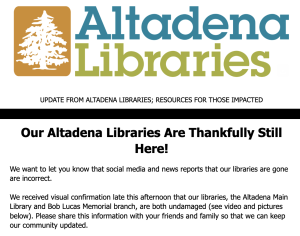
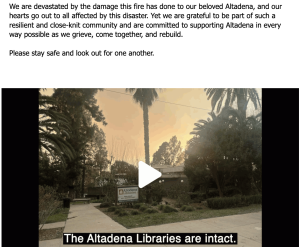
They immediately started sending emails with information about resources for the community that included information about all the places that were giving away clothing, food, and other needed supplies, and they posted information about meetings regarding home insurance, how to receive emergency funds, and information about rebuilding. When the library reopened two months later, they had countless events for children and teens and other events regarding mental health and how to go about grief, periodically holding guided meditations and healing circles. In the summer, they organized a day camp for children and teens so that their parents and guardians could take care of whatever they needed to. 

When I think about libraries and the ways they help their communities, I think about the Altadena Public Library and their responses to a worldwide pandemic and a devasting wildfire that wiped out most of their community. I feel that they reached their community via email when the libraries were closed, when their community was in dire need of information. They used this technology to offer what they believed was needed, and as they found out what other things their community needed, they added events and information to help the community members thrive and heal. 
Assignment X: From Consumers to Creators – How Participatory Service Redefines the Library

When I first read about the concept of participatory service, I thought about events at public libraries such as storytimes for children, crafting or gaming hours for teens and adults, or classes for health or for anyone wanting to learn English. Rather than public libraries simply collecting and distributing information and having a variety of events, participatory service at libraries acts as a platform for collaboration, peer-to-peer learning, and shared creation.

“We have wonderful third spaces that offer our users a place where they can think and dream and experience information. Is your library a place where people can dream?” (Schneider, 2006).

Academic Libraries

North Carolina State University 

“The North Carolina State University African American Cultural Center (AACC) is home to over 6,000 books centering African American and Afro-diasporic experiences, culture, society and history” (Schnittker, 2026). During National Library Week, this library held interactive programs that was of the theme of, “Libraries as Spaces of Opportunity.” The librarian and librarian coordinator, Wynter Douglas, stated that they had many “events that showcased ways libraries are spaces of opportunity” (Schnittker, 2026). Douglas stated that libraries can provide ways for students to find out about their heritage, career possibilities, and what their future can be like. Since AACC is part of the NC State University, it is accessible to the community in addition to being available to students, staff, and faculty.

Reed College

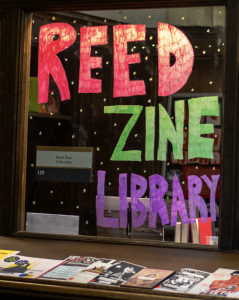
At Reed College in Portland, Oregon, there is a permanent collection of zines that Reed students, staff, and faculty can borrow. They also have zine making kits that can be checked out for groups or individuals. The website has a Zine Library Open House listed on September 24, 2026, where they will have zine-themed snacks, a zine-making area, button making, and a show and tell of rare zines from their archives.

The zine library website page indicates that anyone who is not a student, or a staff or faculty member can go to the reference room where the zines are located and browse through the titles. Not only does this academic library make zines available to read and create for students, staff, and faculty, but they have also made them available for anyone in the community who is in the vicinity of the college.

Public Libraries

New York

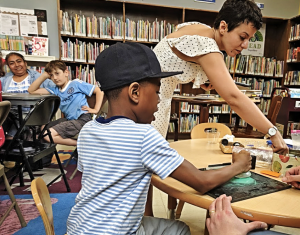
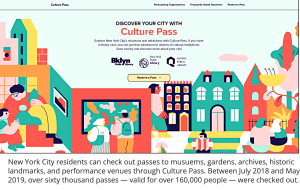
In the chapter titled “Communities of Practice” in the section, “Age of Participation” in Heart of Librarianship, it tells of a museum director having only six seconds to catch the attention of visitors. The author asks, “Could adding a social, participatory component to museum exhibitions maximize this brief window of opportunity?” (Stephens, 2016, p. 79). In the article, “Leveraging Libraries for Cultural Engagement: A Model from New York,” a group of patrons at the Brooklyn Public Library are participating in an event where an educator from The Morgan Library and Museum is leading them in a hands-on event about different ways that colors are produced and created (Giles, 2019). For anyone who does not want to leave their neighborhood, this is an excellent example of programming through the public library systems of New York called Culture Pass. Anyone with a library card from the Brooklyn Public Library, the Queens Public Library, and the New York Public Library, can reserve a daily pass that will allow them to visit over 100 cultural centers across the areas these library systems serve in New York (https://www.culturepass.nyc/). In this case, an educator from the Morgan Library and Museum went to the Brooklyn Public Library. Since museums and cultural centers are in partnership with the library systems mentioned, they can have programming and events such as this one.

The theme of participatory service stands out to me because these types of programming can affect what a person becomes interested in. A lot of people think libraries are only for books and are quiet places to do research and to study. While books, research, and studying are part of libraries, they can also be places where if a person joins an event and is able to participate in something, this might be the canon event in their lives. They may never have known of the topic before, but it can cause them to want to learn more about the topic of the event.

One initial question I had to learning about participatory service is how could this be created in small towns? New York City is a major city with five boroughs that are highly populated. There are many places there that could provide countless cultural experiences. In smaller cities, there might only be one museum, if any. Thinking about smaller cities, on how to build learning and community, I would think that the idea of partnerships with museums and other cultural centers would be important. The cultural centers in a larger city would have to be willing to be in partnership with public libraries in smaller cities, which would mean that they would have to send someone who could lead an event at that library. This idea is something I could research more in depth if I ever found myself working at a library in a smaller city rather than libraries in major cities like Los Angeles, New York, and Chicago.

Works Cited

Giles, D. (2019). “Leveraging Libraries for Cultural Engagement: A Model from New York.” https://www.giarts.org/leveraging-libraries-cultural-engagement

Reed College. (n.d.) “Zine Library.” https://library.reed.edu/zines/

Schneider, K.G. (2006). “The User Is Not Broken: A Meme Masquerading as a Manifesto.” https://freerangelibrarian.com/2006/06/03/the-user-is-not-broken-a-meme-masquerading-as-a-manifesto/

Schnittker, A. (2026). “African American Cultural Center Promotes Libraries as Spaces of Opportunity.” https://news.dasa.ncsu.edu/african-american-cultural-center-promotes-libraries-as-spaces-of-opportunity/

Stephens, M. (2016). “Age of Participation” in Heart of Librarianship.

Stop me if you think that you’ve heard this one before

Hello! My name is Priscilla and I am in my fourth year in the MLIS program at SJSU. I am interested in working in an academic library. I seem to only take one or two classes every semester. I have a goal of completing this program by the end of Spring 2027.

I currently do not have a job. I have been attempting to find one, but nothing has been working (hahaha). I have an AA degree in Library Technology, but this degree does not seem to be helping.

Well, I am looking forward to this Fall 2026 semester. The classes I am taking are INFO 254, INFO 287, and SPAN 132. I was being ambitious when I enrolled in three classes.

Here’s to the new semester!