
Inspiration Report
Shirek, Colin INFO 287 Inspiration Report Slidedeck
Shirek, Colin INFO 287 Inspiration Report
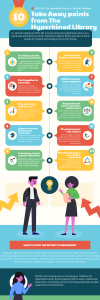
I have included two artifacts for this assignment. One is a standard academically formatted paper on the philosophy of Hygge and how it would help the functionality of the contemporary library through the use of Hygge Learning Commons. The second artifact is a somewhat whimsical take on an IKEA catalogue as an informational slide deck for the implementation of Philosophical Hygge in the contemporary library.
Beyond the Narrative: Evaluating Allegory, Propaganda, and Connection in the Hyperlinked Library
Course: INFO 287 / LIS Graduate Seminar: The Hyperlinked Library
Instructor: Dr. Michael Stephens
Stories do not merely reflect our world—they construct it. In the context of The Hyperlinked Library, story acts as a vital technological and social infrastructure, connecting human beings across physical, digital, and ideological boundaries (Stephens, 2016, 2020). A hyperlinked library is open, participatory, and grounded in human voice; it thrives when communication is transparent and conversational rather than authoritarian or insular (Stephens, 2019; Weinberger, 1999).
However, not all narratives serve the same function within information communities. As information professionals navigating decentralized digital environments, we must critically evaluate the structural mechanics and psychological intents of different storytelling modes.
Below is an analysis comparing and contrasting three primary narrative styles—Allegory, Propaganda, and Connection—and examining how each shapes human engagement, information literacy, and community building.
1. Allegory: The Symbolic Lens of Meaning-Making
Allegory is a narrative mode in which character, setting, and plot function as extended metaphors to convey abstract philosophical, moral, or political truths. Rather than stating a premise directly, an allegorical story creates a secondary layer of symbolic meaning that requires active decoding from the reader (Nusbaum, 2011).
Key Characteristics
-
Structural Mechanics: Uses symbolic archetypes, figurative representation, and dual-layered meaning (literal vs. symbolic).
-
Participant Agency: High. The reader must exercise critical thinking and interpretative agency to bridge the surface story with its underlying thesis.
-
Emotional Vector: Introspective and intellectual; encourages self-reflection and moral reasoning.
In a library environment, allegorical narratives—from Aesop’s fables to George Orwell’s Animal Farm—serve as powerful tools for critical inquiry and ethics education. In hyperlinked learning spaces, allegorical stories encourage patrons to engage in dialogic reflection, asking, “What does this representation reveal about our real-world systems?”
2. Propaganda: The Instrumentalized Narrative of Control
While allegory invites interpretation, propaganda demands compliance. Propaganda is a deliberate, unidirectional narrative engineered to manipulate emotions, attitudes, and behaviors to serve the strategic agenda of an institution or ideology (Jowett & O’Donnell, 2018). In digital ecosystems, propaganda often manifests as algorithmically amplified misinformation, hyper-partisan echo chambers, or curated corporate spin designed to foreclose debate (Ellul, 1965).
Key Characteristics
-
Structural Mechanics: Relies on selective framing, emotional triggers (fear, anger, pride), binary worldviews (“us vs. them”), and the suppression of nuance.
-
Participant Agency: Suppressed or passive. Propaganda seeks to reduce critical distance, replacing independent judgment with instinctual, collective alignment.
-
Emotional Vector: High-arousal reactivity; designed to prompt immediate, uncritical action or belief adoption.
For the hyperlinked librarian, propaganda represents the antithesis of open, transparent communication (Stephens, 2020). Recognizing propaganda mechanics is essential for information literacy instruction, enabling librarians to help communities deconstruct weaponized narratives and evaluate sources through an empathetic, critical lens.
3. Connection: The Relational Thread of Human Empathy
At the heart of Stephens’s (2016, 2019) vision for wholehearted librarianship lies the narrative of Connection. A story of connection is an authentic, human-centered account grounded in lived experience, vulnerability, and mutual understanding. Unlike allegory, which operates through abstract symbols, or propaganda, which operates through ideological coercion, relational storytelling operates through authentic presence and shared humanity.
Key Characteristics
-
Structural Mechanics: Grounded in first-person narrative, qualitative lived experience, dialogic exchange, and mutual vulnerability.
-
Participant Agency: Co-creative and relational. The listener becomes an active participant in an ongoing, empathetic conversation.
-
Emotional Vector: Compassionate, unifying, and reflective; fosters belonging and psychological safety.
In a hyperlinked library, stories of connection manifest in community archiving projects, Human Libraries, digital oral history initiatives, and peer-to-peer knowledge sharing (Stephens, 2020). They transform library users from passive consumers of information into active co-creators of community memory.
Comparative Matrix: Allegory vs. Propaganda vs. Connection
To understand how these narrative styles interact within information spaces, we can compare them across core dimensions:
| Dimension | Allegory | Propaganda | Connection |
| Primary Intent | To illustrate abstract truths via symbolic metaphor. | To manipulate belief and behavior for institutional control. | To build empathy, shared understanding, and community ties. |
| User/Reader Role | Active Interpreter | Controlled Recipient | Conversational Partner / Co-Creator |
| Stance on Nuance | Welcomes layer-by-layer interpretation. | Eradicates nuance in favor of binary absolutes. | Embraces human complexity and lived experience. |
| Information Dynamic | Educational & Reflective | Instrumental & Persuasive | Participatory & Relational |
| Hyperlinked Library Role | Fosters critical analysis & ethical inquiry. | Target for media literacy & source evaluation. | Engine for community building & participatory culture. |
Synthesis: Implications for the Hyperlinked Librarian
Understanding the boundaries between these three narrative modes is vital for modern information professionals:
-
Discerning the Boundary Between Propaganda and Allegory: Both modes use figurative structures to convey messages, but their relationship to truth differs radically. Allegory respects user autonomy by offering symbolic puzzles to solve; propaganda abuses trust by engineering emotional shortcuts that bypass reason (Jowett & O’Donnell, 2018).
-
Replacing Propaganda with Connection: The most effective antidote to divisive propaganda in digital spaces is not merely factual correction, but the elevation of human stories of connection (Stephens, 2019). When libraries create platforms for authentic local voices—through podcasts, community storytelling sessions, or user-generated archives—they strengthen the social fabric against manipulative external narratives.
-
Building the Participatory Storyscape: The hyperlinked library is fundamentally “human, and its communications and conversations, externally and internally, encompass a human voice” (Stephens, 2020, p. 230). By weaving together allegorical critical thinking, propaganda defense, and relational storytelling, librarians cultivate spaces where communities can learn, reflect, and grow together.
References
-
Ellul, J. (1965). Propaganda: The formation of men’s attitudes. Vintage Books.
-
Jowett, G. S., & O’Donnell, V. (2018). Propaganda & persuasion (7th ed.). SAGE Publications.
-
Nusbaum, P. (2011). Storytelling, metaphor, and meaning: The mechanics of allegorical narrative. Journal of Narrative Theory, 41(2), 185–208.
-
Stephens, M. (2016). The heart of librarianship: Attentive, positive, and purposeful change. ALA Editions.
-
Stephens, M. (2019). Wholehearted librarianship: Finding hope, inspiration, and balance. ALA Editions.
-
Stephens, M. (2020). Hyperlinked libraries. In S. Hirsh (Ed.), Information services today: An introduction (2nd ed., pp. 229–237). Rowman & Littlefield.
-
Weinberger, D. (1999). The hyperlinked organization. In R. Levine, C. Locke, D. Searls, & D. Weinberger (Eds.), The cluetrain manifesto: The end of business as usual (pp. 119–138). Perseus Books.
What is New Actually?
Moments in time and New Models
I think my version of “the Roman Empire” is New York between 1975 and 1985: a decade I keep returning to because it seemed to produce new culture at an impossible density. It was not a prosperous time for most New Yorkers, but for those ten years, the city became one of the world’s great laboratories for cultural invention.
Hip-hop, punk, contemporary art, and much of what we now recognize as contemporary culture were all emerging in that same compressed period.
That period has shaped how I view the world, and I can feel its influence waning. What still mesmerizes me is not just the art or the scenes themselves, but the concentration of cultural conditions that allowed so much to begin at once.
My point is that there are certain moments when the new actually happens, and I keep trying to understand what conditions make that possible. What must be present for new culture and new ideas to take hold: density, affordability, boredom, risk, public space, shared discomfort, accident?
We are in a moment of enormous technological change, and yet culturally it often feels redundant. Fascism, robber barons, oligarchs, wars, genocide, feudalism: humanity has already lived through these patterns and, at least in theory, decided they are bad choices. Yet here we are, recycling old political arrangements and even rewatching Disney animations as live-action remakes.
I just think newness is not something we control, no matter how badly we want it. But we can design the conditions where it is more likely to appear, and that may be the deeper promise of the library: not as a nostalgic institution, but as one of the few remaining public models for making room.
That question is what keeps bringing me back to libraries. If new culture needs friction, proximity, and permission to linger, then the library may be one of the last civic institutions built to hold those conditions without demanding that people buy something first.
Anythink, the public library system in Adams County, Colorado, is useful here because it treats the library less like a warehouse for books and more like a designed environment for curiosity, gathering, and self-directed learning. The name itself asks patrons to imagine the library as a place where almost anything can start: a skill, a friendship, a project, a question, a different version of public life.
The United States is often reluctant to build these kinds of social situations equitably. We praise innovation, but we tend to privatize the rooms where innovation happens. Cafés, coworking spaces, conferences, campuses, clubs, restaurants, and ticketed events. If you cannot pay, if you do not already belong, or if you need a place to simply exist without being moved along, the invitation narrows quickly. That is why the library is so important. It is one of the few places where the public is still allowed to become a public.
AI Literacy Presentation
cshirek innovation and roadmap assignment.
Strategic Innovation Overview
What Is the Idea?
The proposed innovation is an AI Literacy at the Public Library service: a beginner-friendly program that combines short presentations, hands-on demonstrations, guided practice, and one-on-one support to help community members understand and use artificial intelligence safely. The service would focus on practical needs such as asking better questions, evaluating AI-generated information, protecting privacy, using AI for job searching or resume support, exploring translation tools, and understanding when human judgment is still essential. The goal is not to make patrons technology experts, but to give them confidence, vocabulary, and critical thinking skills so they can participate more fully in a world where AI is increasingly built into search engines, phones, workplace tools, education, and public services. This program would help adults, seniors, students, job seekers, small business owners, English language learners, and lifelong learners who may feel curious, uncertain, or left behind by rapid technology change. By offering trusted guidance in a welcoming public space, the library can reduce barriers, support digital equity, and make AI literacy part of everyday community learning.
Mission & Institutional Context
Public libraries exist to provide equitable access to information, learning, technology, and civic participation. This AI literacy initiative fits that mission because artificial intelligence is quickly becoming part of how people search for information, apply for jobs, communicate, learn, create, and make decisions. Many patrons already interact with AI-enabled tools, but they may not know how those tools work, where they can be useful, or what risks they carry. Current community needs include digital confidence, online safety, reliable information evaluation, workforce readiness, accessibility support, and practical technology help. National library trends show that public libraries already play a major role in digital literacy and digital equity, including technology training, digital navigator services, and community access to broadband-enabled resources. AI literacy is the next step in that work. The timing is important because patrons need trusted, noncommercial guidance now, before misinformation, privacy risks, scams, and unequal access widen existing gaps. By offering approachable AI education, the library can strengthen its role as a human-centered learning institution that helps people use emerging tools responsibly, creatively, and confidently.
Action Brief Statement
Patron Action Brief: Convince adults, seniors, students, job seekers, English language learners, and lifelong learners that by participating in the library’s AI Literacy for Everyone program, they will discover how artificial intelligence can support everyday tasks such as learning, research, job preparation, translation, creativity, and information evaluation, which will increase confidence, reduce anxiety about new technology, and help them make safer, smarter digital decisions because the public library is a trusted community space dedicated to equitable access, lifelong learning, privacy, and informed participation.
Staff Action Brief: Convince library staff that by supporting and facilitating AI literacy services, they will gain practical tools for answering patron questions, modeling responsible technology use, and strengthening the library’s role as a trusted guide in a changing information environment, which will improve service confidence, build community trust, and align staff expertise with emerging patron needs because libraries are rooted in access, intellectual freedom, human judgment, and public service.
Hygge and the Hyperlinked community…
Hygge in the Library: A Warm Welcome for Everyone
Hygge, the Danish idea often described as coziness, comfort, and a sense of belonging, can feel at first like a private pleasure: a warm drink, a soft chair, a quiet corner, a good book. But in a library, hygge becomes something larger and more public. It becomes a way of thinking about space, hospitality, and care. A library shaped by hygge is not simply attractive or comfortable; it is a place where people feel invited to enter, encouraged to stay, and trusted to belong.
The modern library is one of the few remaining community spaces where a person does not have to buy anything to be present. That fact matters. In a world where public life is increasingly organized around consumption, the library offers a different promise: come in as you are. Read, rest, learn, ask, gather, explore, connect. This open invitation is at the heart of both hygge and librarianship. It is not about luxury. It is about making ordinary life feel more humane.
When we talk about the library as a community space, we are talking about more than programs and meeting rooms. We are talking about the quiet recognition that people need places to be together without pressure. A parent and child sharing picture books, a teen finding a safe after-school place, an older adult attending a discussion group, a new neighbor learning how to access local services—these moments are civic hygge. They create warmth not through decoration alone, but through welcome, routine, and human connection.
Access is central to this vision. A cozy library cannot be cozy only for some. If hygge is about ease and comfort, then access asks: who is able to feel that ease? Clear signage, flexible seating, multilingual materials, adaptive technology, free Wi-Fi, public computers, sensory-friendly spaces, and staff who approach questions with patience all help turn the idea of welcome into something practical. Access is the bridge between a beautiful space and a usable one.
Equity deepens the work even further. Libraries serve people whose needs, resources, and histories are not the same. Some visitors come for books; others come for internet access, job applications, homework help, language learning, cooling centers, cultural programs, or simply a safe place to sit. An equitable library does not treat these needs as secondary to its mission. It understands them as part of the mission. The library becomes a shared living room for the whole community, especially for those who are too often pushed to the margins of public space.
Design can support this sense of belonging. Warm lighting, comfortable seating, natural materials, displays that reflect local voices, and spaces for both solitude and conversation can all help people feel at home. But the deeper design question is not only “Does this look cozy?” It is “Who can use this space with dignity?” A hygge-inspired library should make room for the reader curled up with a novel, the student working on a deadline, the caregiver needing a pause, the community group planning change, and the patron asking for help with a form.
In this way, hygge can become a public value rather than a lifestyle trend. It reminds us that comfort is not frivolous; comfort can be a form of care. Belonging is not extra; it is foundational to learning, participation, and trust. When a library creates warmth, it creates conditions for people to take intellectual, creative, and social risks. They may ask a question, attend a program, meet a neighbor, try a new skill, or see themselves reflected in a collection.
The library space, at its best, is community made visible. Hygge gives us a language for the atmosphere we hope to create: warm, welcoming, grounded, and human. Access and equity give that atmosphere purpose. Together, they help us imagine a library where everyone has not only the right to enter, but the chance to feel at home.
Module 5: Hyperlinked Communities, “The Complexity of Community”
The concept of community has always brought about complex feelings for me. I wouldn’t call myself anti‑social, but I’ve often found that the expectations embedded in group settings stir up a particular kind of anxiety. It’s not the people themselves — it’s the unspoken rules, the pressure to perform socially, the sense that participation must look a certain way. That hesitancy has held me back from engaging in many social environments, especially those built around teamwork or group dynamics. One‑on‑one conversations feel easier, more grounded, more human.
And if I’m feeling this, chances are many others are too.
So how do people with social anxiety navigate participation in communities? How do we reconcile the very real need for connection with the equally real difficulty of accessing it?
I’ve always known that personal connection is essential for my happiness. Yet the need for connection and the ability to connect don’t always run parallel. A friend once told me that introverts “give away” energy in social settings while extroverts “gain” it. It’s not as simple as introverts wanting to be alone and extroverts wanting to be with people — we all contain multitudes. We each have our own blend of social energy, comfort levels, and thresholds.
For people with social anxiety, community participation often requires a different path — one that honors their internal rhythms rather than forcing them into a mold. Many navigate community through low‑stakes entry points, structured environments, and peripheral participation. These approaches don’t eliminate anxiety, but they make community feel more accessible.
Low‑stakes participation is often the first doorway. This might look like attending an event without the expectation to speak, joining a drop‑in activity where engagement is optional, or participating asynchronously through shared projects or online spaces. These forms of connection allow people to be present without being “on.” They create room to breathe.
Structure is another powerful tool. Uncertainty fuels anxiety, and many social settings are full of ambiguity: Who will be there? What will happen? What am I expected to do? When communities offer clear agendas, predictable formats, and transparent expectations, they reduce the cognitive load of participation. A structured event feels safer than a free‑form one. It gives anxious participants a map.
Peripheral participation — observing before engaging — is also a valid and often necessary way of entering community. Sitting quietly in the back, listening more than speaking, or attending without contributing isn’t disengagement. It’s acclimation. It’s learning the rhythms of a space before stepping into them. Communities that normalize this create a more inclusive environment for everyone.
But community is a two‑way street. The group needs to understand that individuals with social anxiety can’t always muster the energy to be social, and that this isn’t personal. At the same time, the socially anxious person often does need to make some effort — not to “fix” themselves, but to gently stretch their comfort zone when they’re able. Growth happens in small increments, not leaps.
This brings me to librarians and community facilitators. Libraries are often seen as natural hubs of community — places where people gather, learn, and connect. But offering community services doesn’t automatically translate into people taking advantage of them. Many patrons want connection but feel overwhelmed by the social demands of traditional programming.
That’s why a “no pressure” policy is so important. And to be fair, many library professionals already understand this intuitively. But we can go further.
Libraries can design programs with multiple modes of participation: active, passive, synchronous, asynchronous. They can create quiet zones and sensory‑friendly events for those who need gentler environments. They can communicate expectations clearly — “This is a casual drop‑in event; participation is optional” — so patrons know what they’re walking into. They can normalize opting out, stepping away, or participating minimally. They can offer small‑group or one‑on‑one alternatives for those who thrive in more intimate settings.
Most importantly, libraries can embrace the idea that community doesn’t have to be loud to be meaningful. Connection can happen in quiet corners, through shared creative projects, in brief conversations at the reference desk, or in the simple act of being in the same space as others.
Community is not a performance. It’s a spectrum of ways of being together.
For those of us who feel the tension between wanting connection and fearing it, the most supportive communities are the ones that make room for different forms of participation. And libraries — with their ethos of access, inclusion, and gentle invitation — are uniquely positioned to model what anxiety‑aware community can look like.
If we design with care, we can create spaces where even the most hesitant among us can find a place to belong.
The Star Trek; Star Wars Inflection Point
ASSIGNMENT X: AI and the Hyperlinked Library: Choosing a Star Trek Future Over a Star Wars Future.
In San José State University’s INFO 287, “The Hyperlinked Library,” taught by Professor X (Michael Stephens), artificial intelligence can be understood as more than a new tool. It marks a technological inflection point that resembles a choice between two science-fiction futures. A Star Trek future imagines technology expanding knowledge, translation, access, exploration, and human flourishing. A Star Wars future shows advanced systems serving surveillance, inequality, militarization, and concentrated power. The hyperlinked library model helps librarians ask which future we are building. It calls for service that is transparent, participatory, playful, user-centered, and human while remaining grounded in core library values (Stephens, n.d.). From that perspective, AI should not replace librarians; it should help libraries extend connection, learning, and access when guided by human judgment and community need (American Library Association, 2025).
AI as a Hyperlinked Library Tool
AI can support the hyperlinked library by improving discovery. Search tools, recommendation systems, and conversational assistants can help users locate books, articles, archives, and digital resources more efficiently. Discovery is not only about finding an item; it is about making meaningful connections across formats, communities, and ideas (Stephens, 2014). AI can support natural-language searching, suggest related topics, summarize long documents, and help users refine broad questions into researchable inquiries. In technical services, it can assist with metadata, subject tagging, transcription, translation, and categorization, making hidden collections more visible (International Federation of Library Associations and Institutions, 2020).
AI can also expand service beyond the building, aligning with Stephens’ emphasis on serving users where they are (Stephens, 2014). Chatbots may answer basic questions after hours, while accessibility tools can create captions, translate languages, or support alternative formats. AI can help create tutorials, offer reading recommendations, research guides, and personalized learning support. For staff, it may reduce repetitive work such as drafting announcements or organizing program data, freeing librarians for relationship-building, instruction, outreach, and reflection (American Libraries Magazine, 2024).
Risks, Values, and Transparency
A hyperlinked approach also requires transparency about AI’s limits. Generative AI may produce inaccurate information, invented citations, or biased responses. Because AI systems depend on large amounts of data, they can create privacy risks when users enter personal, academic, legal, or community information into commercial tools. Algorithms can also reinforce inequalities if training data reflects historical exclusions. Libraries must consider copyright, vendor transparency, environmental costs, and whether AI tools are available to all patrons or only to those with money, devices, and technical confidence (American Library Association, 2025; International Federation of Library Associations and Institutions, 2020).
The Star Wars side of the metaphor reminds us that technology does not automatically create justice. A library AI tool could appear helpful while collecting user data, narrowing search results, reinforcing bias, or strengthening commercial platforms. Without accountability, AI can become less like a public bridge and more like a gatekeeper. For libraries committed to the hyperlinked model, a tool designed for connection could instead undermine trust, privacy, and intellectual freedom.
The Librarian as Human Link
The librarian’s role in an AI-rich environment is to become the human link between technology, information, and community. Librarians can evaluate tools, test outputs, protect patron privacy, and advocate for systems that support intellectual freedom. They can teach AI literacy in the spirit of information literacy by helping people ask better questions, compare sources, recognize bias, cite responsibly, and understand a tool’s limits (American Library Association, 2025; International Federation of Library Associations and Institutions, 2020). Patrons will need guidance on when AI is useful, when it is risky, and when a human expert, primary source, or peer-reviewed source is essential.
This role fits the Hyperlinked Library course. Librarians collaborating with AI should remain participatory by inviting users to shape services and give feedback. They should be playful and experimental without assuming every innovation is beneficial. They should be user-centered, asking whether AI solves a real community problem. Most importantly, they should remain human. AI can generate responses, but it cannot replace empathy, local knowledge, professional ethics, or trust built through sustained service (Stephens, n.d.).
The Star Trek side offers the “hopeful possibility”. In that version, AI is not the captain; it is shared infrastructure that helps people communicate, discover, create, and solve problems together. Librarians remain ethical navigators, helping patrons question AI’s answers, using AI in ways that support curiosity and community rather than dependency or control.
Sustainable AI and the Physical Cloud
Choosing the Star Trek path also means recognizing that AI is not weightless or purely virtual. Every chatbot exchange, image generation, or recommendation depends on data centers that require electricity, cooling, land, water, chips, and supply chains. The “cloud” is physical infrastructure. If libraries adopt AI without asking about environmental costs, they risk supporting a Star Wars version of progress: powerful systems that appear invisible while shifting energy burdens, water stress, and environmental impacts on communities (International Energy Agency, 2025).
Sustainable AI should include renewable energy, efficient design, and responsible water use. Data centers can reduce carbon impacts by matching operations with wind, solar, geothermal, hydroelectric, or other carbon-free energy when and where computing occurs (International Energy Agency, 2025). They can also improve server utilization, reuse heat, adopt efficient chips, and choose cooling systems suited to local climates. In water-stressed regions, operators should avoid unnecessary freshwater use, rely on recycled or reclaimed water where possible, use closed-loop or direct-to-chip cooling, and publicly report water consumption and replenishment (Environmental and Energy Study Institute, 2025). For libraries, AI literacy should include environmental literacy by asking vendors where data is processed, what energy powers it, how water is used, and whether sustainability claims are measurable.
Conclusion
AI will likely become a regular part of library work, but its value depends on responsible use. Through Stephens’ hyperlinked library model, the central question is whether libraries can help society choose the Star Trek path over the Star Wars one (Stephens, n.d.). AI is most useful when it strengthens connection rather than replacing it. Libraries can use AI to improve discovery, accessibility, efficiency, and learning while guarding against misinformation, surveillance, bias, unequal access, and unsustainable infrastructure (American Library Association, 2025; International Energy Agency, 2025). The librarian’s role expands from information guide to AI educator, evaluator, community advocate, environmental questioner, and ethical partner. By defending privacy, equity, intellectual freedom, sustainability, curiosity, and human connection, librarians can help communities benefit from AI without losing the heart of librarianship.
References
American Library Association. (2025, June 11). Libraries’ opportunity to shape how AI transforms society.
American Libraries Magazine. (2024, March 1). Reading between the bots: Where librarianship is headed in the age of AI.
International Federation of Library Associations and Institutions. (2020). IFLA statement on libraries and artificial intelligence.
International Energy Agency. (2025). Energy and AI.
Environmental and Energy Study Institute. (2025, June 25). Data centers and water consumption.
Stephens, M. (n.d.). Module 3: The hyperlinked library model. INFO 287: The Hyperlinked Library, San José State University School of Information.
Stephens, M. (2014). Serving the user when and where they are: Hyperlinked libraries.
Happy Friday!
Not a Blogger Blog.
I did do word press things for INFO 203. I really enjoyed it, and I loved the energy Michael puts in to lecturing. So, I hastily decided to take this class for Summer 26.
To say my legs are still wobbly is an understatement. I am not very comfortable posting blogs. Things might be different by the time I am finished with this class (wink)
I am a wine and cheese maker. Below is a cheese I made called Discrete Charms (of the bourgeoise). It is a play off the Sicilian cheese called Piacentino Ennese. I had a wine label in Oregon called Alto Cirrus, and I now work for Cowgirl Creamery, making Mt. Tam triple cream brie. I want to help people and participate in a more educational world than what I have experienced so far in the fancy food world.
Hopefully, I can keep up with the pace. My tech skills are closer to Luddite than Coding Jedi. I promise to keep on keeping on though.