• Hyperlinked Communities: Fostering Social Connection and Solitude in Libraries

I was genuinely touched, not to mention impressed, while reading the various articles in this module relating to State and Public Libraries Victoria, in Australia, and their initiatives regarding community wellbeing and combating loneliness. It is a standard for considerate, humane, community-oriented policy that I think any library should aspire to and try to incorporate into their mission, values, and vision statements. And that goes beyond public libraries, though of course it is of paramount importance to them: Academic, research, and other libraries serve communities too, of all shapes and sizes, and all have their role to play in combating the loneliness epidemic that we have all heard so much about over the last decade.

Indeed, the ways in which libraries help people feel less lonely, or give them a “booster shot” for their social immune system to protect against loneliness, are myriad. On the one hand, we provide community-oriented services and programs with the explicit intention of bringing people together and forging social connections. This can look like anything from book clubs, to communal arts and crafts, or yoga and meditation sessions: the only limitation is the creativity and imagination of the library. Establishing and strengthening social relationships is critical to helping combat feelings of loneliness and social isolation, and thereby helping to mitigate or prevent the avalanche of negative physiological and psychological outcomes that are so highly correlated with both, ranging from early mortality to risk of essentially all forms of dementia. Such robust findings paint this equation of loneliness’s lethality in a stark light and are enough to give anyone pause, and might just inspire you to go out and take up a new hobby to meet new people, or even just call a friend or family member to check-in — or start a new program at your local library!

But programming is not the only way for fostering feelings of social connection, and thereby mitigating feelings of loneliness. Research suggests that small moments of sociality can be as potent as more explicitly social experiences like spending time with friends or meeting new people. Pop psychology and wellness blogs helped coin the term “micro-moments“, while established researchers have begun to use write about “positivity resonance” and the importance of “weak ties” and “minimal social interactions” to an individual’s wellbeing.

You don’t have to be an expert in this field of research to see the applicability of these concepts to libraries and how they interact with their communities. It is inspiring to think that we provide the rich, fertile ground for so many different kinds of social connection and interaction. It’s hard not to extend this into a garden analogy: our public programs are like resplendent trees that spring forth bearing fruits and beautiful flowers, carrying obvious benefits; at the same time, there is lush, soft grass underneath, and beneath that are fungi, soil, and all manner of beneficial organisms, not cared for as painstakingly as the trees and flowers above, but no less critical to the beauty of the whole garden and to its flourishing. The foundational services we provide, our mere presence, is this ground. Just a warm smile or asking how someone’s day is can make all the difference to a person, to their day, and how they interact with others and the world generally going forward. I can certainly think of times when it has for me, where a comment or compliment has turned a bad day on its head. If a library is open 6 or 7 days a week, 8 hours a day or more, how many opportunities does that add up to? Working at public libraries, it isn’t long before you start to recognize the folks that have been patrons for decades, or the kids that literally grew up in the library. Before your eyes is the living tapestry of connections that are formed over the course of years as a library is embedded and interwoven within a community.

Before I wrap up this reflection post, I want to briefly introduce a topic that is not represented in this module’s materials, yet bears heavily upon their themes. Within the fields of sociality and loneliness research, an interesting new topic of study has emerged within recent years: solitude, and its possible positive effects as a foil (or counterpart/counterbalance) to loneliness. I had the privilege of doing a deep dive into this burgeoning area of study during my final year of study at Reed College, culminating in my Bachelor-level thesis in psychology. I won’t provide an exhaustive literature review here, but suffice to say that empirical evidence is mounting the case for solitude as a positive, nourishing dimension of the human experience that complements our social lives rather than standing in opposition to them. In fact, one’s perceptions of alone time might be a critical factor in their risk for and experience of loneliness. Dr. Thuy-vy Nguyen’s Solitude Lab is a great introductory resource for any overview of this research, be it exploring the theoretical and empirical foundations for study, or understanding the current state of research in the field.

All that is to say that libraries support people by also letting them be who they are–to be complete in their individuality, apart from other people. Libraries should remember that socially oriented programs are not the key to every patron’s personal flourishing. A public programming librarian myself, I find it enjoyable to contemplate programs in which people can simultaneously congregate for a common person while being free to keep to themselves. My library’s Knits and Knots Nook is a great example of this: people are free to show up and start or continue working on all manner of crafts projects, from crocheting to quilting and beyond, and are invited to socialize or keep to themselves as they please. Other libraries and coffee shops do “Silent Bookclubs”, which I would love to implement at my own library, and self-care workshops that prioritize individual wellbeing.

I think many of us current and/or aspiring information professionals can easily conjure the image of the solitary, studious patron hunched over a book at a library desk, or lounging in a chair with newspaper in hand. Today, perhaps it’s simply a patron at their computer with headphones on and phone at hand. Such library models may seem old-fashioned or insufficient for our modern digital age, especially in light of the Hyperlinked ethos. I wonder if there might yet be value to these rather dusty, antiquated ideals, though; if they can inform how we adapt our services in this rapidly evolving age. Not all libraries need be silent, scholarly catacombs; nor do they all need to be buzzing, cacophonous commons. Space can be made for both sides of the spectrum and spaces can be made for both models of service. In the end, I would just love to see solitude mentioned more in all of these hyperlinked conversations: it is wonderful to see all the ways people are connected to each other, but let’s not forget about how people are connected with themselves.

• Assignment X: The Teens are Alright

Introduction

The days of MySpace are long past, but the library landscape in which Casey & Stephens (2008) wrote “Embracing Service to Teens” remains uncannily similar today, almost 20 years on. Public libraries like my own in Broadview, Illinois continue to struggle with providing adequate services to teens and accepting them as a valuable cross-section of the library community rather than a problematic offshoot. Resources are limited based on a fearful mentality where every proposed program or service comes back to the same question: “What if the worst happens?”

The New Guy

I’m one of the newest employees at my library, as well as one of the youngest, falling below the average employee’s age by multiple decades. I’ll never know if these factors combined to make me the library’s current co-lead of teen programming (which was not mentioned in the job posting to which I responded, nor in my initial interviews), or if it was more incidental, but that’s the position I found myself in upon being hired. My previous job was at a community college library, assisting patrons from ages 16 to 80 and everywhere in between of every conceivable background and educational level. Though this gave me some exposure to college-age library patrons, the difference between college library and public library services is vast: programs are an afterthought of the former, and the lifeblood of the latter.

On my first day at Broadview Public Library District I was greeted with a project: I would need to create a suite of Teen Programs for Broadview’s newly inaugurated Teen Room, enough to last the teens through the remainder of the school year and gradually ramp up their engagement for more fully fledged offerings in Summer. In all this, I was truly and unironically starting from square one. For inspiration I had my own niche interests and hobbies, and the bottomless depths of the internet. I would draw from both as the months went on.

The State of Teen Services

Before I go into our current programs and hopes for the future, I should make it clear that I have little to no idea what teen-centered programs looked like before I got to BPLD. I assume that there was “no there there” and that they simply existed in an awkward programming limbo between youth (6-11) and adults (18+), only to finally be made into a serviceable population with their own space in the form of…

The Teen Room, which was an encouraging enough space when I first laid eyes on it: enclosed, with dimmable lights and large glass windows that provided good visibility, and a big TV to boot. Most of the YA book collection was housed there, though specialized collections like graphic novels and manga spilled out into the main stacks. Most encouraging of all were the game consoles it held: a PS5 (ooh la la!), a Nintendo Switch, and a PS4. Little did I know that there was essentially no procedure in place for how teens checked out games and got game consoles set up for them, and god forbid we get into the actual console settings and security issues of having all these things out essentially unmonitored. But these things come with time….

Eight months later, and we’ve made many promising steps towards a more cohesive teen service model. Programs are more regular, both on weekdays and on Saturdays, and attendance has been gradually increasing. I won’t lie, our first few months were rough and saw little to no participation, but it made the first successful programs all the sweeter. To be fair, we’re talking about the dead of winter–the Midwest Winter no less. Teens wouldn’t have come out if we had paid them (believe me, we tried).

One “secret” for better engagement? Snacks and beverages. Make an announcement over the Library PA about an event in the Teen Room with free food and drinks and they’ll come running–literally. Once they’re in the door, then you can try to hook them into the program. Maybe bribes really do work!

Another not-so-secret-secret: listen to the zeitgeist and follow your TikTok-sense for what is trendy and popular. My “boba-making for teens” program was such a surprise hit that it ran out of supplies–folks had to make do with plain milk tea sans boba by the end of it! I had teens tell me they came simply because I put matcha on the poster. But, to hear it from them, they don’t actually like tea, they only like matcha…sigh….

All that to say: if it is popular online, there’s a decent chance that it will be popular in the library. And what’s the worst that could happen when trying out an unusual program? Far better to take a risk on a program that might only draw a handful of people than the same old program that never draws anybody. Regardless of inspiration, regardless of intent,  creativity, or vision, all programs and programmers fear one thing: zero attendance.

Hopes for the Future

Now, Summer is upon us (happy Summer Solstice!), the days are longer and warmer, and the teens have plenty of time on their hands. The library is hosting two teens as seasonal employees through the Summer, and we’re hoping their input and participation might lay a groundwork for a permanent Teen Advisory Board (TAB) to help guide teen programming in the library. That way it’s not solely up to old-timers (or shall I say “uncs”) like myself.

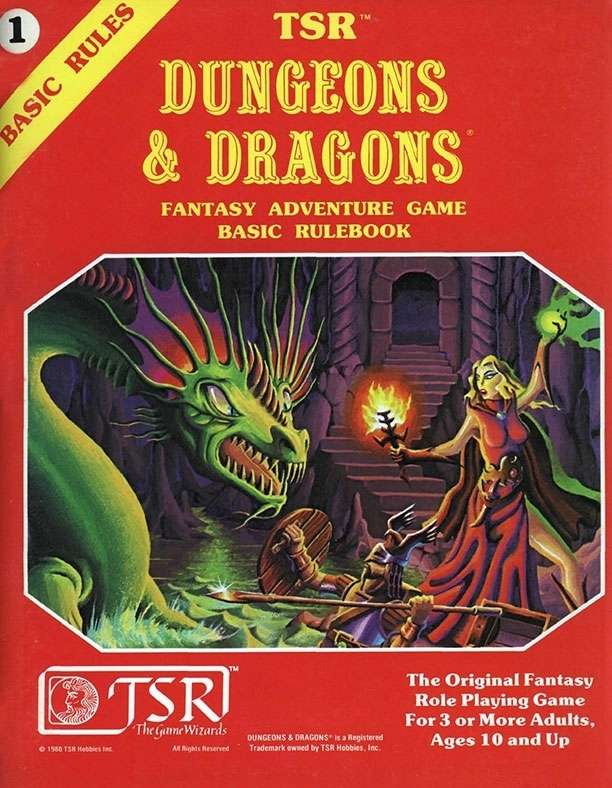
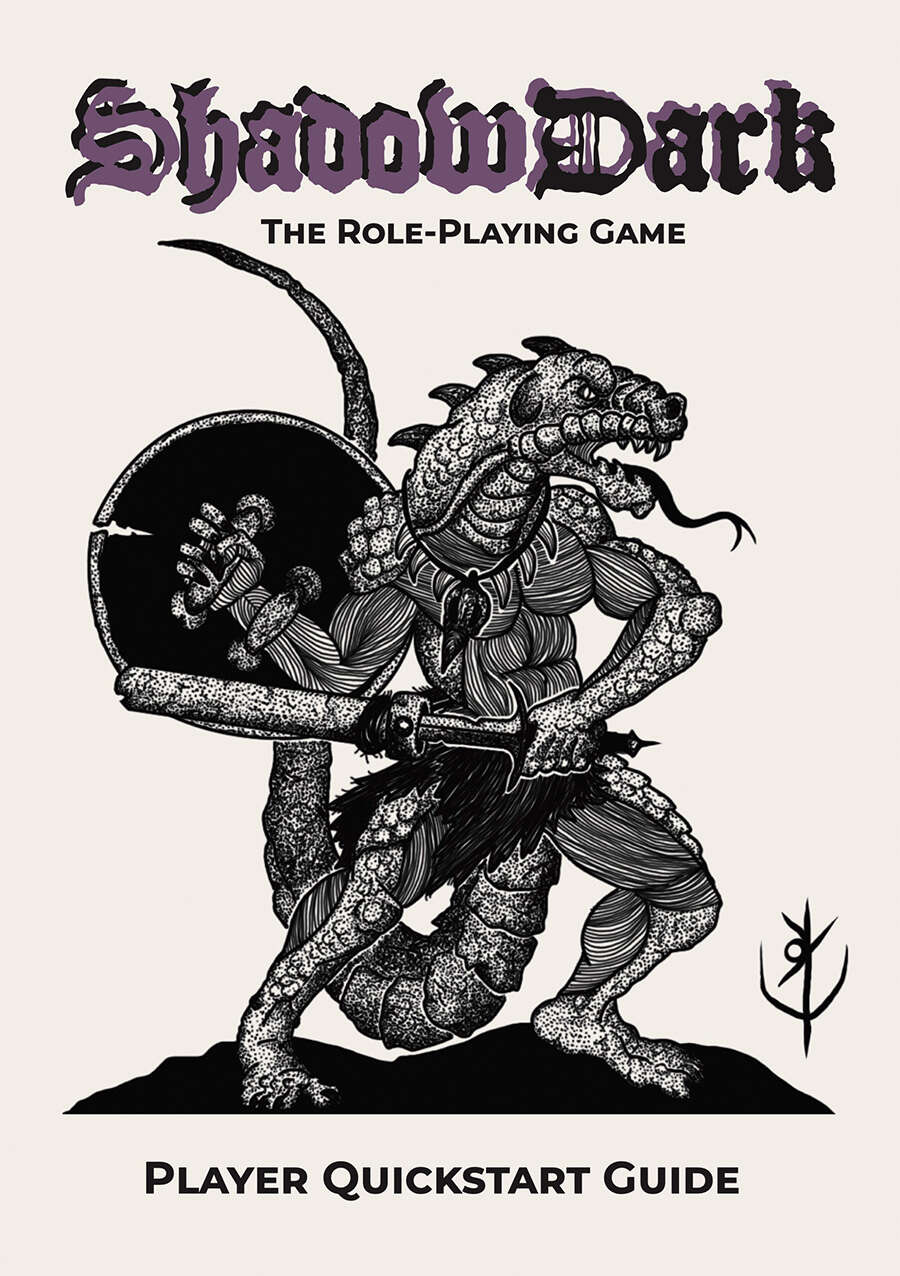
Programs are gaining more traction and dedicated attendance. My coworker and I have started a twice-weekly Tabletop Roleplaying Club for teens and tweens that we hope will allow new players to dip their toes in the medium and get a taste for the game systems. With luck, and enough good rolls of the dice, we hope it will become a fixture of Teen programming that will last through the school year. I’ve gotten players from ages nine to eighteen, and each one brings something unique to the table and to each encounter.

Add to that a weekly Knits & Knots Crafts Club for the more artsy, hands-on members of our teens and youth populations, and we have some very promising programming to take us through the coming months. I’ll reflect more in future blog posts on what programs we’ve tried, what has worked and what hasn’t, how things are going, and whatever inspiration I’m feeling for the future.

Until then, all scheduled programs will continue as usual….

• About Me: In the City, with a Foot in Two Informational Worlds

Greetings!

I’m Nathanael, joining for my first and last Summer session course here at the iSchool. In fact, this will be my last traditional course of the program, as I will be interning to complete my remaining units to graduate this December and completing my e-portfolio this Fall–a bittersweet thought!

I currently live in Chicago after moving last Summer from my hometown of Monterey, California. It has been a dizzying, exciting change to adjust to living in a global city after spending much of my life in a town inhabited primarily by tourists and retirees (though I did spend my undergraduate years in Portland, OR from 2016 to 2020–shout-out Reed College!). This too is a city of libraries, being home to ALA (with its conference in just a few weeks), as well as a sprawling public library system and numerous college and university libraries.

I myself work as a Public Services Associate at Broadview Public Library District in the West Suburbs, a small and relatively under-resourced library that is a lifeline to its local communities. The work is gratifying on the whole, and has helped to push me out of my comfort zone and expand my professional skillset, though it is not where I would like to settle in my career. My hopes extend towards academic libraries and archives, and to that end I’ll be an archival intern at University of Chicago’s Institute for the Study of Ancient Cultures through the Summer and Fall semesters. I’ve only worked there a few days, but already it has proved a perfect foil to my public library work–quiet, working in the back with minimal supervision and no distraction, completely of my own initiative. Combining that with the heady, intoxicating atmosphere of University of Chicago, and I am left refreshed and excited for my future prospects as an information professional.

I’d love to reflect more on the two informational worlds I currently inhabit, and how the Hyperlinked Library model may (or will) apply to both of them. That will be for future posts, I hope, and in the meantime I wish you all a productive and rewarding Summer!