The most common interaction in my library is a transaction. We scan the patron’s library card, check out their chosen books, read the due date, say thank you, and call the next person forward. It happens thousands of times a week at my branch, and as the person who supervises circulation, I am the one responsible for making sure it happens smoothly and in the warmest, most welcoming fashion.
That is why the idea of transactional vs. partnership models in libraries really stuck with me. Mathews et al. (2018) explains that, historically, the operational model for libraries has been transactional: staff provide access to resources and tools, and typically offer more extensive help when asked. But Matthews et al. (2018) argue that libraries are moving past this model toward what they call “partnership models,” in which library workers act as collaborators and consultants rather than suppliers. While reading their article “Empowerment, Experimentation, Engagement: Embracing Partnership Models in Libraries,” I realized how valuable implementing more aspects of a partnership model could be for my branch.
At Creekview High School’s media center – dubbed “The Unquiet Library” – library media specialists Buffy Hamilton and Roxanne Johnson collaboratively planned 100 lessons with the school’s teachers in a single year (Mathews, 2010). This helped to position them as additional members of the teaching team rather than a simple service stop for the school’s students. Hamilton and Johnson taught 1,533 class sessions with a small but efficient three-person staff. This was just one example of how a partnership between library staff and teaching faculty can result in more effective library programming for patrons.
Libraries like Creekview High School’s Unquiet Library demonstrate the “hyperlinked library” philosophy described by Stephens (2011) as “an open, participatory institution that welcomes user input and creativity” – one where library collections and programming grow through user input and active engagement.
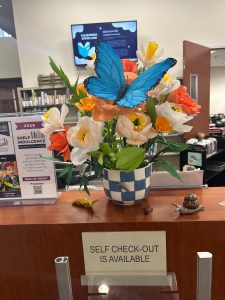
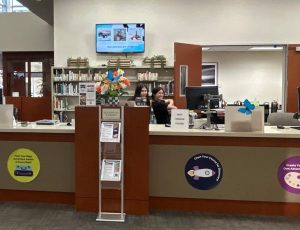
A lot of the discourse around the benefits of the partnership model focuses on library programming. But can partnership also be implemented at the circulation desk? Co-working on lesson plans with teachers is a natural partnership. Handing someone a library book they placed on hold is not. But circulation is the highest-volume touchpoint we have, and if partnership only lives in programming and outreach, then the majority of our public interactions stay transactional by default.
Partnership work is slower and more relational than transactional work, and while some patrons love to linger and chat the circulation desk, others want a friendly but fast transaction and nothing more. So how can we implement the tenets of the participatory and hyperlinked library models to circulation? What would it take to treat a checkout as the beginning of a conversation instead of the end of one? I want to consider these questions in my studies this semester.
I would love to hear from others working in circulation. Has anyone found a way to make the circulation desk feel more participatory without slowing the line?
References
Mathews, B. (2010, June 21). Unquiet library has high-schoolers geeked. American Libraries. https://americanlibrariesmagazine.org/2010/06/21/unquiet-library-has-high-schoolers-geeked/
Mathews, B., Metko, S., & Tomlin, P. (2018). Empowerment, experimentation, engagement: Embracing partnership models in libraries. EDUCAUSE Review, 53(3). https://er.educause.edu/articles/2018/5/empowerment-experimentation-engagement-embracing-partnership-models-in-libraries
Stephens, M. (2011, February 21). The hyperlinked library: A TTW white paper. Tame the Web. https://tametheweb.com/2011/02/21/hyperlinkedlibrary2011/