As I was researching for my inspiration report, I was reflecting on the Library as Classroom chapter by Stephens (2016) and really thinking about how the library can work towards supporting patrons in lifelong learning and building community. The idea of everywhere as classroom is something that has been a throughline in my education and I am grateful to be coming back to this idea towards my MLIS program. My background is as an environmental educator, taking kids out in the North Cascades National Park during the school year and doing garden and literacy summer camp education in the summer. While I loved the elements of self-directed learning, curiosity and wonder, I also needed stability in my life and health insurance. I pivoted to classroom teaching and taught 150 15-year-olds. After burning out in the classroom, I am pivoting to the library. Library as classroom feels so deeply right in my bones, and I am excited to explore education in this capacity.
Block’s article on messy learning (2014), made me smile as I thought about project-based learning in my science classroom and providing students with multiple ways to show their knowledge. Reflecting, I was thinking about how I miss messy learning in the library Teachers bring their classes in for an informative, polished lesson generally about how to research. Then I realized that is exactly what research is, it is deeply messy for these students. Students generally have choice in the topics they are researching, they unfortunately haven’t done a ton of academic research, and it can feel vast and overwhelming. I resonated a lot with Block’s reflection, particularly around the comment of “projects are filled with random ideas, questions, changing minds, and students who feel lost”. One thing Block does to structure the messiness and support students is to have clear learning tasks to complete. Reflecting on my own practice, I think I could do a better job of supporting student in the mess of research, but part of this has been not fully what knowing what my role is as a teacher librarian, and not feeling like as the librarian I can provide students with learning tasks.
As I prepare for the new school year, I have been thinking about ways to provide offerings of delight and incorporate more whimsy and play in my capacity as a teacher librarian. When reading an article about Anythink’s Library of Things, Keely Smith’s words suck with me, ““At that time we wanted to create moments of surprise and delight when you walk into the library” (Diamond, 2026). My guiding question for the year, how can I create moments of delight for my patrons. Reading Stephens’ (2014), article, I was struck by the duality for formal vs informal. It is so obvious where formal learning fits in but building a high school library program from scratch with no funding, I struggle with the informal. Now that I have increased our ratio of books to students from 0.36 to 3 (still very small) I feel that my focus can shift my focus toward programming for joy and play. This course has given me some ideas, and I look forward to trying, failing and succeeding along the way.
When thinking about moments of delight these past two years I was reflecting on the following:
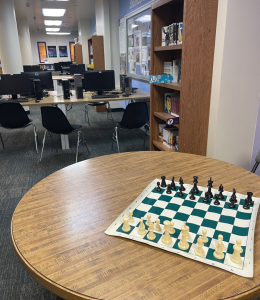
The chess table has been a moment for delight during lunch and has been a space for lively chess games.
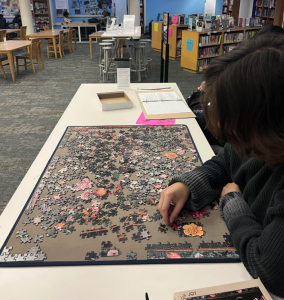
We have abandoned more community puzzles than we completed, but they have been a nice community builder and place where students introduce themselves.
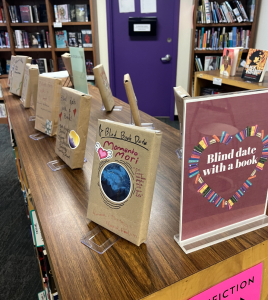
When making the Blind Date with a Book display, the students had more fun helping me decorate the covers then they did checking out a mystery book.
References:
Block, J. (2014, January 7). Embracing messy learning. Edutopia. https://www.edutopia.org/blog/embracing-messy-learning-joshua-block
Diamond, S. (2026, June 27). Come for the books, stay for the power tools. The New York Times. https://www.nytimes.com/2026/06/27/arts/library-of-things.html
Stephens, M. (2014). Making The Case for the Library as a Space for Infinite learning [PDF].
Stephens, M. (2016). The Heart of Librarianship. In The Heart of Librarianship. American Library Association.
Leave a Reply