Monthly Archives: July 2026

Reflection Blog: Wild Card/Participatory Services: The Oodi Library, an Ode to Its Users

Most of us now watch multiple videos everyday. Many of these just pass and go, we sometimes forget them after a few days. One that I watched about six weeks ago and that stuck with me since then was the one presenting the Oodi library in Helsinki, Finland: “Is this the best library?”. That is what I clearly wondered as I watched it and I have not found a match yet. 

In Finnish, “oodi” is an ode. And maybe just as interestingly, in Norwegian, “odde” is a headland. A tribute and a pioneer vision. This is all really quite fitting for this extraordinary library.

Figure 1.Oodi Library. From “Is this the world’s most successful human-centered building?,” by T. Uusheimo, Well-Placed with Emily Wright. Retrieved July 24, 2026, from https://emilywrights.substack.com/p/is-this-the-worlds-most-successful. Copyright 2026 by Substack. 

Figure 2. Sydney Heads, New South Wales, Australia. From “Headland,” by D. Smith, September 30, 2010, Wikipedia. Retrieved July 24, 2026, from https://en.wikipedia.org/wiki/Headland

The Oodi library is an absolutely amazing and wonderful example to show to someone who is a bit stuck in their vision of what a library is (aka who thinks that a library is not much more than a pretty book warehouse). To be honest, even I, when I started this program, had no clue of what everything libraries now offered. That video grabbed that thought and just ran away with it … all the way to Helsinki! The video shows us the vast array of activities and services that are available to its users: chessboards at the entrance to play with a stranger and thus encourage human interaction, the most vintage and also modern video games available on simple reservation, instruments and recording studio rental, a very large kitchen, sewing machines and various crafts instruments, 3D printers, a variety of reading areas with views, etc.

It is evident that this library really thinks about its whole community, about the personal situations that people may be in that may make some aspects of their lives difficult (especially aspects that allow them to learn or flourish). They help with that. They support them in their economical situation. They support them in their social well-being. The example of the kitchen can seem so simple and yet so thoughtful. In a big city, many people live with roommates or have a small apartment, there can be no sufficient kitchen space to be able to cook a big meal or to cook with friends. Nonetheless, cooking and food can be such an exchange of cultures and knowledge, it brings people together. By having a large accommodating kitchen, the library shows how they try to bring people together around things they enjoy and can grow from. Another subtle but powerful example of how Oodi was thinking of its patrons are the reading areas. There are many comfortable seats near windows to enjoy the views. Again, this can look simple but is such a nice touch for people living in small spaces with views of a parking lot or sometimes even a wall. They literally broaden their horizons. 

Stephens asserts that “the era of participatory culture demands that cultural and information professionals play an active, visible role in our communities” (2016, p.80). I agree and I would claim that the Oodi library really gives the participatory tenet of Casey’s (2007) Library 2.0  its true meaning: people are not just meant to read or look at materials, but really to use them and create and experiment with them. In this, they participate in the growing knowledge, culture and creativity of their community. 


References 

Casey, M. E., & Savastinuk, L. C. (2007). Library 2.0 : a guide to participatory library service. Information Today. http://site.ebrary.com/id/10502034

Headland. (2026, April 21). In Wikipedia. https://en.wikipedia.org/wiki/Headland

Stephens, M. (2016). The Heart of Librarianship. American Library Association.

TheRuudy. (2022, December 13). Is This The World’s Best Library? [Video]. YouTube. https://www.youtube.com/watch?v=wvyXjAI5_VI 

Wright, E. (2024, August 8). Is this the world’s most successful human-centred building? Well-Placed with Emily Wright. https://emilywrights.substack.com/
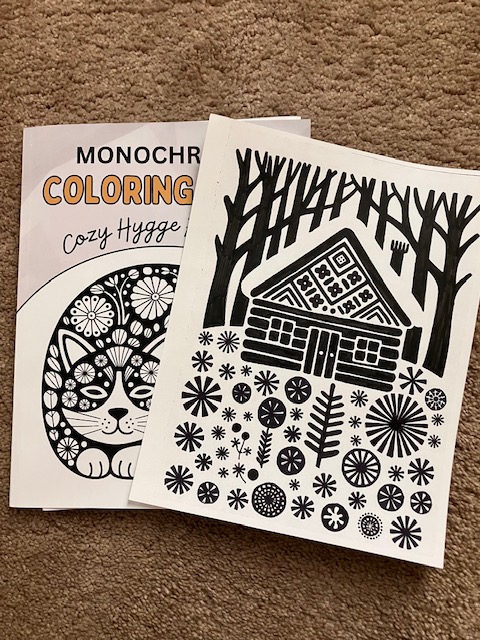
Reflection Blog: New Models: The Necessary Luxury of Hygge

I wanted to talk about hygge in a previous blog as it had come up in a reading, but at the time, other topics had caught my attention. As Hygge came back, and several times in this module, I did want to sit down (well, I was already seated), take a warm cup of tea, place a blanket over my legs, and put on some ambiance sounds

I learned about it a few years ago while browsing The Little Book of Hygge in a store. I was drawn to it. The coziness, and mainly the slowness. Many of us live hectic lives: schedules, deadlines, places to go to, endless list of things to do, etc. The more time goes, the more I feel like practicing hygge becomes difficult to do, and feels like a luxury when we are eventually able to do it. While it should not. It is a necessity to regularly slow down and appreciate a good book, a coloring artwork, or sip a warm beverage by a fireplace. Stephens says that “promoting comfort, a sense of belonging, quiet, and coziness for our users, will serve as an equalizer of sorts, balancing our “living out loud” times with a bit of warm and fuzzy” (2019). In this sentence, the word “equalizer” resonates louder than any other for me. As I am sitting here in a quiet and comfortable spot in my apartment, I know that everyone does not have that luxury. And I believe our libraries should provide this for their patrons: a space in which they can rest, recharge, and reset before sometimes being thrown back in the tumult of their lives. People deserve a time during which they can connect to a story, to an idea that they’re reading more about, or just connecting to themselves. Libraries are a pathway to knowledge , the one you find out in the world, but they should also help with the knowledge and comfort you can find within yourself. And I think that is what hygge can mean.

Furthermore, because I am an Inspiring teacher librarian, I always try to think of ways to get teens to engage with literacy. Teenagers are very attracted to moods/vibes. I play different kinds of ambiance music in my classroom during individual work (witchy vibes in October, blizzard storm or a crackling fire in the winter, …). They love it.  Similarly to the revival of dark academia, I think that this type of space would be very appealing and inspiring to some of them. 

PS: And to just display how à propos this topic came about: I bought a hygge coloring book at the beginning of summer break! 

References 

Olive Raquel TV. (2024, April 14). Cafe for Bookworms in Baguio City – Hygge Library Cafe [Video]. YouTube. https://www.youtube.com/watch?v=vumlMsRoRfY

Sound of Winter. (2025, January 7). Tranquil Snowstorm Nights: Cozy Fireplace Ambience for Rest and Relaxation [Video]. YouTube. https://www.youtube.com/watch?v=5RbH5sc6v2Y

Stephens, M. T. (2019). Wholehearted librarianship : finding hope, inspiration, and balance. ALA Editions.

Reflection Blog: Hyperlinked Environments: Is AI Hypolinking Us?

“One of the biggest business battles of our time is between Microsoft and Google” (Loertscher, 2008). Well, today in 2026, I would say that battle rages between the different AI platforms. “Microsoft believes that if they build it, we will come -and buy their product. Google’s approach is different: if they built it, we will integrate it into our lives”. Now, we can say that Google has remained consistent because that is indeed exactly what has happened with its AI approach. When we search for anything in Google nowadays, we are first presented with an AI overview of the response, and invited to ask follow-up questions. Only if we scroll down, we can get actual sources that would answer our question. And that is the thing: more and more often, many people will not scroll down any further. AI Gemini has been integrated into the Google Suite. A debate has been sparked at my school about Gemini and Notebook LM being added to Google Classroom students’ accounts. We stop mid-task in the kitchen to ask Alexa a quick question. We call our health insurance and are kept on an AI bot until we impatiently repeat “Human agent! Human agent!” into our phone. 

These are all examples of how AI has infiltrated and integrated into our environments and thus our lives. AI has sometimes made itself almost indispensable for some people, or at least a go-to without a second thought. It has become instinctive, and very rapidly so (in just a couple of years). It is very interesting (but I could really think of several other adjectives) how fast this habit has taken. Some people find it fascinating and amazing, some others find it worrying.

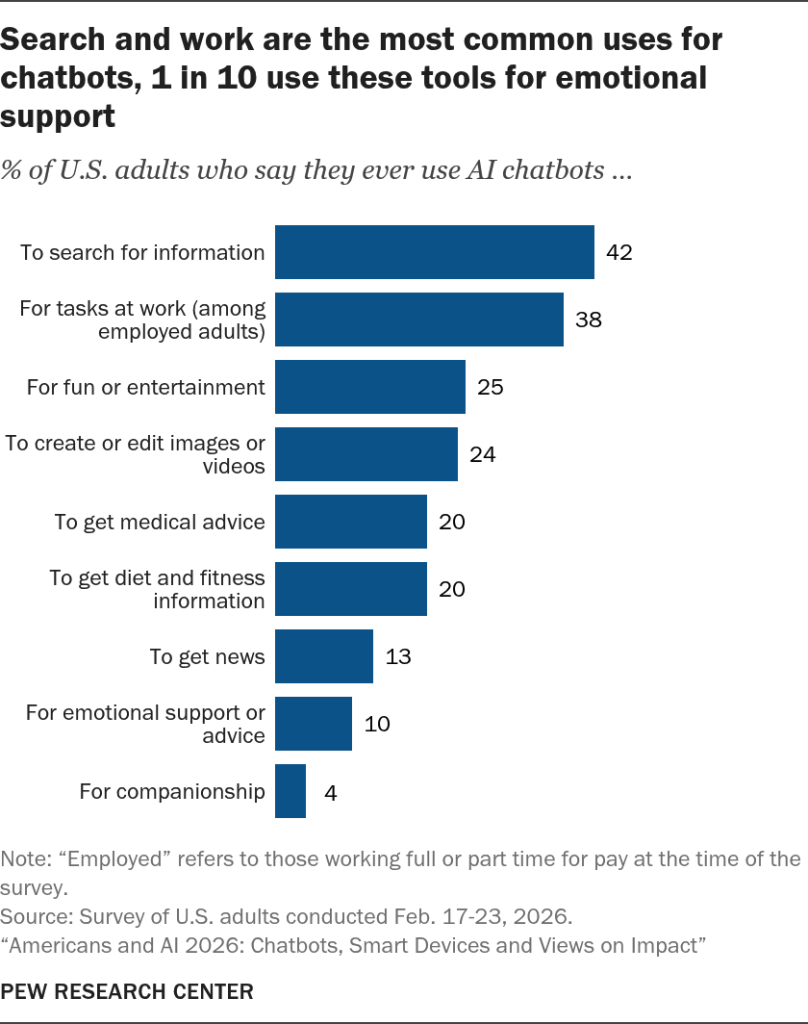
I would personally argue that while AI has hyperlinked us to information (and even here, we need to be very careful because of the numerous AI issues such as hallucination, incomplete or irrelevant information, etc), it has not hyperlinked us with each other. On the contrary, in many ways, I reckon it can easily make us less linked to each other. We read and hear about people using AI engines as their therapist (and it has now become a new market: Therapeak, TalkSpace,…), their friend or even their lover (remember the visionary movie “Her”?). The Russian series “Better Than Us” and many BlackMirror episodes are really too close for comfort when displaying how intertwined AI has become with our environments and actually made us more isolated. According to a recent Pew research (2026), 10% of Americans use AI for emotional support. 


Regardless of our opinions about it, AI is here to stay so we need to ensure that, just like with any other emerging technology, we use it as a tool to navigate our new modern complex environment, and that it remains only a part of it. Information ultimately comes from humans and any new tool, whatever it is, should enhance our human bonds and what we learn from each other. 


References 

Gottfried, J., Bishop, W., Anderson, M., Faverio, M., Park, E., & McClain, C. (2026, June 17). Americans and AI 2026: Chatbots, smart devices and views on impact. Pew Research Center. https://www.pewresearch.org/internet/2026/06/17/americans-and-ai-2026-chatbots-smart-devices-and-views-on-impact/ 

Loertscher, D. (2008). Flip this library: School libraries need a revolution, not evolution. School Library Journal (New York, N.Y.), 54(11), 46. https://link-gale-com.libaccess.sjlibrary.org/apps/doc/A189870491/AONE?u=csusj&sid=bookmark-AONE&xid=c9cf8a02

Thrill de Novo – Shorts. (2025, October 4). Black Mirror: Can AI Bring Back Loved Ones? [Video]. YouTube. https://www.youtube.com/shorts/iUAML4ufD4E