While browsing the resources of this module, I noticed that most were about digital skills. And of course, it is extremely important to teach them because our new world is now infused with tech. People need those skills now, and they will need them even more later. Libraries can help offer technological spaces and tools, while also providing instruction and assistance so that users can be empowered to create and collaborate on what matters to them.
Nevertheless, amongst these resources, a particular one stood out to me: a YouTube video from the Goffstown Public Library: “Life Skills Cooking Basics for Teens ~ PIzza Episode”. This is a library teaching life skills. Life skills could involve technology or not, but as their name indicates, they are vital. Reading a map, sewing a button or cooking are activities that can seem so obviously essential and basic that we forget they were learned. If we turn back time (and let’s do it on the hands of an analogous clock, because it is so much more stylish!), life skills were often taught in Home Economics classes in secondary schools. On social media, I often see comments saying that schools should go back and teach this or that skill. I often do not disagree, but as a teacher, I also know that there is just not enough time to build these into an already packed curriculum. It could be an elective, but space for electives is already sparse in students’ schedules, and that would also mean that not everybody can benefit. Yet, I have experienced high school students who cannot tell the time on an analog clock or read a map. These, just like cooking or drafting a monthly budget are needed basic skills.
So who to teach them? Today, one third of American kids live in a single-parent family (The Annie E. Casey Foundation, 2025). Single parents can absolutely teach these basic skills, but it has to be recognized that it is harder because of time constraints. Also, parents may not know how to approach teaching them to their child. Or it can be the simple fact that they were not taught as kids. Therefore these children and teens become adults without these skills. That is where I believe that libraries can step in. They can teach many basic competencies, and not just to teens. As I was explaining, everyone can learn some basic skills. Learning how to cook is really useful at 15, but it is just as enlightening at 50! Sewing back a tear, changing a tire or checking the fluid levels, tying a tie, planting a plant, but also financial literacy, investment instruction or CPR are all examples of life skills that are useful to all of us.
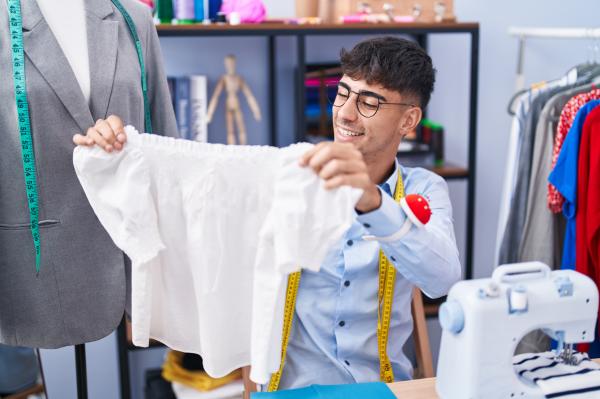
Learning Labs: Bros Who Sew [Photograph]. (2026). Gwinnett County Public Library. https://events.gwinnettpl.org/event/13386717
Public libraries could teach those in person, with some themed session sets (like January cooking lessons every Monday night or basic car care every Thursday afternoons of April). Tutorials could be offered, but in-person programs should also occur because some skills are just logistically easier to learn. Moreover, it is way more fun to learn how to sew a button with a buddy than on your own behind a screen. It builds community. Furthermore, school libraries as well could have these programs and tailor them specifically to teens. This would be another way of getting students into the library space and show them that learning happens everywhere about everything. And those are quite the tenets of Infinite Learning: keeping learning, everywhere, always.
References
Goffstown Public Library. (2020, May 5). Life Skills: Cooking Basics for Teens ~ Pizza Episode [Video]. YouTube. https://www.youtube.com/watch?v=Xf6N_Be7kaI
The Annie E. Casey Foundation. (2025, December 19). Child Well-Being in Single-Parent Families. https://www.aecf.org/blog/child-well-being-in-single-parent-families