Libraries are situated within communities to meet the various needs of their patrons, including being a hub for programs and classes that encourage lifelong learning. In the introduction for the Infinite Learning Module, @michael discusses how learning is moving beyond classrooms, and libraries have an opportunity to design spaces and services to encourage curiosity and continued learning. While organizations such as community centers or local colleges offer classes to the public, there is usually a fee associated with the class. This can make it difficult for people who are interested in taking these classes but are financially unable to afford the fees. This is where the library can fill a need within the community by offering free classes to their patrons. From technology classes to cooking demonstrations, libraries are coming up with unique programs that can help their patrons continue to grow and learn.
In Bookey’s (2015) article, two programs caught my attention. The first was the Lit Room at Richland public library, which is a room that uses lights, sounds and movements to interact with a story and provide a visual representation of the emotions and actions taking place. I thought this sounded fascinating and offered a new way to use technology to enhance a reading experience. Another program Bookey (2015) highlights is The Supper Club at Madison Public Library, which is a monthly program that provides dinner and information about the many different children’s apps that are available. With apps being developed daily and privacy settings changing frequently, this program can provide valuable information to parents and their children.
Another service I want to highlight from one of my local libraries is The William N. Skirball Writers’ Center at Cuyahoga County Public Library (Cuyahoga County Public Library, n.d.). Within the South Euclid-Lyndhurst Branch, there is a dedicated space for writers with private rooms, laptops, and a special collection available to patrons. Additionally, there is a writer in residence that offers advice and regular workshops. This type of service is one example of how a library can support learning outside of a classroom and provide resources and classes to help patrons pursue their passions.
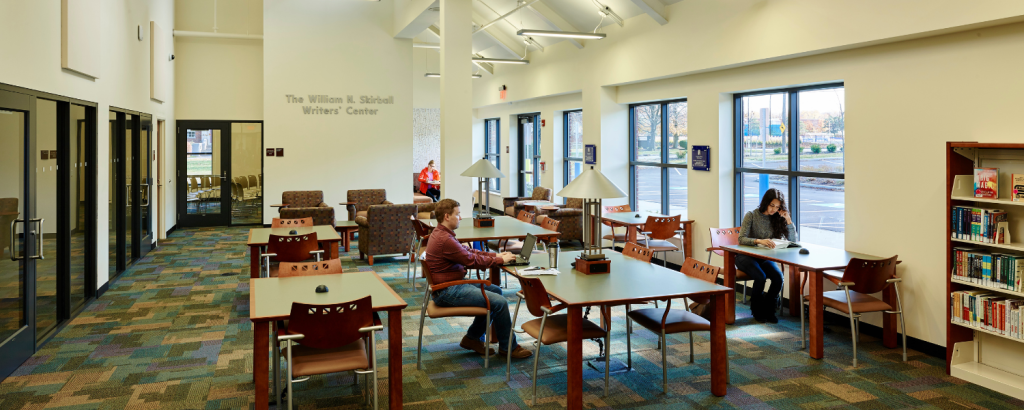
Image of William N. Skirball Writers’ Center from Cuyahoga County Public Library website.
References
Bookey, J. L. (2015, April 29). 8 awesome ways libraries are making learning fun. Huffington Post. https://www.huffpost.com/entry/8-awesome-ways-libraries_b_7157462
Cuyahoga County Public Library. (n.d.) The William N. Skirball writers’ center. https://cuyahogalibrary.org/services/makerspaces/the-william-n-skirball-writers-center
Hi Alexandra – Great post! You bring up a good point that other community organizations (like colleges) might offer learning opportunities, but the library is special because they offer these things for free. I think the library also has an advantage because they can promote fun learning experiences that people participate in for the joy of learning and personal enrichment.