Library Lettuce?
A large part of what I enjoy about working at the library is the practice of lifelong learning, especially when learning new things for programs. An example of this was learning all about the Flex Farm, by Fork Farms, in order to continue offering an indoor hydroponics program for our patrons. The Flex Farm is one of the most unique features of the library and one I like to mention to patrons and even more so as it provides the opportunity to “discover technology” that isn’t too well-known but totally accessible through our library’s programming and it lets you grab breakfast with a library associate, totally not spoofing Bookey’s “grab dinner wth a librarian” (I totally am) (2011). Once on the first Saturday of the month, families are able to join Hydro Harvest to learn all about the Flex Farm and as available, eat what we grow, which is mainly lettuce.
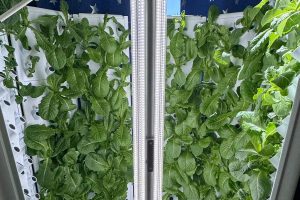
Patrons get to learn all about nutrients, PH, the workings of all the Flex Farm’s components, and about all the plants we grow. Fork Farms provides access to resources outlining a traditional classroom lesson plan. After some slight remixing, I was able to come up with a lesson plan suited for my library while still mimicking a classroom environment through collaboration. Once again, libraries are not just repositories of books but rather areas where patrons can access technologies that aren’t easily accessible such as 3D printers, laser cutters, or indoor hydroponic towers. The best part? It’s all (usually) free!
Tatsoi Salad?! At the Library!?
While community gardens and culinary programs at the library are not a completely new occurrence, especially with programs such as The Charlie Cart Project, large indoor hydroponic systems may be! Especially when they’re growing things like tatsoi, a relative of the vegetable, bok choy. Prior to being a family program, I utilized the Flex Farm for our adult garden club to teach about hydroponics while hosting a harvest day so that we could all enjoy a salad using library-grown tatsoi and cucumbers (recipe here). Not only was the salad a success but the learning opportunity for the patrons involved in hydroponics and in expanding their library experiences.
I am always amazed and inspired by the incredible work that libraries across the world accomplish. This work pushes the expectations and beliefs of library users past the antiquated view of the library as a repository for only books. In the 11 years that have passed since Bookey’s article, I am proud that it is so commonplace for libraries to incorporate many of the identified fun learning activities in the article (2015). I cannot wait for the next advancements in how libraries can exceed the expectations of their users when it comes to learning at the library.
References
Bookey, J. L. (April 29, 2015). 8 awesome ways libraries are making learning fun. Huffpost. https://www.huffpost.com/entry/8-awesome-ways-libraries_b_7157462