A summary of my Inspiration Report: The Power of Stories Through the Sound Booth.
https://drive.google.com/file/d/1I2WwcwXzqI1uolChbaLsZluVxDySiBtV/view?usp=drive_link

Serving Books
A summary of my Inspiration Report: The Power of Stories Through the Sound Booth.
https://drive.google.com/file/d/1I2WwcwXzqI1uolChbaLsZluVxDySiBtV/view?usp=drive_link
Hi all,
For my inspiration report, I focus on the module covering the Power of Stories, one that resonated with me throughout the semester with all the current happenings at my library.
https://canva.link/r2pf76fpg7e4wzw
Here’s the link to my Innovation Roadmap presentation!
https://canva.link/deliciousinlibrarydigitalarchiving
Library Lettuce?
A large part of what I enjoy about working at the library is the practice of lifelong learning, especially when learning new things for programs. An example of this was learning all about the Flex Farm, by Fork Farms, in order to continue offering an indoor hydroponics program for our patrons. The Flex Farm is one of the most unique features of the library and one I like to mention to patrons and even more so as it provides the opportunity to “discover technology” that isn’t too well-known but totally accessible through our library’s programming and it lets you grab breakfast with a library associate, totally not spoofing Bookey’s “grab dinner wth a librarian” (I totally am) (2011). Once on the first Saturday of the month, families are able to join Hydro Harvest to learn all about the Flex Farm and as available, eat what we grow, which is mainly lettuce.
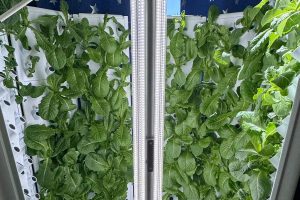
Patrons get to learn all about nutrients, PH, the workings of all the Flex Farm’s components, and about all the plants we grow. Fork Farms provides access to resources outlining a traditional classroom lesson plan. After some slight remixing, I was able to come up with a lesson plan suited for my library while still mimicking a classroom environment through collaboration. Once again, libraries are not just repositories of books but rather areas where patrons can access technologies that aren’t easily accessible such as 3D printers, laser cutters, or indoor hydroponic towers. The best part? It’s all (usually) free!
Tatsoi Salad?! At the Library!?
While community gardens and culinary programs at the library are not a completely new occurrence, especially with programs such as The Charlie Cart Project, large indoor hydroponic systems may be! Especially when they’re growing things like tatsoi, a relative of the vegetable, bok choy. Prior to being a family program, I utilized the Flex Farm for our adult garden club to teach about hydroponics while hosting a harvest day so that we could all enjoy a salad using library-grown tatsoi and cucumbers (recipe here). Not only was the salad a success but the learning opportunity for the patrons involved in hydroponics and in expanding their library experiences.
I am always amazed and inspired by the incredible work that libraries across the world accomplish. This work pushes the expectations and beliefs of library users past the antiquated view of the library as a repository for only books. In the 11 years that have passed since Bookey’s article, I am proud that it is so commonplace for libraries to incorporate many of the identified fun learning activities in the article (2015). I cannot wait for the next advancements in how libraries can exceed the expectations of their users when it comes to learning at the library.

References
Bookey, J. L. (April 29, 2015). 8 awesome ways libraries are making learning fun. Huffpost. https://www.huffpost.com/entry/8-awesome-ways-libraries_b_7157462
The Power of Mahjong!
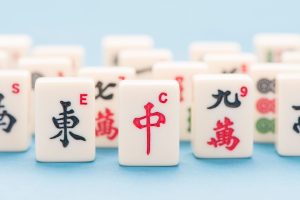
Recently, I was approached by the organizers of a local mahjong group that organized weekly meetings at a different local library. The goal? To bring mahjong to the eastern Coachella Valley making it easier for many of their players to visit and of course, the opportunity for more mahjong! Immediately, my supervisor and I were hooked! They had no idea we would be on board and they were happy with how eager we were to host a group at our library. To prepare for the program, we began our mahjong journey.
In reality, only I was barely beginning my mahjong journey. My coworker was already familiar with playing as her mother had taught her and her siblings when they were younger. Still, as she was revisiting mahjong, she purchased two books for us to review to see if her family’s way of playing differed from an “official” way to play. From these books, I was lent Nicole Wong’s Mahjong: House Rules from Across the Asian Diaspora.
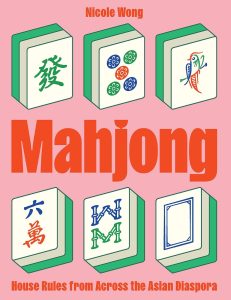
As this module dealt with storytelling and connection across cultures, I was particularly impacted by Wong’s “House Rules Apply” chapter in which she writes, “I believe that when someone teaches you mahjong, their mannerisms and traits inevitably get imprinted on you along with the rules,” and “when people learn mahjong, they’re not just learning one person’s rules, but rules from the teacher’s whole lineage of teachers,” and finally, that through this teaching, elders are remembered and that this process is the transference of knowledge and the emergence of a new keeper (2025). Wong’s words made me so appreciative of my supervisor’s willingness to share her family’s house rules in preparation of this program. Not only was I learning her family’s house rules, I was also getting to listen as she would share the memories of her parents and grandparents playing mahjong. As a friend, I felt extremely grateful for the opportunity to be a part of a tradition and as a keeper of her family’s story which deepened the connection with the program and mahjong as a whole.
And- the stories didn’t stop there. We also got to learn about the experiences of the organizers that approached us along with all the participants that have attended the new mahjong group. There have been many new people that I have met and with that, their stories! Like, what brought them to the desert. How they got into mahjong. Stories and memories they have with one another. What mahjong means to them. Just overall, a connection that I sometimes have to take a pause during the program for, just to process that these people are all here not just to play but to see each other and communicate with one another.
With the number of players that come from all different walks of life, each time we host the program, I consider the two hours we have together to be a kind of Human Library (Wentz, 2013). As I cycle through different beginner tables (I’m not pro but I have improved in my ability to answer questions!), I always look forward to learning more about each of the players, not just how they play, but of themselves and their stories while also sharing mine and hopefully, encouraging them to come back to our community.
References
Wentz, E. (April 26, 2013). The human library: Sharing the community with itself. Public Libraries Online. https://publiclibrariesonline.org/2013/04/human_librar/
Wong, N. (2025). Mahjong: House rules from across the Asian diaspora. Hardie Grant North America.
New Horizons and Not Just In Animal Crossing!
For Assignment X, I shared about my hesitation about the Minecraft Monday program I was introducing at my library due to the “dreaded screen-time”. Driving the creation of this program was my own experience growing up in which I did not have access to a console which meant that I was also not playing the games everyone else was. Through Minecraft Monday, I wanted to provide kids with the opportunity to play with a console they might not own in addition to a popular game that their friends might be talking about all the time.
With the large amount of Minecraft novels that now exist for kids, I realized that I could highlight the impact that the program would have on literacy. If a child’s first exposure to Minecraft was through the novels, they could now incorporate what they read into their playing experience and continue to seek out books on how to elevate the world; specifically, I think about the various books on redstone (an experience similar to wiring or electrical engineering) and other building guides.
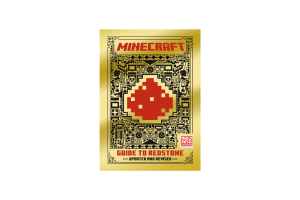
The program runs for one hour with kids, depending on the amount registered, being able to cycle between 30 minute play periods. If there are no additional registrations after the 30 minutes, kids already on the Switches can continue for the full hour. The hour (or half hour hits) that sweet spot in which it is a usual restriction parents already place on their children already and one in which kids will still have the desire to continue playing which can then be translated into reading books such as the redstone or building guides for future play! This reflects my experience where if I couldn’t play it, I could at least read all about it and be very knowledgeable about it the next time I played.

As National Literacy Trust (n.d.) notes, video games can give young people a route into reading and writing, immerse them in stories, support communication with family and friends, support wellbeing, and engage reluctant readers. While I did not have access to many video games growing up, I was able to immerse myself in their world by reading books and guides about them. Again, the purpose of this program was to provide kids with an opportunity that wasn’t accessible to me when growing up. Even with this access to the console, I try to encourage the use of our Minecraft books after the program is over. During the program, I also like to offer the Heroes of the Village board game and while not a video game, still gets the kiddos to engage in critical thinking and reading. I was also gifted a book on building that I like to keep in-house and use to showcase the utility that referencing books can provide. My thoughts on this? If they see an adult doing it, they’ll think it’s cool! Especially when they get to live in it as part of our “community base” on our shared world.
As a part of our last meeting, we brainstormed a few future projects to engage in during our next meetings including a tree house and soccer field. These are particularly exciting as they create the opportunity for group lore-building in our world allowing the expression of creativity and writing through game’s writable item, the book and quill, encouraging writing, reading, and immersion (National Literacy Trust, n.d.). To make this the best experience, I’ll be encouraging players to check out available copies of Minecraft graphic novels/novels and picking out their favorite part to incorporate into our world or translating a desired element from the real world or other favorite series into the Minecraft world!
References
National Literacy Trust. (n.d.) Video games and literacy. https://literacytrust.org.uk/information/what-is-literacy/video-games-and-literacy/
Music To My Ears!
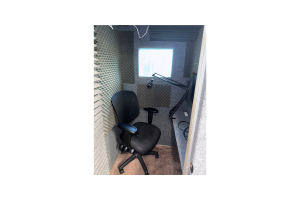
One day, I returned to my office after covering the front desk for a few hours and heard what I thought to be a cello. Much to my surprise, it was a cello! In the study room! I only confirmed this after leaving the office and “browsing” the stacks in front of the study room door. I later learned that it would be a recurring meeting as this was the only space that the instructor could meet with the student. I was initially worried that we would receive complaints from patrons in the quiet area about the noise level; however, the times they reserved were near our closing hours which meant less people in the area anyway. After this initial worry, I then shared with my office buddy that we would be witnessing the student’s entire cello career. This use of the study room made me so happy as a band geek. A happiness I shared when reading about Memphis’ Cloud901 (Grant, 2021) and learning about the Noise Closet at the Chattanooga Public Library (n.d.). While not on the level of these amazing libraries, yet (just kidding), I am happy that we can provide a Sound Room for a user of the library. This moment added to my lived experiences solidifying my library as more than just a “hushed repository of books” and maybe, others outside of staff as well that typically see the library as such. While not offering as much space as our study room, I am very excited about a new sound booth our library has acquired which will allow users, such as our cellist (might be a little snug), to record themselves, practice individually, or explore podcasts!
Fine-ally, Free!
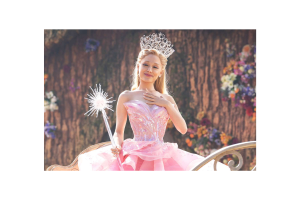
As of July this year, my library system has now been fine free for two years and I couldn’t be happier (not in an ironic-Glinda way)!
Much like in The Fine Free Library: One Year Later, I have had my own moments interacting with patrons that have made me extremely happy that we are fine free. Moments like the mother of four bringing in various late picture books asking if she can check out more have been common and much like Tanya, I am so pleased that I get to respond yes and provide reassurance that we do not charge late fees anymore (2018). Just the other day, I was hanging out in our courtyard getting some cleaning done when I overheard a mother telling her kids to “let her do the talking”. I wondered what they might be talking about and then, as if on cue, late fees were mentioned. It was a tough internal battle not to call over to them and shout, “we’re fine free, you’re totally okay!”. One, I didn’t want to scare them as I was hidden by the doors to our shed and two, I didn’t want to deny my colleague’s opportunity to make someone’s day (again, I fought so hard and almost jumped to the door leading out of the courtyard). With increased costs of living and the library being recognized as a free space, it makes total sense to eliminate any barriers that would prevent users from enjoying the resource. Especially if service groups consist of those who cannot afford the extra charge in addition to all their other expenses. While it has been two years, these moments still occur and it is always such a special moment to provide reassurance.
References
Chattanooga Public Library. (n.d.). Noise closet. Chattlibrary. https://chattlibrary.org/noise-closet/
Grant, R. (November 2021). How Memphis created the nation’s most innovative public library. Smithsonian Magazine. https://www.smithsonianmag.com/innovation/memphis-created-nations-innovative-public-library-180978844/?fbclid=IwAR1KhgGc_cXHfCduhqGtJ1Wi5Y2jRho1yW1Q62QjCNC5o2Qs9eLeGnzqqIM
The City Library. (August 9, 2018). The fine free library: One year later. Medium. https://slcpl.medium.com/the-fine-free-library-one-year-later-d28c69743c15
Instagram for Erics
I love an article about social media for the library! For context, I am the main staff member at my branch that handles the library’s social media. As part of our library system’s guidelines, we are only allowed Instagram and Facebook so I was a little disappointed to learn that we couldn’t have Tiktok when I first started (still a little disappointed) but a particular reading, Potter’s Instagram for Libraries, provided me comfort in that fact!
Recently, I sat down and identified some areas of focus for the remainder of the year. With school starting back up, I really wanted to prioritize outreach and as this has been something on my radar for quite some time, especially with so many libraries putting out amazing content, like the Vancouver Public Library, social media! As mentioned previously, my library system doesn’t utilize Tiktok and instead uses Instagram and Facebook. With Tiktok’s massive popularity I questioned this decision but after reading Potter’s article and reflecting on my current workload, I realize that it’s probably for the best. Specifically, Potter notes that TikTok is a platform that demands a lot of time and energy and as such is one to focus on if you’re other socials are squared away; additionally, from a library point of view Potter does not see how it can be useful without the need for a physical presence, or, a person in front of the camera (Potter, 2022-a). Recognizing that I can’t always dedicate myself to social media daily I realize that if my branch had a TikTok page, it would likely go weeks without content resulting in less of an impact. Further, staff aren’t always available to film or they might not be comfortable enough being on camera and that is 100% okay!
These two points have brought me comfort in not having Tiktok and have contributed to my current reworking of my social media workflow. Out of curiosity, I explored Potter’s Instahacks mini series which reaffirmed a few of my experiences on Instagram and has provided me useful tips! The first was that a nice picture of our library’s interior on a phone will do better than a perfect shot of a book on an expensive camera (2022-b). A few of my more “polished” posts received less interactions than pictures of our interior and exterior. Reels and stories are identified as great resources and I hope to cultivate a more active feed on Instagram, especially as I plan to form a little social media committee with the team! This way I can incorporate the ideas of everyone and what they would like to see as well as easing the workload a bit!
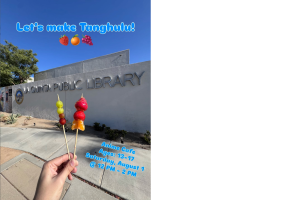
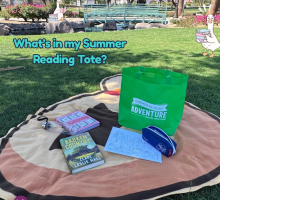
A quick note, I really want to try and drive more conversation with our community on social media, inspired by Beyond Buzzwords (Stephens, 2025), which will be a point I share with the LQ social media committee (Gambie’s Angels? Maybe! The Gambel Quail is our city’s bird and the mascot is named “Gambie”). Let’s make Tangulu? Let’s connect! Anyway, this image garnered quite a lot of interaction based on Meta insights and I was so shocked that I ran to tell my supervisor.
References
Potter, N. (July 21, 2022-a). Ideas about communication. Ned Potter. https://www.ned-potter.com/blog/tag/InstagramMiniSeries
Potter, N. (January 3, 2022-b). Instagram for libraries. Ned Potter. https://www.ned-potter.com/blog/instagram-for-libraries
Stephens, M. (2025) Beyond buzzwords: Ten invitations to build library connection and community. https://www.dropbox.com/scl/fi/f05u6l0d50k8js28vgokz/Beyond-Buzzwords-Ten-Invitations-to-Build-Library-Connection-and-Community.pdf?rlkey=2i1b76g18h9t2qxmq3s1y7q90&st=t70l9v4y&dl=0