
The Power of Mahjong!
Recently, I was approached by the organizers of a local mahjong group that organized weekly meetings at a different local library. The goal? To bring mahjong to the eastern Coachella Valley making it easier for many of their players to visit and of course, the opportunity for more mahjong! Immediately, my supervisor and I were hooked! They had no idea we would be on board and they were happy with how eager we were to host a group at our library. To prepare for the program, we began our mahjong journey.
In reality, only I was barely beginning my mahjong journey. My coworker was already familiar with playing as her mother had taught her and her siblings when they were younger. Still, as she was revisiting mahjong, she purchased two books for us to review to see if her family’s way of playing differed from an “official” way to play. From these books, I was lent Nicole Wong’s Mahjong: House Rules from Across the Asian Diaspora.
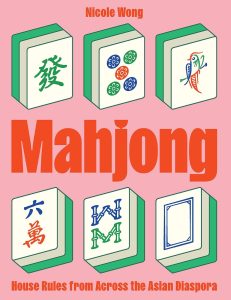
As this module dealt with storytelling and connection across cultures, I was particularly impacted by Wong’s “House Rules Apply” chapter in which she writes, “I believe that when someone teaches you mahjong, their mannerisms and traits inevitably get imprinted on you along with the rules,” and “when people learn mahjong, they’re not just learning one person’s rules, but rules from the teacher’s whole lineage of teachers,” and finally, that through this teaching, elders are remembered and that this process is the transference of knowledge and the emergence of a new keeper (2025). Wong’s words made me so appreciative of my supervisor’s willingness to share her family’s house rules in preparation of this program. Not only was I learning her family’s house rules, I was also getting to listen as she would share the memories of her parents and grandparents playing mahjong. As a friend, I felt extremely grateful for the opportunity to be a part of a tradition and as a keeper of her family’s story which deepened the connection with the program and mahjong as a whole.
And- the stories didn’t stop there. We also got to learn about the experiences of the organizers that approached us along with all the participants that have attended the new mahjong group. There have been many new people that I have met and with that, their stories! Like, what brought them to the desert. How they got into mahjong. Stories and memories they have with one another. What mahjong means to them. Just overall, a connection that I sometimes have to take a pause during the program for, just to process that these people are all here not just to play but to see each other and communicate with one another.
With the number of players that come from all different walks of life, each time we host the program, I consider the two hours we have together to be a kind of Human Library (Wentz, 2013). As I cycle through different beginner tables (I’m not pro but I have improved in my ability to answer questions!), I always look forward to learning more about each of the players, not just how they play, but of themselves and their stories while also sharing mine and hopefully, encouraging them to come back to our community.
References
Wentz, E. (April 26, 2013). The human library: Sharing the community with itself. Public Libraries Online. https://publiclibrariesonline.org/2013/04/human_librar/
Wong, N. (2025). Mahjong: House rules from across the Asian diaspora. Hardie Grant North America.