In my previous blog, I touched upon the growing loneliness epidemic among immigrants. In 2023, Dr. Vivek Murthy, the former U.S. Surgeon General, highlighted the serious effects of loneliness and social isolation, as well as the benefits of more connected communities (Office of the U.S. Surgeon General, 2023). Libraries can help nurture a sense of community and belonging by providing a third space where people can connect and feel at home, all without the pressure to spend money. Emma Wood, Associate Librarian at UMass Law Library, describes a third space as “space that is separate from home and work where we seek conversation, neutral ground, and comfort in feeling connected” (Wood, n.d.). In many Asian countries, where collectivist values are stronger, there is greater emphasis on fostering human connections. Information professionals in the United States can learn from our colleagues from these cultures to make libraries more deliberately social spaces.
Modern Japanese libraries are intentionally designed as third spaces (often referred to as “destination libraries”). These vibrant, community-centered hubs feature experimental and adaptive architecture, shared work areas, technology centers, and even cafés that actively invite public engagement. For example, the Ota Library in Gunma Prefecture, Japan, was developed with its growing population in mind, blending the functions of an art museum and a library to foster curiosity and creativity. Citizen feedback was integrated throughout every phase of the planning process to reflect the true needs of the community. The library curates local art, crafts, and historical materials, and its café offers food and beverages made from local ingredients, demonstrating how thoughtful design and programming can successfully fulfill the third-space mission.
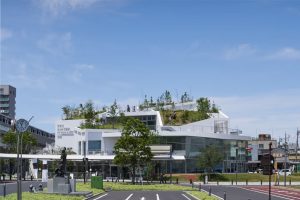
Art Museum & Library, Ota
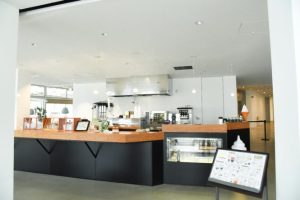
Cafe at Art Museum & Library, Ota
On the other hand, Minna no Mori Gifu Media Cosmos in Gifu, Japan serves as a multi-purpose cultural facility that embodies the third-space vision. It houses the Municipal Central Library (“center of knowledge”), the Citizens’ Activity Exchange Center (“center of community bonds”), and the Multicultural Exchange Plaza and exhibition galleries (“center of culture”). Designed as a true “destination library,” it encourages people of all ages to form connections with each other and with the broader community. Its Community Activity Exchange Center even operates a “Foreign Resident Consultation Counter,” offering daily assistance in six languages to support non-Japanese speakers, further strengthening the library’s role as a community connector.
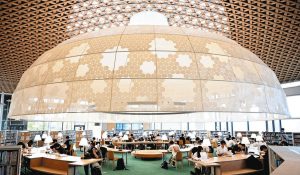
‘Minna no Mori’ Gifu Media Cosmos
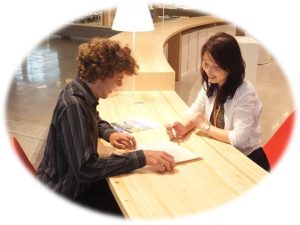
Foreign Resident Consultation Counter
These examples remind us that reimagining our libraries as intentional third spaces cannot be a second thought, but true inclusivity and connection-building often begin in the planning phase.
References
Art Museum & Library, Ota. (n.d.). Facilities. https://www.artmuseumlibraryota.jp/eng/facilities-eng/#id03
Gifu Media Cosmos. (2026). Home. https://g-mediacosmos.jp/
Office of the Surgeon General. (2023). Our epidemic of loneliness and isolation: The U.S. Surgeon General’s advisory on the healing effects of social connection and community. US Department of Health and Human Services. https://www.hhs.gov/sites/default/files/surgeon-general-social-connection-advisory.pdf
Wood, E. (n.d.). The rise of third place and open access amidst the pandemic. American Library Association Office for Diversity, Literacy & Outreach Services. https://www.ala.org/advocacy/diversity/odlos-blog/rise-third-place
Love how Japan is putting in so much effort into making their libraries a third space! In California, where I live, I have only seen university libraries and museum institutions incorporate eating areas (like cafes and small restaurants). It is honestly really nice to see Japan libraries open cafes and add another layer of comfort for patrons to truly immerse themselves in the social space. I think this alters the traditional notion of libraries being quiet places of study and opens doors to libraries being spaces that foster human relationships and connections. Great post!
@cocoatthelibrary
Thank you for sharing information about the Ota Library and Minna no Mori Gifu Media Cosmos. I was happy to learn that the Minna no Mori Gifu Media Cosmos has a multicultural exchange plaza and a foreign resident consultation center. I studied in Japan for a few months, but I never visited a Japanese library because I was not fluent in the language. I felt embarrassed and was not sure if the libraries near me offered services in English. If I new there were foreign resident services or a multicultural center I would have been more likely to visit a library. Living in a foreign country can be lonely and isolating. I believe offering a multicultural space and foreign assistance is a great way to meet the needs of foreign residents living in the area.
@cocoatthelibrary I so appreciate all of these examples you shared. The photos are very striking, and the services offered at these libraries are amazing. Be sure to save this post for your portfolio competency O. 😀
Hi @cocoatthelibrary ! I love all the examples you shared. I love my local library, but it really feels like foreign libraries are so much more human-centered. If I ever get to visit Japan, I would love to check out these libraries. I love the idea of “deliberately social spaces. A lot of my schoolwork has been focused on transforming current libraries into equitable third spaces, but I love that there are libraries out there planning this from the get-go.🎉