
For Assignment X, I wrote about how libraries offer creative storytelling and community story sharing opportunities to help members actively participate in our services and foster a sense of belonging. As I finish the readings in Module 5, I am once again encouraged by librarians around the world who are fostering diversity, inclusion, and human connection in libraries. I live in the San Francisco Bay Area, one of the most ethnically and culturally diverse areas in the country. The library where I work serves a community where People of Color have become the majority (I am still struggling with the term “People of Color,” but that is a blog post for another day), where 64% of our residents claim to be “Asian alone” in the Decennial Census in 2020. Nearly 60% of these Asian immigrants were born overseas, with 15.5% noting that they come from households where limited English is spoken. That is a striking 15,000 people. How are they managing their lives here if they do not speak or understand English? Is my library reaching out to them and helping them and access information essential for day-to-day life? Do they feel that they belong?
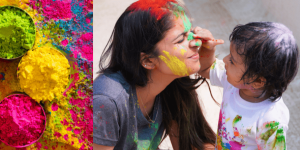
Holi celebration at my library
I hope this is where I can step in.
While I only speak selected Asian languages and mostly help Chinese- and Japanese-speaking members, I wholeheartedly agree with Victoria Angela Savage, CEO of Public Libraries Victoria, whose vision of the public library is that “Libraries are free, non-judgemental, trusted, and accessible to everyone. There’s no stigma involved in coming into a library and we feel that we can offer safe and welcoming spaces for people who might otherwise experience discrimination” (Hasan, 2023). That was what the Port Moody Public Library was to me when I first emigrated to Canada at the age of 13, and that is the library that I want to work at and create for all members of the community. Having lived in five countries and being an immigrant myself, I understand that moving to a new country and re-establishing oneself is a lonely and daunting experience. Making friends with the locals is also extremely difficult due to language barriers, different cultural backgrounds, and quite frankly, people’s lack of interest in foreign cultures and immigrant experiences. Just as Savage believes that there is an epidemic of loneliness in Australia, I believe that there is an epidemic of loneliness among the immigrant population, where few, if any, free and public spaces are created for them to learn, grow, and connect. But today’s libraries, serving more as community centers, are uniquely positioned to fill this gap. With new technologies and especially AI, we have plenty of tools to break down language barriers and offer resources, programs, and services in people’s native languages. Even more important is that we now have the tools to collect feedback from these communities, listen to their needs, and foster genuine connections. Using Lauersen’s analogy, diversity is inviting others to the party, and inclusion is asking them to dance (Lauersen, 2018). By actively listening to our members’ needs and involving them in conversations and decision-making, we invite them to dance with us and, together, create a safe space where everyone feels they belong.
References
Hasan, T. N. (2023, June 27). ‘Free, non-judgemental, accessible’: How your local library is a sanctuary of health and wellness. SBS. https://www.sbs.com.au/language/bangla/en/article/free-nonjudgmental-and-accessible-how-your-local-library-is-a-sanctuary-of-health-and-wellness/t15blzsi9
Lauersen, C. (2018, June 7). Do you want to dance? Inclusion and belonging in libraries and beyond. The Library Lab. https://christianlauersen.net/2018/06/07/inclusion-and-belonging-in-libraries-and-beyond/
@cocoatthelibrary I really appre appreciate the personal approach you brought to this reflection. And I love what you had to say about when you first arrived in I agree with you. I think a lot of people across all regions are lonely. I think our institutions are one of the best that can step up and offer ways to bring people together. It might be as simple as afternoon coffee at the library or something similar.