The purpose of the public library is the pursuit of happiness first, and education second.
John Cotton Dana, as quoted by Pam Sandlian Smith
I work among more than 450,000 volumes on U.S. and international law, most of them don’t circulate; they are costly and specialized. On paper, academic print looks like it’s fading. But what if we’ve been counting the wrong thing?
What if making an academic legal print collection visible is a new model to move forward? A practicing attorney with paid access to Westlaw might laugh at that idea. Christian Lauersen’s Impact Compass invites libraries to look beyond circulation and ask what an encounter with a book awakens: curiosity, confidence, creativity, or connection. Pam Sandlian Smith’s vision makes that possibility feel truly joyful. If a library exists for happiness first and education second, then discovery should feel more like an invitation. Her “part wizard, part genius, part explorer” staff are not at all guardians of shelves. I keep returning to the question from her presentation, “Who else is gonna do it?”
At a law library, that question feels urgent as AI reshapes both legal research and writing, and the practice of law. We teach law students to search databases whose underlying knowledge organization depends deeply on print structures (digests, reporters, statutes, annotations, indexes, and treatises). Yet many students have never encountered those structures in physical form because they have never needed to (and no one taught them). Searching a legal database can sometimes feel like navigating without a compass.
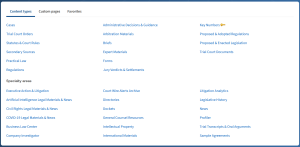
Westlaw Landing Page
Bringing students back to books could therefore be innovative. I imagine a print display as a way of exploration: students trace a legal question from a book to a database to an AI response, learning how legal knowledge is organized, connected, verified, and trusted.
At the academic law library where I work, and as a way to support advanced legal research courses and doctrinal courses with a research component, I could create a rotating “Anatomy of Legal Research” display that connects one legal question to the print sources (treatise or legal encyclopedia, an annotated code, digest, reporter, citator), the database tools (litigation analytics, claims explorer, content types), and the AI-assisted methods a researcher might use to make a persuasive and valid argument.
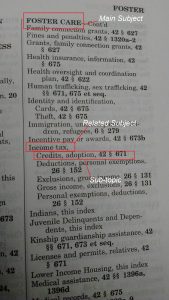
Example of an United States Code Index
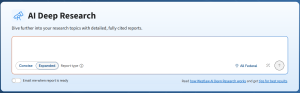
Westlaw’s AI Research Assistant
A short QR reflection could ask what surprised students, whether handling the books changed their search strategy, and whether they felt more confident evaluating database results or verifying an AI-assisted legal research output.
References:
Huddleston, B. (2022, March 29). Find it: Federal statutes. Loyola University New Orleans College of Law Library. https://libguides.law.loyno.edu/find_federal_statutes
Lauersen, C. (2024, August 25). The value of libraries from Roskilde to Toronto. The Library Lab. https://christianlauersen.net/2024/08/25/the-value-of-libraries-from-roskilde-to-toronto/
Seismonaut. (n.d.). The Impact Compass [Online guide]. Retrieved November 25, 2026, from https://experience-impact.com/
TEDx Talks. (2013, December 16). What to expect from libraries in the 21st century: Pam Sandlian Smith at TEDxMileHigh [Video]. YouTube. https://www.youtube.com/watch?v=fa6ERdxyYdo