The Idea
I’ve brought up the idea of a local art gallery in the library a few times in past assignments; however, I haven’t yet had the opportunity to really flesh out that idea and proposal. The idea for this assignment is then just that: making the library a dynamic space for art, aiming to serve both local artists and community members. The goal is to make art a more visible, accessible part of the community and encourage creativity and artistic expression for all. This program will be multi-modal and encourage both practiced and non-practiced members of the community to develop and share their work through galleries, workshops, and the star of the program: a local artisan fair where art and goods can be sold and purchased. The library then becomes the driving, central force of creativity and community.
Mission and Institutional Context
Arguments about AI are, in my opinion, tired. The general consensus seems to be: AI is here to stay, and while there are potentialities for harm, there are many contexts in which it can be used ethically and for good. I bring up AI here because, while I believe it to be true that it presents opportunities for advancement, I also believe that it has spurred a desire and a need for the analog, for physical, tangible manifestations of creativity, and provoking inspiration in its truest form. We need this innovation now because creating solely for the sake of the joy that it spurs is more valuable than ever. Rather than using innovation to further speed up the world, to create new inventions and new anxieties, this innovation will slow things down and allow community members to enjoy something unconcerned with the pervasive productivity culture that we currently exist within. Its target audience is everyone.
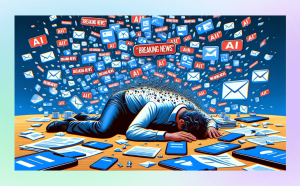
(Mistelbacher, 2024)
Action Brief Statement
Calling all artists and art lovers! In a climate that centers productivity as its driving force, celebrating self-expression in all its forms has never been more important. Whether showcasing your own art, enjoying that of others, or learning a new artistic skill, your local library has developed a series of programs- galleries, workshops, and artisan fairs- that facilitate creativity and community for all, one piece at a time.
Inspiration
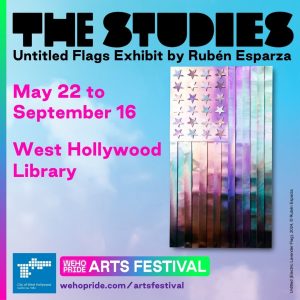
I feel very fortunate to live in Los Angeles, where local art is such a big part of our culture. Several branches of the LAPL and LA County library systems offer programs similar to what I propose; for example, the West Hollywood Library maintains a rotating gallery so that new artists can have their work shown and patrons can routinely enjoy something different (City of West Hollywood, n.d.). The most recent gallery explores the different meanings and ideologies behind the American flag:
A big inspiration for this program proposal, however, occurred via closer proximity. I have been working at my local library for about a year. However, I have been a patron of the same library for about 15 years, taking the bus there every day after school while I waited for my mom to pick me up after work. In all that time, the library has showcased the exact same few paintings and photographs (I believe there are about 5-6 total). While I am not privy to back-end conversations or whether there is a reason why the art never changes, it has always seemed like a missed opportunity to me. There are art and artists all around us- our Library Coordinator being one example- and I believe wholeheartedly that our library could become a more dynamic, exciting place with an openness from higher-ups to embrace change. We are so lucky to have so many available spaces (a large multipurpose room and an outdoor amphitheater) that could be used for more community-centered programs. One of the most valuable things I have learned in working in a library while attending library school at the same time is what I would do differently if given the opportunity. The program proposed here is the product of my imagining how I would develop programs and allocate space in my local library, taking into consideration its smaller staff and budget.
Guidelines and Policies / Staff Training and Readiness
Before developing guidelines and policies for these programs, I think it is important to define what I mean by “local artists.” When I say, “local artists,” I mean it in the most inclusive and equitable of ways. A local artist can be anyone from an individual who creates art professionally to an elementary school-aged finger-painter. A local artist is anyone who has used their imagination to express themselves or an idea. My set of proposed programs: gallery, workshops, and fair, was created with various spaces and budgets in mind. While ideally, all programs would be possible, there is ample room to condense according to library needs.
Gallery: The gallery would require few resources on the library’s part, as it would welcome local artists to temporarily display their work in a rotating gallery. The idea here is to both make the library a more interesting, dynamic space for patrons to enjoy and to empower and inspire them to create art themselves. Before their art is shown, I think we should establish an agreement that releases the library from any responsibility if the art is damaged, stolen, or copied. Ultimately, it is a public space, and unlike a museum, there are no security officers to ensure the art is not tampered with. A written, signed agreement between the library and the artist on mutual expectations would help avoid most potential issues.
There is also the additional potential issue of a backlog of art to develop and having to pick and choose what art gets shown. To combat this, staff would have to create an organizational structure in which only a certain amount of art could be accepted within a specific time frame. First, it would have to be decided how often the art is rotated: I suggest a quarterly or bi-annual rotation. Subsequently, there would be a period in which art for the next gallery would be accepted, and staff would have to decide whether art is accepted on a “first-come, first-served” basis or on merit, which would be trickier.
Workshops: This program has more potential challenges in budgetary concerns. While kid-friendly art project programs could be led by staff, more advanced YA or adult programs may require additional staffing. Spokane Public Library’s Artist-in-Residency program, which also inspired this project, offers artists workshop space in exchange for their leading community programs (Spokane Public Library, n.d.). While this is a great idea that would allow patrons access to skilled artists, the lack of workshop space would make it invalid at my local library. Providing a stipend to a skilled artisan would be one way to address this concern and offer a more comprehensive program. Referring to the Friends of the Library could also help provide this part of the funding.
Art fairs: This program would be a big one, but a fun one! It would be a community event where artisans could display and sell their work, and community members could purchase and support local art! I would originally propose to keep the scale of this event small to evaluate interest before going all-out. I would schedule the first fair in the multipurpose room, where each artist (the space has room for around 20 tables) could show and sell their work.
Timeline for Implementation
Phase 1: Rotating Art Gallery- three months to collect and rotate art
- Two stages: art collection and art rotation
Phase 2: Workshops- three months to hire a supervising artist and advertise the program
- Three stages: locate funding for artist stipend, hire artist, advertise, and host program
Phase 3: Art fair- six months to find participating artists, allocate appropriate space, and advertise the program
Marketing and Promotion
Internal users: Instagram posts and in-library signage! If the library has an email newsletter, that would also be a great opportunity!
External users: In addition to writing incessantly about bringing art into the library, I have also written on using TikTok as an outreach/ marketing strategy. BookTok is a community with millions of members with oftentimes similar interests. By engaging with a younger, book-loving community online, libraries can tap into an underrepresented market of potential users in Gen Z and Millennials. I believe wholeheartedly that the key to a library’s success is in engaging as many people as possible, and the truth is that there are hundreds (if not thousands) of members in any given community who do not know about all the programs and resources available to them at their local library. Bridging that gap through all the outlets available to us as hyperlinked librarians has immense potential. Not only is this a great strategy to reach members internal to our community, but also all over the world. I regularly find inspiration from a group of Australian librarians on TikTok who are the blueprint for what utilizing this platform can do. Note that the City of Marion Libraries TikTok account has over 20,000 followers, with over 635,000 likes (City of Marion Libraries, n.d).
This TikTok has 2.5 million views:
@cityofmarionlibraries Teamwork makes the dream work. ✨ Thank you to @Toni Marie Rawk for tagging us in @polkcolibrary’s video! 📚🥰 #marionlibraries #librarytiktok #librariansoftiktok
Evaluation and Future Expansion
Evaluation can be tricky because the traditional means of gauging community interest: attendance or enrollment statistics, do not reflect the outcome or effectiveness of the program to the individual. In a perfect world, ethnographic evaluative methodology would be used to receive natural, empirical opinions and feedback from users; however, in this case, I think that multiformat, anonymized polls can be an effective way of gauging how successful and worthwhile the program was for users. These polls could be offered either in-person, via social media, or via an emailed link and offer write-in or rating options to not deter users who prefer one method to another from participating. In addition to establishing post-program evaluation models, I believe that pre-programming evaluation models and ensuring that community members approve of the program before it happens are also important. This can also happen using the same methodology, through strategic reference interviews, community suggestion boards, or jars.
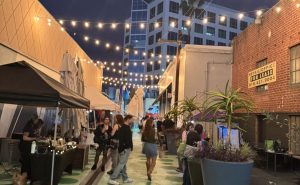
This program is great because it provides ample opportunity for expansion. The art fair, specifically, has the potential for a city-wide draw, Los Angeles having a history of successfully hosting art fairs. North Hollywood, for example, hosts a weekly Markers Mart fair that has provided an opportunity for artists to sell their work and locals to enjoy local art for years. While I don’t expect my small library to be able to host a market on that scale, I believe that small, local artisan-led fairs have immense potential in diversifying our space!
References
City of Marion Libraries. (n.d.). City of Marion Libraries [TikTok profile]. TikTok. https://www.tiktok.com/@cityofmarionlibraries
City of West Hollywood. (n.d.). WeHo arts exhibition spaces at the West Hollywood Library. https://www.weho.org/community/arts-and-culture/visual-arts/library-exhibitions
Mistelbacher, R. (2024, February 20). Managing AI chaos: A strategy for information overload. Fresh van Root. https://freshvanroot.com/blog/burning-out-from-ai/
Spokane Public Library. (n.d.). The Hive®. https://www.spokanelibrary.org/hive/