Reflection Post: On the Power of Stories

This week, I want to think about the difference between diversity and inclusion, reinforced by Professor Stephen’s interview with Madaline Paxaman. While many use the words diversity and inclusion interchangeably, there is a critical difference between the two and how we use them in the library. Diversity refers essentially to who is allowed entrance into a space. Inclusion is how they are treated within the space. We see this often in books and media that may have a non-cis, non-white character; however, oftentimes that character was created (at best) to say, “look at how diverse this project is” and (at worst) to reinforce harmful stereotypes. Libraries need BOTH diverse and inclusive materials within their collection, not only for representation, but to dismantle the narratives that have been used to marginalize and oppress. According to Stephens, “Libraries can push back against fear with the power of free information and a space that says no matter who you are, you are welcome” (Paxaman, 2019), a statement with so much power behind it. Libraries, to their core, are vehicles of social justice. Their institutional and unwavering goals to ensure equal access to information and foster lifelong learning make them inherent combatants against any form of discrimination.

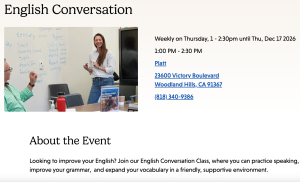
I’m thinking now about my local library’s weekly English Conversation program that welcomes non-native English speakers to come in and have the opportunity to practice and develop their English. I cannot reinforce enough how critical this program is. Native English speakers are so privileged in that ability and do not often consider how difficult it would be to live, work, go to school, maneuver through medical or legal systems, and so many other critically important aspects of life- without the ability to speak the predominant language. This is just one example of how the library can be not just a diverse, but inclusive and truly life-changing place that creates opportunities for people to thrive and assert agency over their lives.

References

Los Angeles Public Library. (n.d.). English conversation. https://www.lapl.org/events/english-conversation

Paxaman, Madaline. (2019). Challenged but not dying: The public libraries are more relevant than ever. Wayback Machine. https://web.archive.org/web/20201125214023/http://www.jutlandstation.dk/challenged-but-not-dying-the-public-libraries-are-more-relevant-than-ever/


Reflection Blog: New Models

This module is the perfect opportunity for me to discuss something that has weighed heavily on me as a public library employee. I would love any feedback from the class on whether they have encountered any similar situations at their institutions! The policy regarding obtaining a library card at my library used to be that if you could not provide proof of your current home address, you would still be able to get a “restricted card” that provides access to the computer lab and e-media. Naturally, these restricted cards were largely relied upon by unhoused patrons who do not have a home address. A few months back, our Library Director changed the policy so that the restricted cards expire and cannot be renewed after a month of use. If a patron cannot provide proof of address after the month ends, their restricted card stops working, and they cannot access the e-media or computer room. This choice was made by the Director specifically to reduce the number of unhoused patrons in the library. I was absolutely shocked by this policy change that seems to go against everything the public library institution stands for. Has anyone else encountered any similar barriers in their institutions that inhibit unhoused persons’ access to resources?

I was inspired to share this story because included in this week’s module is a video about Salt Lake City’s Homeless Tai Chi program. I found this video so, so incredibly inspiring, and I do not understand why more libraries do not provide more programs specifically for unhoused patrons who need them the most.

Unhoused persons are frequent patrons of public libraries and for good reasons; libraries are one of the few safe places they can go to get out of the Sun and be treated with dignity, as they should be. It makes me uncomfortable to even have to group people as though they are a subcategory. I hope to work for an institution that not only provides equal access to unhoused patrons, such as Berkeley’s library, which makes cards more accessible to patrons without a permanent address, but also provides resources specifically for them that consider their individual needs.

References

Rees, M. (2018, December 3). No permanent address? No problem. Berkeley library makes it easier for those without homes to get library cards. Berkeleyside. https://www.berkeleyside.org/2018/12/03/no-permanent-address-no-problem-berkeley-library-makes-it-easier-for-those-without-homes-to-get-library-cards

The Salt Lake Tribune. (2017). Salt Lake City Library hosts Homeless Tai Chi [Video]. YouTube. https://www.youtube.com/watch?v=SPCnWosz9HU&t=14s

Reflection Blog: Hyperlinked Environments

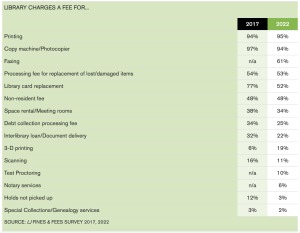
For this post, I want to reflect upon no-fee public libraries, inspired by Medium’s article “The Fine Free Library: One Year Later.” The article featured several anecdotes from patrons who had strayed from utilizing the library for fear of being charged late fees and had subsequently returned once the fees were eradicated. This is so important for library professionals to consider in structuring late policies in their own institutions. After reading Medium’s article, I found the ALA’s page on “Fines and Overdues” that explains that late fees became popularized after a 1989 article from The Bottom Line: A Financial Magazine for Libraries argued that overdue books both inconvenience other patrons and place financial burdens on the library, which may need to replace the book as a result (ALA, n.d.). One excellent, ideological counterargument to that point was made by Library Service Director, Nancy Martinez, who states that “library users amass such huge fines that- instead of paying the fines-they simply forfeit their library privileges. We want our books back, and even more we want our borrowers back” (ALA, n.d.). However, I was also interested in looking at the numbers for this argument and found an EXCELLENT report from Library Journal called “Fine Farewells: LJ’s 2022 Fines and Fees Survey” that provides a comparison of public libraries’ institutional fines from 2017 to 2022. Take a look at the graph below that highlights several areas of fines that changed over the years:

(I realized after the fact that WordPress cannot publish the graph without shrinking it; however the full size can be found within the references below)

Amazingly, they found that between 2017 and 2022, the number of libraries that charge fines for late books dropped from 96% to 36%!

Ultimately, the funds collected from late fees contribute a fractional amount when compared to a library’s overall annual budget, and Library Journal argued that the amount further lowers drastically when considering how much time it takes paid staff to collect and process them (Library Journal, 2022). I currently work in a predominantly no-fee library, and the only books that we charge late fees for are our selection of new books, which get re-cataloged into our regular collection after a few months. I think that this is a great compromise that ensures the library remains an equitable space, yet also considers patrons waiting to read the newest, popular titles that amass large hold queues.

References

American Library Association. (n.d.). Fines and overdues. https://www.ala.org/tools/atoz/fines-and-overdues

The City Library. (2018, August 10). The fine-free library: One year later. Medium. https://slcpl.medium.com/the-fine-free-library-one-year-later-d28c69743c15

Gerber, A. (2022, September 28). Fine farewells: LJ’s 2022 fines and fees survey. Library Journal. https://www.libraryjournal.com/story/Fine-Farewells-LJs-2022-Fines-and-Fees-Survey

Innovation Strategy & Roadmap: Local Art at the Library Program Proposal

The Idea

I’ve brought up the idea of a local art gallery in the library a few times in past assignments; however, I haven’t yet had the opportunity to really flesh out that idea and proposal. The idea for this assignment is then just that: making the library a dynamic space for art, aiming to serve both local artists and community members. The goal is to make art a more visible, accessible part of the community and encourage creativity and artistic expression for all. This program will be multi-modal and encourage both practiced and non-practiced members of the community to develop and share their work through galleries, workshops, and the star of the program: a local artisan fair where art and goods can be sold and purchased. The library then becomes the driving, central force of creativity and community.

Mission and Institutional Context

Arguments about AI are, in my opinion, tired. The general consensus seems to be: AI is here to stay, and while there are potentialities for harm, there are many contexts in which it can be used ethically and for good. I bring up AI here because, while I believe it to be true that it presents opportunities for advancement, I also believe that it has spurred a desire and a need for the analog, for physical, tangible manifestations of creativity, and provoking inspiration in its truest form. We need this innovation now because creating solely for the sake of the joy that it spurs is more valuable than ever. Rather than using innovation to further speed up the world, to create new inventions and new anxieties, this innovation will slow things down and allow community members to enjoy something unconcerned with the pervasive productivity culture that we currently exist within. Its target audience is everyone.
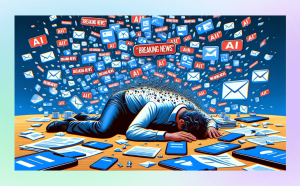
(Mistelbacher, 2024)

 Action Brief Statement

Calling all artists and art lovers! In a climate that centers productivity as its driving force, celebrating self-expression in all its forms has never been more important. Whether showcasing your own art, enjoying that of others, or learning a new artistic skill, your local library has developed a series of programs- galleries, workshops, and artisan fairs- that facilitate creativity and community for all, one piece at a time.

Inspiration

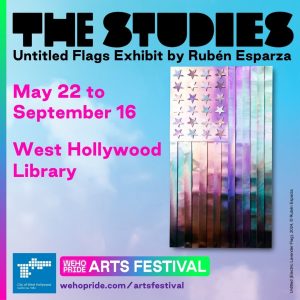
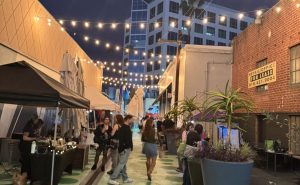
I feel very fortunate to live in Los Angeles, where local art is such a big part of our culture. Several branches of the LAPL and LA County library systems offer programs similar to what I propose; for example, the West Hollywood Library maintains a rotating gallery so that new artists can have their work shown and patrons can routinely enjoy something different (City of West Hollywood, n.d.). The most recent gallery explores the different meanings and ideologies behind the American flag:
A big inspiration for this program proposal, however, occurred via closer proximity. I have been working at my local library for about a year. However, I have been a patron of the same library for about 15 years, taking the bus there every day after school while I waited for my mom to pick me up after work. In all that time, the library has showcased the exact same few paintings and photographs (I believe there are about 5-6 total). While I am not privy to back-end conversations or whether there is a reason why the art never changes, it has always seemed like a missed opportunity to me. There are art and artists all around us- our Library Coordinator being one example- and I believe wholeheartedly that our library could become a more dynamic, exciting place with an openness from higher-ups to embrace change. We are so lucky to have so many available spaces (a large multipurpose room and an outdoor amphitheater) that could be used for more community-centered programs. One of the most valuable things I have learned in working in a library while attending library school at the same time is what I would do differently if given the opportunity. The program proposed here is the product of my imagining how I would develop programs and allocate space in my local library, taking into consideration its smaller staff and budget.

Guidelines and Policies / Staff Training and Readiness

Before developing guidelines and policies for these programs, I think it is important to define what I mean by “local artists.” When I say, “local artists,” I mean it in the most inclusive and equitable of ways. A local artist can be anyone from an individual who creates art professionally to an elementary school-aged finger-painter. A local artist is anyone who has used their imagination to express themselves or an idea. My set of proposed programs: gallery, workshops, and fair, was created with various spaces and budgets in mind. While ideally, all programs would be possible, there is ample room to condense according to library needs.

Gallery: The gallery would require few resources on the library’s part, as it would welcome local artists to temporarily display their work in a rotating gallery. The idea here is to both make the library a more interesting, dynamic space for patrons to enjoy and to empower and inspire them to create art themselves. Before their art is shown, I think we should establish an agreement that releases the library from any responsibility if the art is damaged, stolen, or copied. Ultimately, it is a public space, and unlike a museum, there are no security officers to ensure the art is not tampered with. A written, signed agreement between the library and the artist on mutual expectations would help avoid most potential issues.

There is also the additional potential issue of a backlog of art to develop and having to pick and choose what art gets shown. To combat this, staff would have to create an organizational structure in which only a certain amount of art could be accepted within a specific time frame. First, it would have to be decided how often the art is rotated: I suggest a quarterly or bi-annual rotation. Subsequently, there would be a period in which art for the next gallery would be accepted, and staff would have to decide whether art is accepted on a “first-come, first-served” basis or on merit, which would be trickier.

Workshops: This program has more potential challenges in budgetary concerns. While kid-friendly art project programs could be led by staff, more advanced YA or adult programs may require additional staffing. Spokane Public Library’s Artist-in-Residency program, which also inspired this project, offers artists workshop space in exchange for their leading community programs (Spokane Public Library, n.d.). While this is a great idea that would allow patrons access to skilled artists, the lack of workshop space would make it invalid at my local library. Providing a stipend to a skilled artisan would be one way to address this concern and offer a more comprehensive program. Referring to the Friends of the Library could also help provide this part of the funding.

Art fairs: This program would be a big one, but a fun one! It would be a community event where artisans could display and sell their work, and community members could purchase and support local art! I would originally propose to keep the scale of this event small to evaluate interest before going all-out. I would schedule the first fair in the multipurpose room, where each artist (the space has room for around 20 tables) could show and sell their work.

Timeline for Implementation

Phase 1: Rotating Art Gallery- three months to collect and rotate art

  • Two stages: art collection and art rotation

Phase 2: Workshops- three months to hire a supervising artist and advertise the program

  • Three stages: locate funding for artist stipend, hire artist, advertise, and host program

Phase 3: Art fair- six months to find participating artists, allocate appropriate space, and advertise the program

Marketing and Promotion

Internal users: Instagram posts and in-library signage! If the library has an email newsletter, that would also be a great opportunity!

External users: In addition to writing incessantly about bringing art into the library, I have also written on using TikTok as an outreach/ marketing strategy. BookTok is a community with millions of members with oftentimes similar interests. By engaging with a younger, book-loving community online, libraries can tap into an underrepresented market of potential users in Gen Z and Millennials. I believe wholeheartedly that the key to a library’s success is in engaging as many people as possible, and the truth is that there are hundreds (if not thousands) of members in any given community who do not know about all the programs and resources available to them at their local library. Bridging that gap through all the outlets available to us as hyperlinked librarians has immense potential. Not only is this a great strategy to reach members internal to our community, but also all over the world. I regularly find inspiration from a group of Australian librarians on TikTok who are the blueprint for what utilizing this platform can do. Note that the City of Marion Libraries TikTok account has over 20,000 followers, with over 635,000 likes (City of Marion Libraries, n.d).

This TikTok has 2.5 million views:

@cityofmarionlibraries

Teamwork makes the dream work. ✨ Thank you to @Toni Marie Rawk for tagging us in @polkcolibrary’s video! 📚🥰 #marionlibraries #librarytiktok #librariansoftiktok

♬ Better Off Alone – Alice DJ

Evaluation and Future Expansion

Evaluation can be tricky because the traditional means of gauging community interest: attendance or enrollment statistics, do not reflect the outcome or effectiveness of the program to the individual. In a perfect world, ethnographic evaluative methodology would be used to receive natural, empirical opinions and feedback from users; however, in this case, I think that multiformat, anonymized polls can be an effective way of gauging how successful and worthwhile the program was for users. These polls could be offered either in-person, via social media, or via an emailed link and offer write-in or rating options to not deter users who prefer one method to another from participating. In addition to establishing post-program evaluation models, I believe that pre-programming evaluation models and ensuring that community members approve of the program before it happens are also important. This can also happen using the same methodology, through strategic reference interviews, community suggestion boards, or jars.

This program is great because it provides ample opportunity for expansion. The art fair, specifically, has the potential for a city-wide draw, Los Angeles having a history of successfully hosting art fairs. North Hollywood, for example, hosts a weekly Markers Mart fair that has provided an opportunity for artists to sell their work and locals to enjoy local art for years. While I don’t expect my small library to be able to host a market on that scale, I believe that small, local artisan-led fairs have immense potential in diversifying our space!
References

City of Marion Libraries. (n.d.). City of Marion Libraries [TikTok profile]. TikTok. https://www.tiktok.com/@cityofmarionlibraries

City of West Hollywood. (n.d.). WeHo arts exhibition spaces at the West Hollywood Library. https://www.weho.org/community/arts-and-culture/visual-arts/library-exhibitions

Mistelbacher, R. (2024, February 20). Managing AI chaos: A strategy for information overload. Fresh van Root. https://freshvanroot.com/blog/burning-out-from-ai/

Spokane Public Library. (n.d.). The Hive®. https://www.spokanelibrary.org/hive/
Reflection Blog: Hyperlinked Communities

As a burgeoning public librarian, I found this module so inspiring! I have come to learn that the hyperlinked librarian is not just tech-savvy in the traditional sense but uses technology to connect with and learn about what their unique communities want and need in their local library.

As a relatively artsy person, I took a lot of inspiration from the idea of bringing local art and artists into the library space because there is so much crossover between what the library and the museum/gallery spaces offer. Spokane Library’s The Hive is incredible, especially its Artist-in-Residence program, which offers local artists studio space in exchange for their leading community programs (Spokane Public Library, n.d.). How fun would it be to attend an artisan-led program that taught you a new skill?!

While most libraries do not have the resources to establish a separate building dedicated to programming, I think that the prospect of collaborations between the library and local artists is not only possible but exciting! For example, the West Hollywood Library utilizes its open public spaces to showcase local art and rotates exhibits, so patrons always have something new to explore. I think this is a great middle-ground in creating partnerships that make the library a more beautiful, communal, and exciting space!

I would love to plan gallery events in my library that would allow patrons to enjoy local art and artists to have their art shown publicly. I even think a children’s or YA version where kids can display and take pride in their art would be incredibly fun and meaningful.

That being said, the most effective hyperlinked librarian does not design a program solely based on what they assume would be fun and worthwhile, but on what their unique community does. To this end, hyperlinked librarians can employ technological methodology, such as through social media engagement, online or in-person polls, email campaigns, etc., to give patrons a voice in what the programming at their library includes.

 References

City of West Hollywood. (n.d.). WeHo arts exhibition spaces at the West Hollywood Library. https://www.weho.org/community/arts-and-culture/visual-arts/library-exhibitions

Spokane Public Library. (n.d.). The Hive. https://www.spokanelibrary.org/hive/
 

Assignment X: The Hyperlinked Library and Considering What Libraries Do

The public library is a distinctly interesting space because (in my experience working in one), many patrons do not truly know what its function is. That might seem like a far-fetched notion, but what I mean by that is not that patrons do not know what libraries are, but that their expectations of them often skew toward one end of a diverse spectrum. The first side are the patrons who may be entering the library for the first time in many years and underestimate the public library institution, resulting in questions I answer frequently at the circulation desk, such as: how much does it cost to get a library card, can I sit inside and read without being a “member,” do I need to check in before entering the library, etc.? The patrons who ask these questions are often surprised when I tell them that access to public libraries is free, that they can sit anywhere they like and utilize whatever resources they need, including access to librarians, and that the library is a safe and open space for everyone to enjoy, again, yes, for free! Despite being saddened that patrons may have strayed from using the public library because they didn’t realize they could access it for free, it also makes my day to welcome them in and explain all the resources available to them. The other side of my proposed library spectrum is patrons who view the institution as the resolution to any frustration or point of conflict. For example, one of my coworkers once had a patron request that they personally exterminate a peacock on their property, which had been waking them up early in the morning with its peacock sounds. I have also been asked directly whether the library allows “homeless people” inside because they don’t want their children “exposed” to them when they visit.

Both queries (peacock and reference to unhoused patrons) prove to me that many do not understand the function of the public library because they overestimate or place added personal expectations/ responsibilities on the library space. All of which is to say that, as explained in the Hyperlinked Library model, the library (especially, in my opinion, the public library) is not a static place and every patron who enters it does so with vastly different conceptions and queries. It is then the hyperlinked librarian that utilizes socio-technological resources towards the goal of disrupting and subverting traditional organizational structures that may inhibit the user experience in a variety of ways. While our institutional goals, informed by core ethics and values, remain steadfast, the methodology employed to meet them must evolve.

I want to reflect on what that means to me personally as I begin to consider, as a burgeoning librarian, how I want to practice librarianship in my career. Recently, I have been inspired by TikTok, which is an insane sentence but hear me out! Over the past year or so, my page has been flooded with librarians around the world creating diverse, PLAYFUL content that appeals to a population that I think is underrepresented in libraries: teens and adults belonging to millennial and Gen Z age ranges. Again, speaking solely from my own personal experience, I have observed much library programming dedicated to either children or seniors, which is understandable when you consider that both of those groups are within transitional life phases that may require structural assistance via library patronage. However, there has been a huge recent surge in recreational readership among teens and adults that is largely influenced and informed by social media (BookTok, BookTube, Bookstagram, etc.), which I believe provides hyperlinked librarians with an opportunity to reach previously unavailable persons.

It is my opinion that the reason there is such a divided understanding of the library’s function is that cultural and mass media representation has made society view the library as a cold, one-dimensional space that may be perceived as exclusionary to certain people. Social media, for all its pros and cons, can help librarians change the narrative on what libraries are, what they do, and how they can serve all members within diverse communities.

References

Stephens, M. (2016). The hyperlinked librarian: Skills, mind-sets, and ideas for working in the evolving library. In The heart of librarianship: Attentive, positive, and purposeful change (pp. 1–34). ALA Editions.

Stephens, M. (2011, February 21). The hyperlinked library: A TTW white paper. Tame the Web. https://tametheweb.com/2011/02/21/hyperlinkedlibrary2011/


Introduction

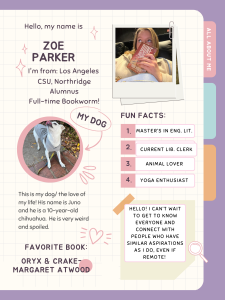
Hello!

My name is Zoe, and I’d like to share a little infographic I made for INFO 204 a few semesters back! As a burgeoning librarian, I am interested in public and children’s librarianship. I look forward to this class because I think that learning how to embrace technology is the best way to remain competitive in today’s information landscape. I’m excited to get started and to learn!