Reflection Blogging – New Horizons
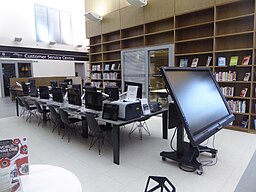
There is much to consider when thinking about the future and libraries. The NMC Horizon Report Libraries Edition considers many facets of what the future looked like for libraries five years on from when it was published in 2017, and many of those trends are still relevant today. The two trends that resonated with me the most and are related to our course content are “Patrons as Creators” and “Rethinking Library Spaces” (New Medium Consortium, 2017). Utilizing patron engagement in the library and redefining where, what and how the library will be in the world continue to directly impact service delivery and are an opportunity for where improvement and change can happen. This report was focused on academic libraries, but the issues are just as relevant for public libraries
I was particularly entertained by the 2021 Pew Research Center’s report on what experts believe will be the “new normal” in 2025.
|
Hopes
|
Worries
|
Source:Anderson, J., Rainie, L., & Vogels, E. (2021). Experts Say the “New Normal” in 2025 Will be Far more Tech-Driven, Presenting More Big Challenges.
This report does not support the techno-optimists and is almost frightening in how the worries have come to pass. These trends have me worried about the tools and technologies that are being adopted in society and in libraries, while I acknowledge that one of the themes of this class is to utilize these tools in our services. I remind myself that participatory service demands that we constantly evaluate the outcomes of our programs and the tools being used to the best of our ability to ensure that at least in our environments and settings these tools do not lead to negative outcomes.
I just came across an interesting blog post about learning and AI titled “Will AI make us stupid?” Generally, I think the author was right on the nail with the challenges of AI and learning. To really learn you must do the hard work of synthesizing and working with complex ideas in your head, which is difficult. As the author points out, in learning, some effort is wasted whereas other effort is important and useful. When AI systems encourage useful effort, they contribute to growth and improvement, but when they are poorly designed, they will not contribute to sustainable learning gains. The use of AI in school, work environments and other contexts is creating opportunities for greater learning, but it’s also undercutting learning at the same time and likely widening gaps in skill, cognition and critical thinking. This is a huge challenge and OPPORTUNITY for libraries.
The Educause Horizon Report – Teaching and Learning Edition underscores these trends, as it cites research that the frequent use of technology in young people (and older) is shortening attention spans, impairing critical thinking skills and impacting brain development (Robert, 2025). It does offer some hope though bringing to light certain technologies that are aiding learning, like AI Course assistants, a platform (FloRA) to support self-regulated and human-AI coregulated learning environments and AI created student assessment generators. The Horizon Report does highlight librarians’ role in teaching information literacy and digital literacy and how critical this will be for learning and critical thinking. It’s hard to know if the benefits will outweigh the negatives. But libraries have always been the great equalizers in society and that challenge continues and going forward may be greater than it has ever been.
Anderson, J., Rainie, L., & Vogels, E. (2021). Experts Say the “New Normal” in 2025 Will be Far more Tech-Driven, Presenting More Big Challenges.
New Media Consortium. (2017). NMC Horizon Report > 2017 Library Edition.
Robert, J., Muscanell, N., McCormack, M., Pelletier, K., Arnold, K., Arbino, N., … & Reeves, J. (2025). 2025 EDUCAUSE Horizon Report: teaching and learning edition. Horizon Report.
“Young, S. (2025, November 18). Will AI make us stupid? – Scott H Young. Scott H Young. https://www.scotthyoung.com/blog/2025/11/18/will-ai-make-us-stupid/




One Comment
Tessa Stone
I agree that it is concerning that all the worries have come to pass in 2025. I love how you mentioned that we should bring these technologies into the library, and yet we still need to monitor the outcomes. I feel like AI has similar views to when the internet first became bigger. There is a lot of fear when it comes to changes in technology. The more we learn about the downsides of technology, the more valid this fear becomes. Like most things, there are many positives and many negatives. Knowing these allows us to provide access to these technologies and also educate our patrons to get the most out of them. We can’t run away from these technologies. They have so much to offer, but we need to keep monitoring and improving them. AI is new, and we are learning that it has many amazing benefits. However, there are many cons as well. You mentioned a few of them, and to add on, there are also environmental concerns. How do we weigh the risks to the world around us and the benefits it gives us? It is a hope that we can improve the system so the cons don’t outweigh the benefits. These are important things to consider moving forward. Thank you for sharing, Matthew!