Assignment X: Reimagining Teen Spaces
What is participatory service, and why is it important for future teen services in the library? This concept was introduced in the Hyperlinked Library course and emphasizes involving the community that libraries serve in the planning and development of services and programs. It prompted me to consider how teen patrons could be actively involved in designing and brainstorming ideas about the resources, programs, and spaces they want the library to provide. Engaging teens in this process is important because it helps ensure that library services remain relevant, responsive, and meaningful for our community youth.
My awareness of the lack of teen participation in libraries began during my library assistant job orientation at a Toronto Public Library (TPL) branch. While walking through the branch, we passed the teen area, and the branch head casually mentioned that the teen zone was underutilized and that staff were unsure why. I had also noticed low attendance at teen-focused programs, such as video game and board game events. These observations led me to question why teens were not using library services more frequently. Was the timing of the events inconvenient? Were the programs failing to reflect the interests of teen users?
Reflecting on my own experiences as a teenager, I remember visiting the library every day after school to work on projects and assignments with friends. Although my home branch was small, it had a program room that served as a valuable space for studying, socializing, and playing board games. Unfortunately, the room was later converted into a storage area for musical instruments, eliminating our regular gathering space. Without a designated area for teens, we struggled to find a place where we could study or play games without disturbing other patrons. This experience made me realize how important dedicated and welcoming spaces are for encouraging teen engagement in libraries.
Youth should have a voice in determining what they need from library services rather than having those decisions made for them. Reading about The Mix at the San Francisco Public Library (O’Brien, 2019) and the Mindspot project (Transformationlab, 2009) inspired me to think about how library spaces can be transformed into vibrant youth hubs. One particularly innovative aspect of these projects was the involvement of young people in designing their own spaces alongside professional architects. This approach demonstrates the value of participatory service and ensures that youth spaces reflect the needs and interests of the teens they serve.
Libraries should also embrace the HOMAGO model—Hanging Out, Messing Around, and Geeking Out (O’Brien, 2019) —to create welcoming environments where youth feel comfortable exploring their interests and building connections. As Casey & Stephens (2008) note, teenagers need spaces where they can socialize and interact while still respecting library expectations and behavioral guidelines. In addition, libraries must engage teens through social media platforms and other channels that are relevant to their daily lives. Creating inclusive environments for all youth, regardless of race, gender, sexuality, or disability, is equally important. Libraries should strive to provide safe and supportive spaces where teens can discuss issues that matter to them and feel a sense of belonging within their community.
At my organization, TPL, many major branches have volunteer teen councils that provide opportunities for youth to participate in library planning and decision-making. Through monthly meetings with library staff, teens collaborate on programs, services, and initiatives that are relevant to their peers. Participation allows them to develop leadership, communication, and teamwork skills while earning community service hours. In return, the library benefits from valuable feedback and recommendations on how to design spaces, services, and collections that better meet the needs of teen users (Toronto Public Library, n.d.).
Teens who participated in these groups described them as welcoming and supportive environments where they can share their opinions and ideas without judgment. Many feel that they are making meaningful contributions to their communities and helping shape services for other young people. Additionally, involvement in TPL’s teen councils can provide valuable experience that may support future employment opportunities within the organization.
Empowering teens and giving them a voice in library decision-making helps foster a sense of belonging and ownership within library spaces. In turn, this can encourage lifelong engagement with library services and contribute to the development of stronger, more connected youth communities in the future.
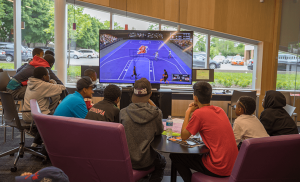
Figure 1: Teens play video games at a Toronto Public Library Youth Hub.
Toronto Public Library. (n.d.). Youth hubs. https://tpl.ca/teens/youth-hubs/
References
O’Brien, C. (2019, June 24). How San Francisco’s public libraries are embracing their changing role. Shareable. https://www.shareable.net/how-san-francisco-public-libraries-are-embracing-their-changing-role/
Stephens, M., & Casey, M. (2008, May 16). Embracing service to teens. Tame the Web.
https://tametheweb.com/2008/05/15/embracing-service-to-teens/
Toronto Public Library. (n.d.). Teen councils. https://tpl.ca/support-us/volunteering/teen-councils/
Transformationlab. (2009, Apr 20). Mindspot the Movie: The Library as a Universe [Video]. YouTube. https://www.youtube.com/watch?v=ixsOLvLSARg
One Comment
Alexandra Juarez-Young
@nimalinybk
I agree with your statement that teens should be given a voice in the planning of teen programs and spaces, and feel empowered to share their opinions. Unfortunately, in some libraries, teens are seen more as a nuisance by staff and avoided. In the library I currently work at, this is sadly the case with our teen patrons. When a group of teens enter the library there are some staff members who roll their eyes and look at them with dread. While there have been some issues, such as teens yelling, I do not think there should be this type of attitude towards the teens. Instead I think we should work together with the teens to create a space that will work for them. I think creating a teen council or advisory board is a great idea that can lead to more constructive conversations with the teens and give them a sense of ownership in the teen space at the library.