As I explored the materials for on the power of stories, it was wonderful to see how public libraries facilitate the sharing of stories through ways like “human library” programs or conducting and recording interviews of community members through programs like StoryCorps. However, I noticed that academic libraries were absent from the materials, apart from Southern Methodist University’s Oral History projects. As an academic librarian, this absence led me to consider if my academic library contributes in any way to creating a storytelling environment. I went looking, both online and in person, and found some ways I think that we do.
Oral History and Manuscript Collections
Like SMU, the BYU Library has Oral History collections. These include specific oral history collections like the Charles Redd Center for Western Studies Oral History Program, a collection of local oral history interviews conducted between 1959 and 2013, as well as individual oral histories. The BYU Library also has large holdings of manuscripts in Special Collections. These manuscripts include diaries, letters, biographies, etc.

Book Displays
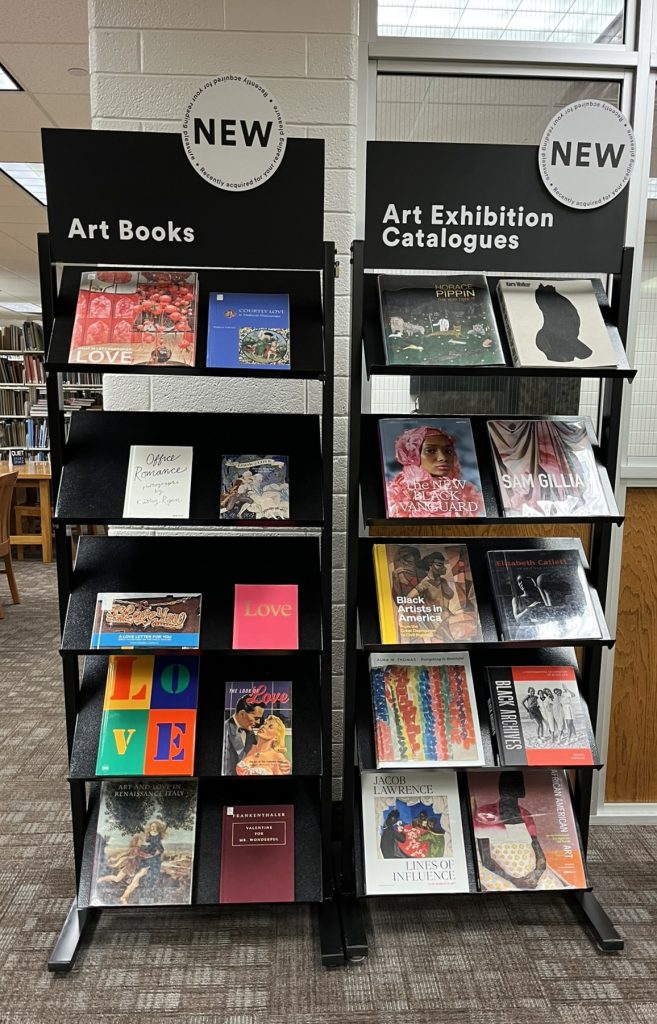
Each library department has book display shelves. The displays are curated by subject librarians or library student employees. These displays rotate frequently and are often thematically based. Sometimes, these themes correspond to monthly celebrations: for example, in February, I curated a display of books all about African American artists in honor of Black History Month. Other times, they’re based on a book type. For example, we’ve had a display of cookbooks. These cookbooks spanned cooking traditions and techniques from all over the world.
Exhibits
The BYU Library has several rotating exhibit spaces. Several of these spaces are dedicated to exhibits that highlight materials from the library collections. Other spaces are dedicated to showing art exhibits from students, faculty/staff, alumni, or visiting artists. These exhibits, whether they showcase library collection items or artwork created by library community members, are designed to tell stories. A recent art exhibit focused on family and relationships. A past collection exhibit highlighted Utah women who were in medicine between 1873-1930.

This examination of my library and the materials in this module have shown me that while different types of libraries may differ in the ways they tell and share stories (and necessarily so), all libraries can do so in one way or another. In doing so, they can create an environment where barriers can be broken and individuals feel valued.
References
Eberhart, G. M. (2018, February 10). Sharing people’s stories. American Libraries. https://americanlibrariesmagazine.org/blogs/the-scoop/sharing-peoples-stories/
Southern Methodist University Libraries. (n.d.). SMU oral history projects. https://www.smu.edu/libraries/locations/special-collections/digital/ohdh
Stephens, M. (2019). Wholehearted librarianship: Finding hope, inspiration, and balance. ALA Editions.
Wentz, E. (2013, April 26). The human library: Sharing the community with itself. Public Libraries Online. https://publiclibrariesonline.org/2013/04/human_librar/