“If you build for people, people will come,” Marie Østergård (project leader, Dokk1, Aarhus Public Libraries)
In this blog I will look at a global library trend that is found outside of the U.S. I am looking specifically at design and aesthetic when it comes to the library space. In previous blogs I wrote about how in the hierarchy of needs we can find many these met at the library. In addition to that, libraries serve not only as a third place but a space where we can work on our mental in health through programs and services. How can the design of the library space serve these needs and help serve the needs of the community? Let’s take a tour of Japan while looking at some these spaces.
- First stop: the island of Kyushu.
Map reference and directions: This library is located on the island of Kyushu. You can either take a six-hour shinkansen or fly to this island from Tokyo. It is also 1.5 hours from Fukuoka on the island.
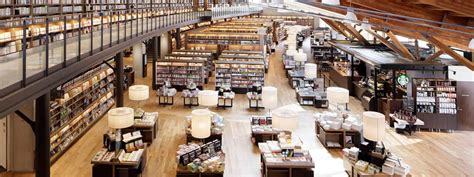
Example one: minimalist design found in Takeo City library in Japan. I’ve found that some of the way libraries are designed in Japan help promote a peace and calm atmosphere. This is a contrast to the hustle and bustle of city life and creates a space where people can enjoy a book in a quiet space. This is not only found in how the library is laid out, but lighting is another factor in the calming atmosphere. It is worth noting that this library partnered with CCC which owns and operates the Tsutaya bookstore in Japan, so the library is not the ordinary public library you come across every day in Japan. However, the blend of public space and café (it includes a Starbucks) provides a welcoming and peaceful atmosphere for those visiting.
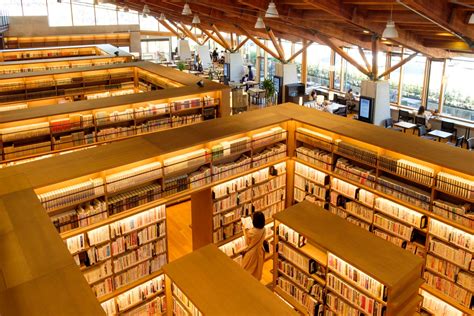
Takeo City Library in Saga, Japan. Photo from Takeo Library website.
- Second stop: Gifu prefecture on Honshu.
Map Reference and Directions: This library is accessible from Tokyo station through public transportation and shinkansen and can be reached in 2.5 hours. It is also only 50 minutes from Nagoya station by train or bus.
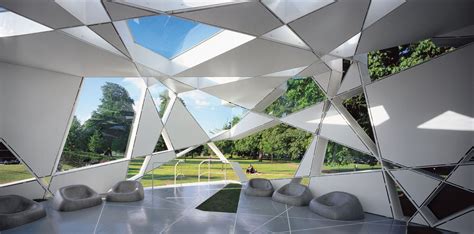
Example Two: Minna no Mori in Gifu prefecture. The phrase Minna no Mori means everyone’s forest which encapsulates what we’ve been covering this class when look at libraries as community spaces. This was built in 2015 by Toyo Ito & associates who are famous for their innovation architecture. “Ito believed that architecture should cater to both sensory experiences and practical requirements, a viewpoint that undoubtedly enhanced the significant acclaim and popularity his creations garnered.” (Parametric Architecture, 2024) This falls in line with the human need for sensory and aesthetic experiences and how this can be incorporated into a public space for everyone.
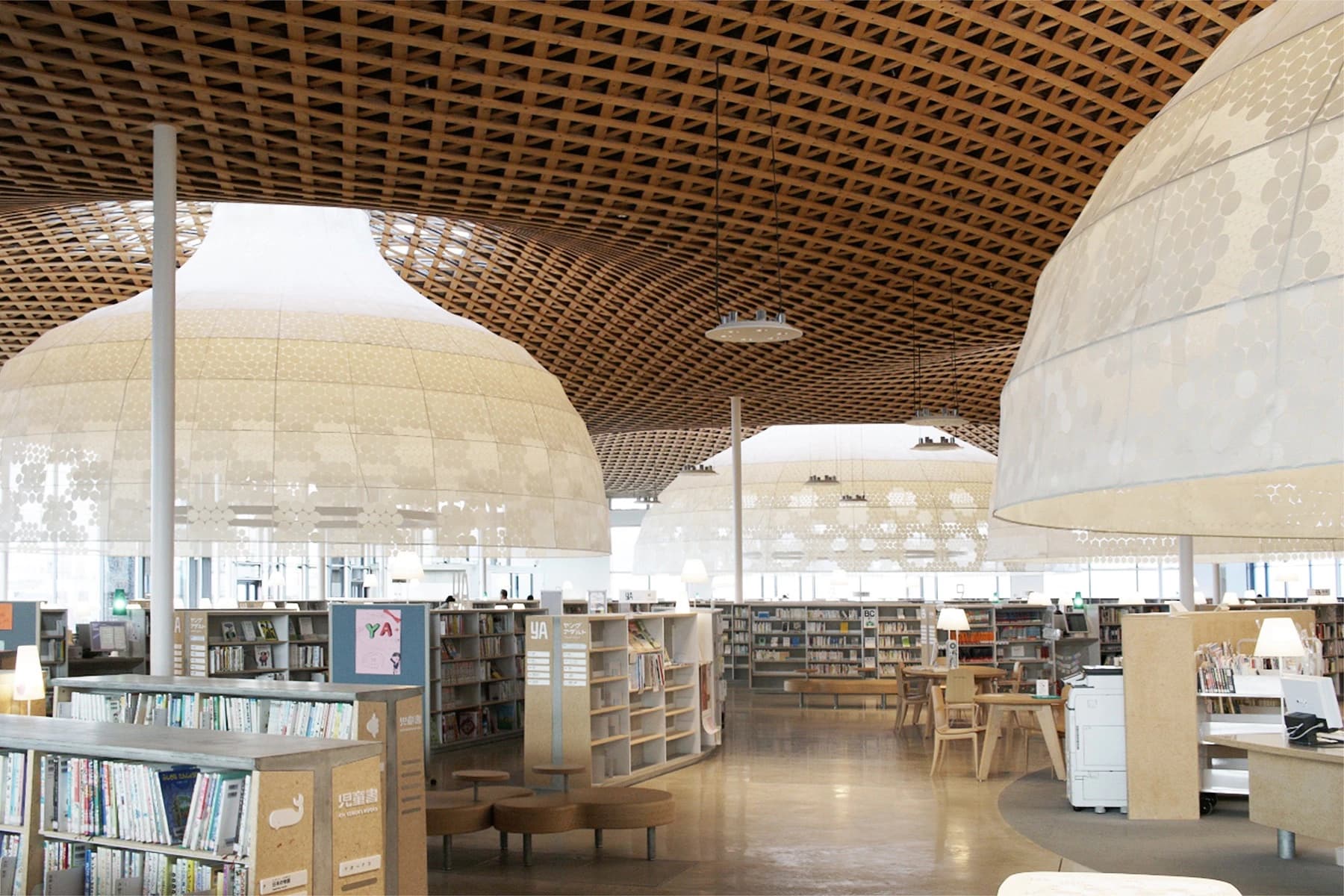
Inside the Minna no Mori Library from the Danish Architecture website.
- Last stop: Shikoku Island.
Map Reference and Directions: This library is accessible from Tokyo by plane in about 2-3 hours or by bus or train. It is on the island of Shikoku which is just south of Honshu and northeast of Kyushu.
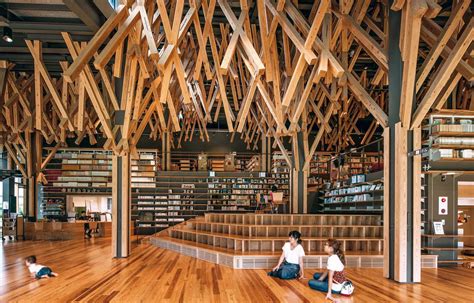
Yusuhara Library image take from gallery.
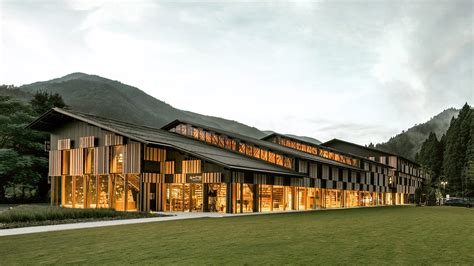
Example three: Yusuhara community library located in Shikoku Island. Also known as the Kumo-no-ue library which translates into above the clouds, this library uses the concepts of nature to incorporate into its design. The architecture followed a concept, ‘a building designed after a forest’, which was achieved through fusing into the surrounding nature:
”Its shape represents a tree with branches and leaves, whose combination makes komorebi (the interplay of sunlights and shades filtered through trees, an untranslatable Japanese sense of beauty); toky?, a traditional building system supporting eaves was chosen as a decorative motif, on the basis of which the figure of the gallery following yajirob? (a traditional balance toy) was formed by piling up wood members. This type of architecture is quite unique all over the world and provides even solemnity.” ( Yusuhara library, n.d.) Not only do patrons get to experience the unique beauty of this architecture but they can also enjoy the tranquility of nature found through this design.
Although when we think about improvement in libraries and the needs of patrons, new technology and services might come to mind. I would argue here that while those things are important, the use of space and architectural design is just as important. As with these examples in Japan, the library is part of several community spaces and built with the surrounding spaces and people in mind. This is in line with the moving beyond a “third space” (Moving Beyond the “Third Place” | American Libraries Magazine, 2016) or creation of library design that considers the library as a community. Similar to the “Libraries become the center of urban development and the incubators of community knowledge, bringing together multiple functions in a centralized hub and open, evolving learning spaces.” (Stephens, 2019) This type of design brings more patrons into these spaces. “What the staff of Dokk1 learned after the new library opened is telling: an average of 4,000 people visit each day, many staying for hours, working and socializing.” (Stephens, 2019) These things can also be apparent not in the grand library design found in these examples in Japan but simple ideas such as layout and lighting. Designs like these are essential to libraries because they take into consideration the needs of people’s appreciation for beauty and aesthetic in addition to libraries being the “living room” (Oestergaard et al., 2017) of the community–a space for a multitude of artistic and civic based activities.
More photos of the community built spaces in Japan:
References:
Kumo-no-UE Library(Yusuhara Town Library)│Kengo Kuma’s Works in Yusuhara Town. (n.d.). https://www.town.yusuhara.lg.jp/kuma-kengo/eng/town-library.html
Moving Beyond the “Third Place” | American Libraries Magazine. (2016, August 29). American Libraries Magazine. https://americanlibrariesmagazine.org/blogs/the-scoop/library-design-moving-beyond-third-place/
Oestergaard, M., Skot-Hansen, D., Rasmussen, C. H., & Jochumsen, H. (2017). Dokk1 – a place for people – rethinking the library in a new urban context. https://www.ala.org/sites/default/files/pla/content/onlinelearning/webinars/archive/Marie_Oestergaard_PLAWebinar_nov_16.pdf
Stephens, M. (2019). Heart of librarianship. ALA.