“Many of us wish we were more creative. Many of us sense we are more creative, but unable to effectively tap that creativity. Our dreams elude us.”
Julia Cameron, The Artist’s Way
The inspiration for this week’s blog comes from the idea of participatory service and transparency. I am especially interested in the idea of moving past media spectatorship especially as people become more and more involved in hobbies, crafts, creating for personal enrichment and not monetary gain. This idea comes from Henry Jenkins who wrote on the theory of participatory culture.“He argues that with the rise of digital technology and social media, audiences are no longer passive consumers but active participants in cultural production. This shift has transformed traditional hierarchies in media, allowing for greater collaboration and interaction among fans, creators, and distributors.” Masteringmedia.net Many of us become hesitant to write, paint, draw or delve into other creative pursuits when we decide it is not worth the time or effort or when we decide we are not talented enough. I noticed this trend often on Instagram as people encourage creativity based on your individual growth and feeling that comes from the act of creating itself.
Becoming a talented artist equals fame and money although that is not always the case. We also put a lot of worth into artists and creatives but when we look at the funding for the arts in terms of education it is a different story. This site looks at the budget cuts that arts education are currently facing. Incorporating the arts into library programs and services as a way for patrons to be part of their community and be active participants touches on the notion of participatory culture and makes a space where those individuals can access their inner artist.
This idea comes into fruition at the Chicago Public Library. Henry Jenkins points out that the shift in how we approach media creates greater collaboration and interaction with fans, creators etc. but in the case of public libraries it creates a stronger community. YouMedia is a program at the Chicago Public Library for teens where they can use digital media to create using technology including 3D printers, laptops, and even vinyl cutters. “With an emphasis on digital media and the maker movement, teens engage in projects across a variety of core content areas including graphic design, photography, video, music, 2D/3D design, STEM and hands-on making.” This also explores into the idea of radical trust mentioned in our lecture on participatory service. We trust these teens to use this equipment and in turn I think this also builds confidence and responsibility in teens. Teens should feel as though an adult trusts them enough to be responsible in this context. In addition, teens can not only connect with their community while being active participants and consumers of their peer’s art, but they can tap into their inventive and artistic selves. When we create something in the context of community the reason for making the art is not judged but its monetary worth or in terms of artistic genius. We are creating for something more important.
Some of the programs I found on the Youmedia Chicago Instagram page:
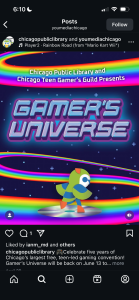
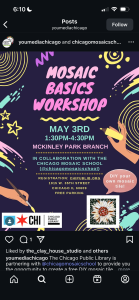
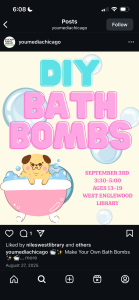
On a sidenote: I love the CPL mascot. A more subdued version of the Duolingo owl.
Great post, Tara! I enjoyed your parallel to Jenkins’ participatory culture theory, as I studied this in particular during my first semester for Information Communities. One of the downfalls of social media and creativity is detrimental comparison to others’ output rather than just creating for the sake of it. For example, bullet journals are a big one, where people rise to influencer status with these gorgeous layouts and pens and washi and stickers, which can make the whole enterprise seem daunting. Rather, instead of focusing on if it’s good enough, to simply create and share with the community and become a part of the dialogue. Examples of communities where participatory culture still thrives are for books, video games, and anime/manga, where fans create fanart, fanfiction, conversation, ideas, videos, podcasts, and more that takes the focus content and expands it into a larger community, which in turn deepens connections and the communities’ canon and histories. Bringing back to libraries, that same parallel can exist as you discussed. The community benefits and is enriched by the creative endeavors of its patrons, and thus can forge closer connections as a whole. Those programs and contributions strengthen the fabric of the library’s community.