
What do you know about Mahjong? Quick vote on my poll: Vote Here | See results here
Music tangent: I invite you to listen to Last Night of the Dynasty (Instrumental) by Shanghai Restoration Project. It reminds me of the opening theme song from Kipo and the Age of Wonderbeasts.
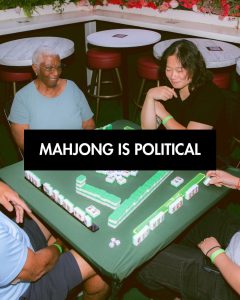
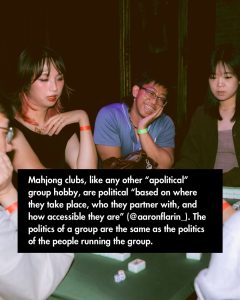
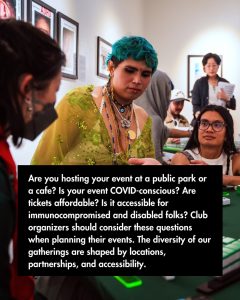
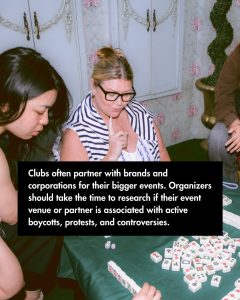
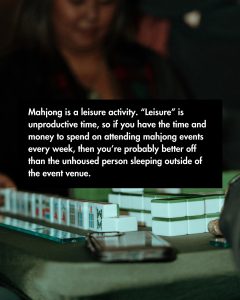
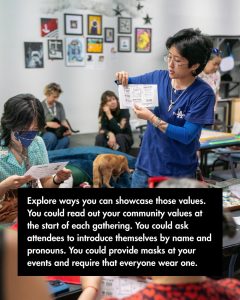
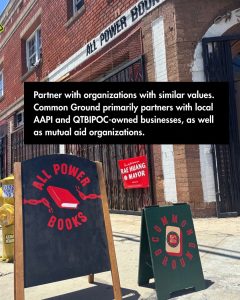
I first heard of music by Shanghai Restoration Project on this Instagram post by Common Ground Mahjong (2026) titled, “Mahjong is political”.
 |
 |
 |
 |
 |
 |
 |
 |
In a similar vein, are hyperlinked libraries are political too? When public libraries insist on wearing the guise of apoliticalness, it sounds like a way of saying, “[w]e [don’t] architect for prejudice, but we [don’t] design systems to combat it either” (Boyd, 2016).
 |
 |
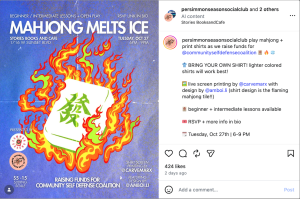
Mahjong social clubs are growing in popularity for young Asian Americans in U.S. metropolitan areas. These meetups are usually free to attend, volunteer-run, or grant-funded. Mahjong meetups can ward off social and cultural loneliness. Mahjong meetups can also mobilize a community to take political action. Public library staff could build a relationship with members of the Asian American diaspora through playing together at mahjong meetups. I started to daydream of these outcomes when public libraries meet mahjong communities:
- The public library responds to the the ongoing diverse needs of Asian American diaspora. For example, diverse patron needs may be revealed when networking with the Queer Trans mahjong group (Goh, 2026), the Filipino mahjong group, and the 1.5 Generation Asians mahjong group
- The public library co-creates community-led mahjong programming inside and outside the brick and mortar building.
- The public library curates technology and resources that empowers patrons to research any topic and publish content about it. For example, a research and pedagogy workshop on how to teach a digital public about mahjong connecting with race, gender, ethnicity and sexuality in context with U.S. history (Lang, 2021).
- The public library models to the public an anti-racist approach to participating in the mahjong community. For example, identify and respond to instances of Sinophobia and cultural appropriation relating to mahjong (Bloomberg, 2026). Should all cultural practices be made accessible to all people at all times? If the answer is no, how can public libraries still sustain a meaningful partnership with underserved communities?
I am a Cantonese American future librarian, and this week I got to play mahjong in person with other Gen Z and Millenial Asian American diaspora. What joy! Language and generation barriers kept me from connecting with mahjong earlier, even though I could hear it in my periphery at annual family gatherings.
Weeks earlier, during a haircut, I mused aloud to my stylist, “I’ve gone to a few local boardgame meetups, but I didn’t feel like I fit in. There’s a lack of diversity, too.” A barber leaned over and chimed in about mahjong meetups in the Chinatown-International District. I knew about those. So why hadn’t I been going? Would I brave the long rainy commute, the seasonal gloom, and the city parking? The answer would finally be yes, because I need the reminder that immigrant joy belongs here.
Lately, I had trouble writing about hyperlinked communities for reasons related to ICE activity. (Anyone else?) I’m glad I went to the mahjong meetup. After playing multiple games, I felt replenished in cultural joy. I had more energy to write this assignment. One method of replenishing the heart is participating in local community. Learning more about the following helped me stay grounded:
- mutual aid groups near me
- volunteer groups for serving hot meals near me
- city council agendas and how citizens can speak at these meetings
- finding out what happens when I contact my congressional representative https://www.house.gov/representatives/find-your-representative
- mahjong meetup groups near me
During the mahjong meetup, I got to hear, read, and speak Mandarin and Cantonese. I got to feel close to my heritage with a beginner-friendly atmosphere. I got to feel close to peers in my community while washing the tiles together. I got to ask about recommendations on local resources and hear about upcoming cultural events. I felt inspired to ask public librarians to consider partnering with some mahjong social groups. I felt inspired to teach my own siblings and cousins about this game, and see if we can play together with our folks this holiday season.
Mahjong meetups are attended by people I can comfortably ask:
- What do you think about…?
- Who do you know who can…?
- What have you heard about…?
- Where would you go if…?
Mahjong communities for Asian American diaspora inspires a daydream about the potential of public libraries partnering with mahjong communities where values align. How can public libraries increase civic and cultural literacy (Jensen, 2017) in partnership with mahjong meetups? What are your dreams for what happens when public libraries partner with Asian American mahjong communities?
References
Bloomberg. (2026, May 7). Second-generation kids of Asian diaspora embrace mahjong. https://www.straitstimes.com/world/united-states/mahjong-is-the-third-place-of-the-moment-for-a-burnt-out-generation
Boyd, D. (2016, January 25). What world are we building? https://medium.com/datasociety-points/what-world-are-we-building-9978495dd9ad
Common Ground Mahjong [@commongroundmahjong]. (2026, September 26). I watched a reel by @aaronflarin_ about “the art of politicizing your group hobbies (slowly).” Here are some ideas that [Photograph]. Instagram. https://www.instagram.com/p/Ddz3OOfjz-8
Goh, S. (2026, February 27). QT Mahjong Club turns game night into space for queer Asian community. https://southseattleemerald.org/community/2026/02/27/qt-mahjong-club-turns-game-night-into-space-for-queer-asian-community
Jensen, K. (2017, February 10). Libraries resist: A round-up of tolerance, social justice, & resistance in US libraries. https://bookriot.com/libraries-resist-round-tolerance-social-justice-resistance-us-libraries/
Lang, C. (2021, May 1). What the surprising history of Mah-jongg can teach us about America. https://time.com/6045817/mahjongg-history/