One foundational concept that strongly resonates with my professional values is participatory service, supported by transparency. In the Module 4 lecture, Stephens (2022) explains, “Libraries create and facilitate connections. The library can be the heart of the community, and every community member that participates makes it even stronger.” This idea reflects the kind of information professional I want to be, both in my current role as a public library assistant and as I continue to grow professionally. I want to create experiences that do more than welcome people into the library. They should invite community members to contribute, connect with others, and play an active role in shaping their library. Listening to their needs, interests, ideas, and feedback is essential to keeping libraries responsive and relevant.
Initial Reactions and Questions
Participatory service has led me to consider what library workers need to provide community-responsive services. How can administrators ensure that staff receive adequate training, tools, time, and resources? How can frontline employees, who regularly hear patrons’ questions and feedback, be more meaningfully included in decisions?
During a recent meeting with my library director, I shared programming ideas inspired by needs I had observed at my branch. Although I appreciated the opportunity, I encountered some resistance to offering craft programs for adults. The concern was that libraries should emphasize their role as information institutions. I agree that helping people find and understand information is central to our profession. However, this course has encouraged me to consider a broader understanding of learning. Guided craft programs teach participants to use tools, follow processes, practice techniques, solve problems, and express themselves creatively. They also provide access to materials some patrons may not have at home while supporting social connection and well-being. If participatory spaces are places where learning occurs, then creative programs can support the library’s educational mission.
Putting Participatory Service into Practice
Stephens (2022) asks us to consider how we can help people feel connected to and involved in the library’s mission. I apply this approach when planning and facilitating programs at my branch. One example is the ESL Conversation Club that I co-facilitate. We initially adopted the structure used by our main library but quickly discovered that it did not fit our participants’ needs. Many members already had some English-language education but wanted to practice speaking, learn about local and American culture, and apply English to everyday situations. In response, we made the club more conversational and participatory.
Participants now interview partners during opening activities, learn from one another, and recommend subjects for future lessons. Their questions have inspired lessons about local history and the origins of community place names. When a restaurant employee asked about workplace safety, we developed a lesson about protections provided by Cal/OSHA. These experiences have shown me that learners bring valuable knowledge, questions, cultural perspectives, and goals to the program.
The connections created through the club can also extend beyond the library. After one participant returned to Taiwan, her daughter requested a copy of a lesson because her mother had enjoyed the club and wanted to continue practicing. In the future, I would like to adapt the community soup potluck idea discussed in the Module 4 lecture (Stephens, 2022). Members could bring a favorite cultural dish and share its meaning with the group, creating another welcoming opportunity to practice English and learn from one another.
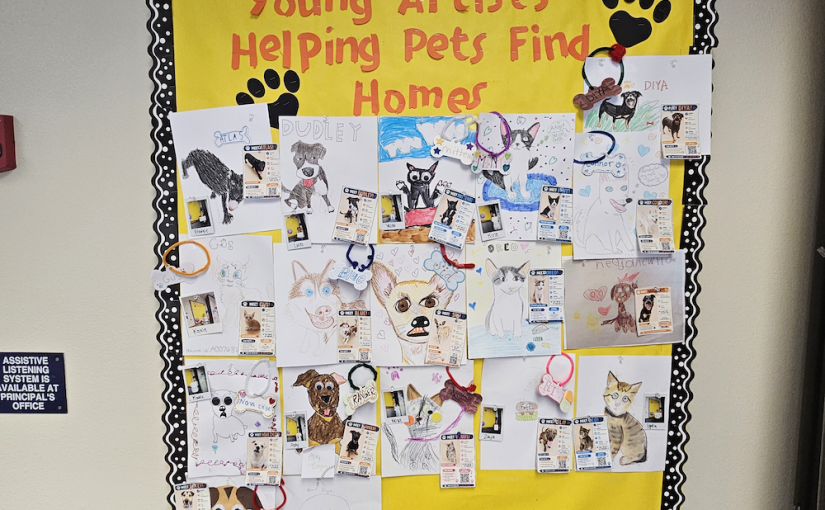
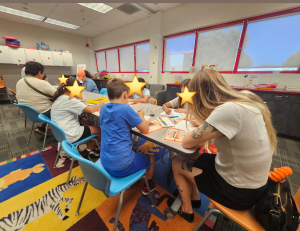
Another example is Paws & Portraits, a program I developed with our city’s animal shelter. Children selected profiles of real shelter animals and recreated their portraits through art. We displayed the finished pieces on a library bulletin board with information about the animals and adoption. Participants also received buttons featuring the animals they portrayed and learned about other ways to support the shelter, including volunteering and taking an animal on a “blind date” outing.
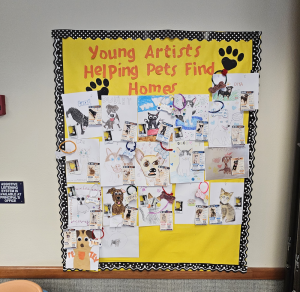
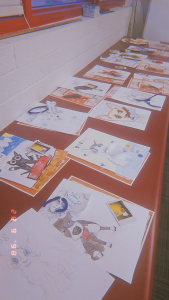
The program was designed for children ages 9 to 12, but many parents wanted to participate with their children. It naturally evolved into a family experience that connected creativity, learning, and community service. The display also extended participation beyond the program by sharing the animals’ stories with library visitors. This connects with Stephens’s (2019) statement that libraries should “keep stories, share stories, and make stories” (p. 92). Participants became storytellers and advocates who helped shelter animals gain visibility, and several animals were later adopted. In the future, I would intentionally offer it as a family program because its evolution showed me how listening to participants can make a program more inclusive and responsive.
Participatory service has helped me recognize that a successful program is not only something library staff create for the community. It can be something staff and community members create together. Through the ESL Conversation Club and Paws & Portraits, I have seen how conversation, creativity, and shared purpose can transform attendees into contributors and storytellers and deepen their connection with their community.
References:
Stephens, M. (2019). Wholehearted librarianship: Finding hope, inspiration, and balance. ALA Editions.
Stephens, M. (2022, August 16). Hyperlinked library participatory service & transparency [Video]. Panopto. https://sjsu-ischool.hosted.panopto.com/Panopto/Pages/Viewer.aspx?id=2a19a4b6-e945-4d2e-abf1-aef3014172a5