
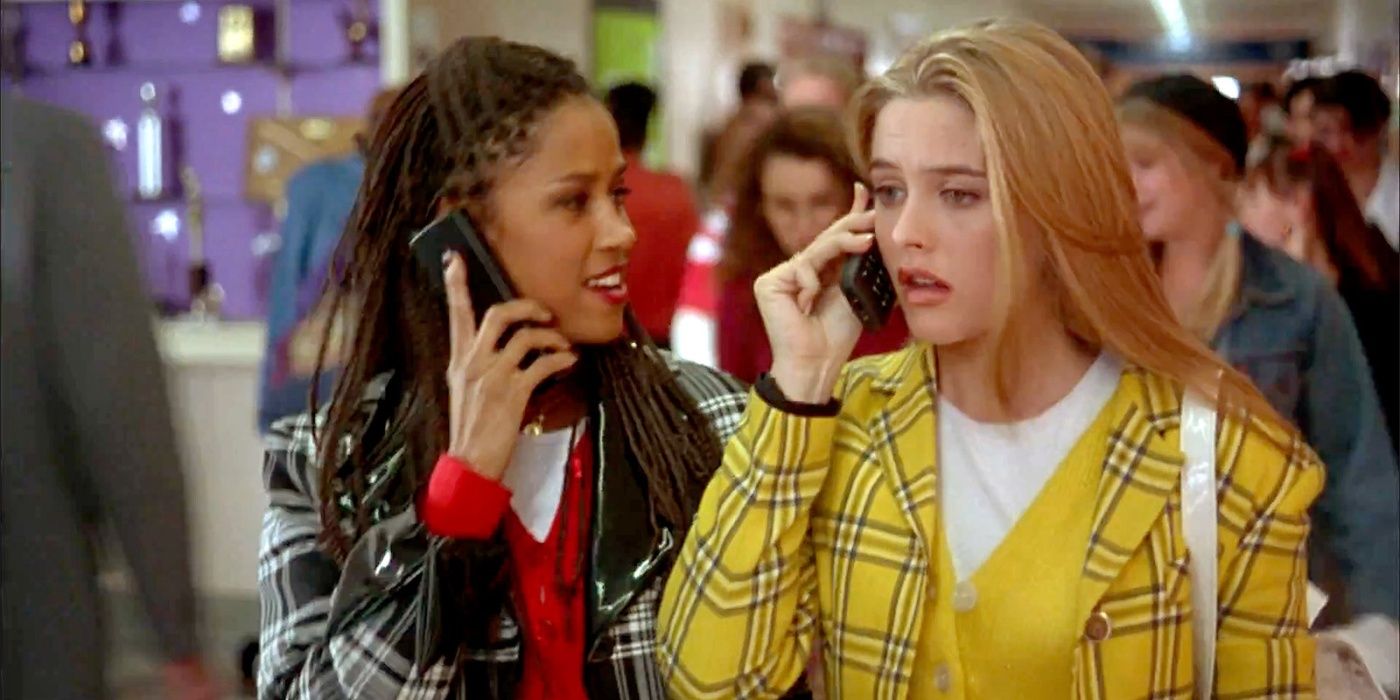
10 “Clueless” Storylines That Were Way Ahead Of Their Time by Kacie Lillejord
Having a cell phone in the past was considered a luxury, a scene in Clueless where the main character Cher was conversing with her friend Dionne on their grades with their debate teacher, and they met up in the middle of the hallway to continue their conversation. It was for a humor purposes but it was the future we will soon know. Even if this scene is for the young and rich of Beverly Hills at the time. We can do converse on our cell phones in recent times, maybe not in high school now due to restrictions. I recall my time I had a flip phone that was able to text 18 years ago, while 30 years ago, they still had pagers to message and tell each other to call. As the article states, phone usage is more common now with texting and playing games. So, what is it about phone usage for our library services to have an information environment for.

Dhruv vishwakarma via UnSplash
The two articles I want to discuss is how common it is to have a cell phone with today’s standards and how we can economize lending out phones to the ones who don’t have them. First article to discuss is how commonplace cell phones are in the world.
As I pointed out, Cell phones were considered a luxury to have, as well as other technological devices such as computers, laptops and even game consoles. In the article, Laura Silver writes “People in advanced economies are more likely to have mobile phones – smartphones in particular – and are more likely to use the internet and social media than people in emerging economies.” So even if this article is set several years ago, now in recent times, that at least 90% of Americans own a phone according to Pew Research Institute (Gelles-Watnick, 2024). Proving that the U.S. does have 10% of people that don’t own a smartphone.
“Access to technology is a basic human right.”
In the second article, it discusses the homeless populations of Las Vegas, Nevada. Where the library provided a cell phone lending service program for the underserved community. This effort instigated benefactory results towards the people in need. Providing numbers, apps and information for those who want to apply for community efforts, jobs and help for their issues at hand. The reason why the program expanded was due the covid pandemic, where technology started to advance more for services provided online. Thus the funding and costs went towards providing a 18-month lending period for the homeless, giving them a great place to start. Since we are in a country that has 90% of people who own a smartphone, we should consider those who don’t own one, and that is a luxury for them.
Cell phones are our modern world, no one could imagine in the past the extent the power of information in our hands as we do now. Libraries can benefit and make use of having smart phones through having apps, help providing them and so much more.
References
Gelles-Watnick, R. (2024, January 31). Americans’ use of mobile technology and home broadband. Pew Research Center. https://www.pewresearch.org/internet/2024/01/31/americans-use-of-mobile-technology-and-home-broadband/
Lillejord, K. (2020, February 29). 10 “Clueless” storylines that were way ahead of their time. ScreenRant. https://screenrant.com/clueless-storylines-ahead-of-their-time/
Silver, L. (2019, February 5). Smartphone ownership is growing rapidly around the world, but not always equally. Pew Research Center. https://www.pewresearch.org/global/2019/02/05/smartphone-ownership-is-growing-rapidly-around-the-world-but-not-always-equally/
Stephens, M. (2019). The Wholehearted Librarianship: Finding Hope, Inspiration, and Balance. ALA Editions.
@anitaagarza88 I just deleted a spam comment that found its way to your blog. It was just some person trying to link to themselves. Apologies for that.
I’m so glad you took a look at this topic. And it reminded me of back in the day when the phone seemed so much more unique and not everybody had a smart phone and all those things and now as they say and I probably said this in my little lecture a lot of people think of their phones as an extension of themselves and the means to connect to their loved ones. I still agree with that 100% I’m in a family chat with people all over the United States that is so encouraging and wonderful to keep us close.
Anita, I agree that we need to make it our business to get smartphones into the hands of as many underserved people as possible. So much personal business is done online that they really are an important lifeline for folks these days.