
This week’s module focused on hyperlinked communities and explored how these communities provide various avenues of connection and services for users at the library through the use of technology and advocacy strategies. Library advocacy is the process of supporting and promoting the value, services, funding, and role of a library within its community and in this module the idea that most resonated with me was that this approach was not just about outreach, but about the users and ensuring the services reflected their needs.
The lecture video created by Dr. Michael Stephens titled Hyperlinked Communities, states ”everything you do should involve your users every step of the way (2025).
I think this really reflects the goals of libraries because libraries are there to provide people with access to information, knowledge, and resources that support learning, education, research, and personal growth. Involving users every step of the way is important for libraries to ensure they are providing services that are relevant, accessible, and inclusive through their understanding of community needs. If libraries involve their users, they are more likely to understand their needs and meet those needs better. In this way the goal of the library is not simply to just provide resources, but to provide resources very thoughtfully, with regard to the very intricate needs of users. A great strategy libraries may employ to reach their users is advocacy. Advocacy promotes library services, helps to share user success stories, and uses social media, emails, and community partnerships to connect to communities. This strategy also encourages users to provide feedback and participate in campaigns that highlight how the library benefits the community. According to the book The visible librarian : asserting your value with marketing and advocacy, getting to know your library users needs and preferences gives you an edge in the market, builds relationships, and helps to demonstrate the libraries value (Siess, 2003). There are many different approaches to outreach and advocacy for libraries. Social media is a valuable approach to connect to users and connect to a wide community.
Social media supports the promotion of library events, services, new books, new technologies, and community programs to users. Through social media libraries connect to their users and can gather feedback from them in order to understand them better. It is very important for libraries to understand their users for feedback. The book The heart of librarianship: Attentive, positive, and purposeful change discusses the importance of librarians to think beyond-the-walls of the library as a way forward to reach as many people as possible in their communities (Stephens, 2016). One way to meet users beyond-the-walls of the libraries is by going to the users where they live and spend their time. One such beyond-the-wall method libraries can reach out to users is through bookmobiles. This article “The necessary nearness and ode to bookmobiles” explains how libraries can reach out to their users using proximity and accessibility by bringing books, library staff, and activities directly to local communities (Lauersen, 2025). Advocacy within libraries may help to emphasize partnerships and outreach with schools, families, and community organizations to connect people with library services where they are located because it demonstrates a library’s value and strength in being able to reach people where they live and participate in their local community.
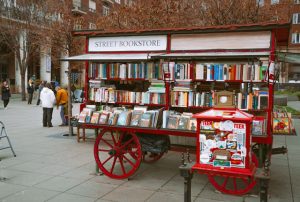
Book mobiles may come in all shapes and sizes as seen in this photo (Oluwatobiloba, 2026).
Reflecting back on how libraries should include users within every aspect, bookmobiles really showcase how libraries can meet users where they are and build better relationships in the community. The bookmobile offers communities a way to engage with their libraries through accessibility and libraries depend on their users to access and use their services to help demonstrate their value and gauge users’ needs through their interactions with the services a library may provide. Additional services a library can use to connect to their users are through kiosks and book lockers. The article “Revolutionizing public libraries: Three ways that alternative service delivery strategies can meet the challenges of a booming population” discusses the strategy to use kiosks and hold lockers as a method of self-service for library members and are valuable to library members through ease of access and location (Warner, 2024). These methods of outreach to community members helps to increase circulation of library materials and bridge service delivery gaps in expanding communities. Kiosks, bookmobile, and book lockers all promote library advocacy by bringing books and library services to people in the community where they live, work, or spend their time. These methods demonstrate a library’s ability to go beyond to reach their members by going to them. By providing access to library services and materials to those who may not regularly visit the physical location of a library building helps to demonstrate the impact and value a library has to connect to users by making their resources more readily available to them. These methods of outreach and advocacy are great ideas to connect to real-world library services because bookmobiles, book kiosks, and social media allow for libraries to reach users beyond the traditional library building and demonstrate their determination to reach their users. These services provided by libraries support advocacy by increasing access and building relationships by meeting library users where they are. This sparks the possibility for people with limited methods of transportation or limited time to be able to still have access to the library through these services making the library more readily available to them.
References
Lauersen, C. (2025, February 5). The necessary nearness and ode to bookmobiles. Christian Lauersen. https://christianlauersen.net/2025/02/05/the-necessary-nearness-and-ode-to-bookmobiles/
Oluwatobiloba, A. (2026). A red street bookstore cart filled with books [Photograph]. Unsplash. https://unsplash.com/photos/a-red-street-bookstore-cart-filled-with-books-WpMFWVqazlQ
Siess, J. A. (2003). The visible librarian : asserting your value with marketing and advocacy. American Library Association. http://swbplus.bsz-bw.de/bsz12181386xinh.htm
Stephens, M. (2016). The heart of librarianship: Attentive, positive, and purposeful change. ALA Editions. https://www.dropbox.com/s/gc9ecokb972xgil/HeartofLibrarianship.pdf?dl=0
Stephens, Michael (2025). Hyperlinked Communities [Lecture recording]. Panopto. https://sjsu-ischool.hosted.panopto.com/Panopto/Pages/Viewer.aspx?id=3eacdb23-84fd-49e5-9975-aef3014b3ed2
Warner, L. (2024, January 17). Revolutionizing public libraries: Three ways that alternative service delivery strategies can meet the challenges of a booming population. Medium. https://medium.com/@lauracwarner/revolutionizing-public-libraries-ff7fed3d12c5
One response to “Taking the Library to the People: Advocacy on Four Wheels and More!”
Hello Alexis!
I really enjoyed reading your post about the importance of tailoring library materials to suit the needs of their community and also bringing library materials around their community through the usage of book mobiles. As librarians, outreach is a major tool we can use to connect with our community by advocating library services, programming and materials. Additionally, connecting with the community is a great way to understand community needs, for instance if a community needs self service book kiosks because they cannot visit the library during normal hours of operation, 24/7 book kiosks can help alleviate the stress of missing a book pick-up date.
Additionally, you made a great observation in seeing the power and influence social media can have when promoting library activities and resources. For instance, the Hello Kitty library cards that dropped for Los Angeles County Libraries were extremely popular and circulated heavily across social media. Library staff were able to allocate enough staff to accommodate the demand and long lines.
Great post! I look forward to reading more of your posts and your insights.
Best,
Aldore