Project Forward
This project is a perfect fit for me because I have been developing my Librarian Organizer training program for about 7 months now and I’ve spent a lot of time exploring how community organizing can strengthen public libraries. This assignment gives me an opportunity to take those ideas a step further by developing a practical strategy for putting them into action which is really exciting! As part of the assignment, I am preparing for the program to be piloted at a real public library that I am very familiar with her in San Diego. I access this particular library frequently as a patron and I have studied it extensively from many different angles for different classes in this program. It adds a little extra challenge but I think it’s a good exercise because it is my goal to launch this program for real one day. My inspiration for the Librarian Organizer concept comes from years of union and political organizing experience marrying with my love for public libraries and information institutions and recognizing how powerful they can and should be in our communities.
Building stronger public libraries through relationships, participation, and community leadership
Implementation Period: 12 months
Proposed Institution: San Diego Public Library (SDPL)
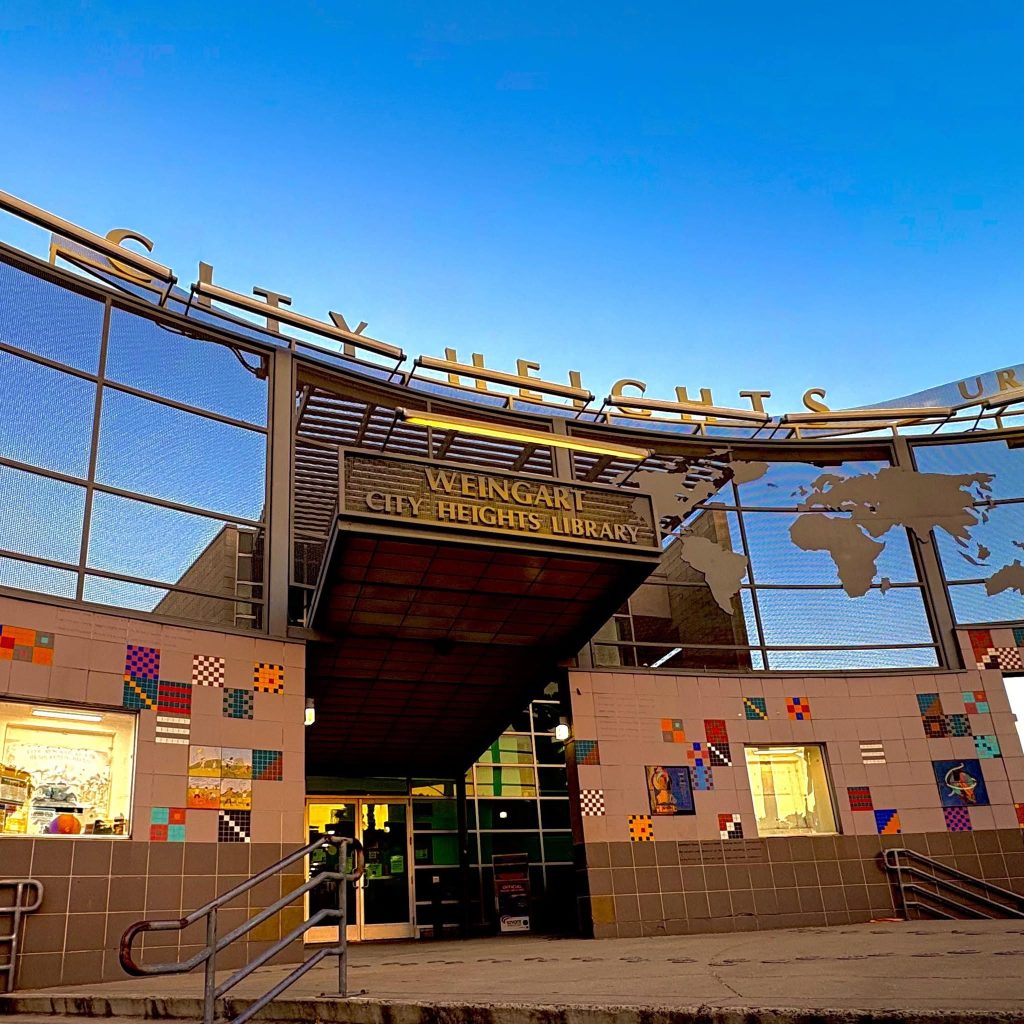
Pilot Location: City Heights/Weingart Branch Library
Innovation Overview: The Librarian Organizer Program
I have talked before in my posts about developing a Librarian Organizer Program and I think this innovation strategy provides an opportunity to turn those ideas into something that could realistically be implemented in a public library. The concept is relatively simple: Libraries don’t need more marketing; They need organizing.
Public libraries provide extraordinary educational resources, technology, programming, and community spaces but many residents remain unaware of these opportunities or face barriers that prevent them from participating. Rather than waiting for people to discover the library passively, I propose training librarians to become active community organizers who build relationships with the people and organizations in the neighborhoods they serve. The program would begin as a 12 month pilot at the San Diego Public Library’s City Heights/Weingart Branch.
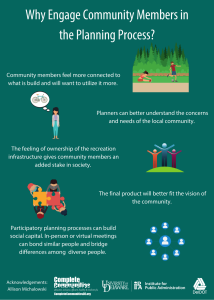
The primary objectives would be to increase community participation, develop lasting partnerships with neighborhood organizations, and encourage residents to become active contributors to library programming and services. I want to move beyond the idea of libraries providing services to communities and toward a model where communities actively participate in shaping their libraries.
Mission and Institutional Context: Why This Innovation, Now?
The San Diego Public Library’s mission is “to inspire lifelong learning through connections to knowledge and each other” (San Diego Public Library, n.d.). I think the second half of that statement is especially important because it recognizes that libraries are not just about providing information they are also about connecting people.
I did an in-depth study for a class recently of SDPL’s 2023 Library Master Plan which emphasizes equitable access, community engagement, and adapting library services to changing community needs. More than 11,000 San Diegans participated in developing that plan (City of San Diego, 2023) so we are off to a good start with community engagement before the pilot ever launches. I propose beginning the Librarian Organizer Program at the City Heights/Weingart Branch which serves one of San Diego’s most culturally diverse neighborhoods and is a branch I visit frequent. It provides public computers, educational programming, creative resources, and community gathering spaces. City Heights is a promising setting to test a more relationship based approach to community engagement. The Librarian Organizer Program would build upon SDPL’s existing work while providing a more structured approach to community involvement. Libraries have reached a point where offering excellent services is not enough, they must actively build relationships with residents, understand the conditions affecting their communities, and invite people to participate in the institution’s future.
Action Brief Statements
Action Brief: Community Members
Convince community residents, especially those who do not regularly use the library, that by connecting with Librarian Organizers and participating in library activities they will discover that their public library is more than a place for books. It is a community institution where they can learn, build relationships, access resources, and influence the services available to them, because public libraries exist to serve and strengthen their communities.
Action Brief: Library Staff
Convince library staff that by learning and practicing community organizing techniques they can develop stronger relationships with residents, better understand community needs, and increase meaningful participation in library services, because successful public libraries are built through relationships, trust, and community involvement.
Implementation Strategy & Roadmap
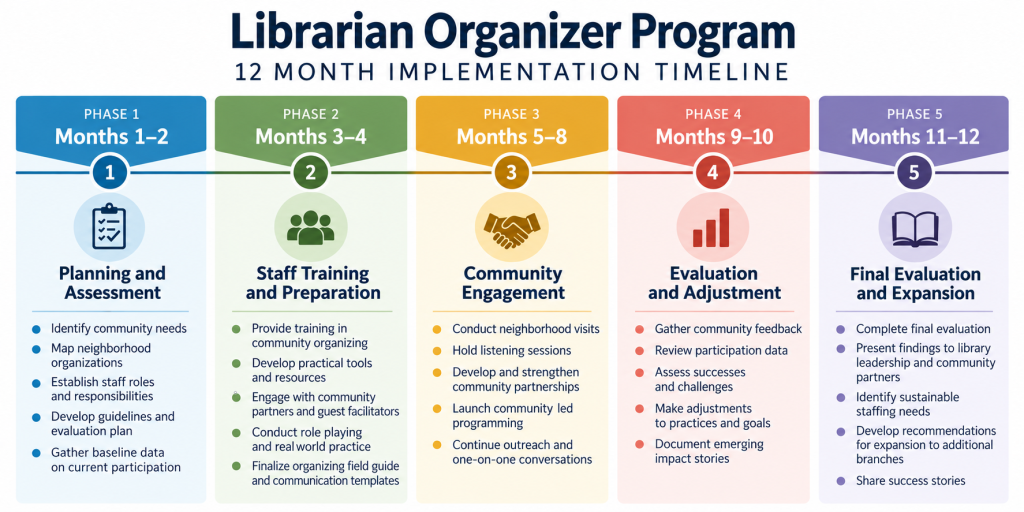
I think this phased approach reflects the central lesson of Taming Technolust and Technoplans vs. Technolust: innovation should respond to actual community needs rather than simply introducing something new for the sake of innovation.
Guidelines & Policies
The Librarian Organizer Program would introduce new responsibilities for participating librarians, so clear guidelines and institutional support would be essential.
Proposed guidelines:
Community engagement: Librarian Organizers would conduct regular neighborhood visits, one-on-one conversations, and meetings with community organizations.
Ethics and intellectual freedom: All organizing activities would uphold professional library ethics, privacy, intellectual freedom, and equitable access. Community advocacy would focus on library services and public needs.
Accessibility and inclusion: Engagement opportunities would be accessible to residents regardless of language, disability, income, or familiarity with library services.
Staff responsibilities: Participating librarians would receive dedicated work hours for organizing activities rather than having these responsibilities added to their existing workload.
Community accountability: Residents would have meaningful opportunities to recommend programs, identify unmet needs, and participate in decisions affecting library services.
Privacy and consent: Community conversations would be documented only as necessary, with clear consent procedures and safeguards for personal information.
Note: Library leadership, branch managers, frontline staff, city representatives, and community stakeholders would help develop and approve these, and possibly more, guidelines.
Timeline for Implementation
I would recommend a 12 month pilot rather than immediately expanding the program throughout the library system. This would provide opportunities for experimentation, evaluation, and adjustments before making a larger institutional commitment.
Marketing & Promotion
One of the defining features of this program is that traditional marketing would become secondary to relationship building. Trust precedes participation, people engage because of relationships, not posters. Traditional promotional methods would still play a supporting role as they do in community organizing but the most important communication would happen through direct personal interactions.
Internal promotion:
Introduce the program through staff meetings, workshops, and presentations to library leadership and explain how community organizing supports SDPL’s mission and existing outreach services. Share early successes and encourage staff feedback throughout the pilot.
External community engagement:
Establish relationships with neighborhood associations, schools, faith organizations, labor groups, nonprofits, and local businesses. Attend existing neighborhood meetings and community events and conduct listening sessions in accessible community spaces. Use library newsletters, social media, multilingual flyers, and community partners’ communication networks to support personal outreach. The central message would be simple: Your library belongs to your community and your voice matters in shaping its future.
Staff Training & Readiness
Staff preparation would be the most important component of this program because community organizing requires a number of skills that are not emphasized in traditional library education. I propose training a small group of interested librarians with support from branch leadership and experienced community organizers.
Training topics would include:
- One-on-one conversations and active listening.
- Community mapping and identifying neighborhood leaders.
- Building relationships with community organizations.
- Facilitating meetings and encouraging participation.
- Understanding community needs and barriers to access.
- Developing community led programming.
- Ethical considerations and professional boundaries.
Training would combine workshops, roleplaying, neighborhood visits, and ongoing mentorship. Staff would also receive the organizing field guide, conversation templates, community mapping worksheets, and evaluation tools.
Librarians would need dedicated time to perform this work. If organizing is going to become part of library service it must be treated as a professional responsibility rather than an optional activity. It takes a significant amount of time and effort to train effective organizers, that training must translate into positive organizing metrics for the library.
Evaluation & Future Expansion
I think one of the most important changes this program could introduce is how libraries measure successful community engagement. Traditional metrics such as circulation, attendance, and library card registrations are valuable but they do not necessarily measure the strength of relationships between libraries and their communities.
The Librarian Organizer Program would introduce additional measures focused on meaningful participation.
Proposed first year benchmarks:
- Conduct at least 100 meaningful one-on-one community conversations.
- Establish 10 ongoing partnerships with community organizations.
- Develop at least three programs designed collaboratively with residents.
- Document increased participation among residents who previously had limited involvement with the library.
- Gather community feedback through listening sessions, interviews, and accessible surveys.
These are preliminary targets that would be reviewed after the initial assessment. Evaluation would also include qualitative stories demonstrating how the program has affected people’s relationships with the library. A neighborhood organization might become a regular programming partner or residents who previously felt disconnected from the library might begin participating in planning discussions.
Findings would be shared with staff, library leadership, and community participants. If successful, the program could expand to additional SDPL branches with training materials and procedures adapted to each neighborhood’s particular needs.
Conclusion: Building Libraries with Communities
I think the Librarian Organizer Program represents an opportunity to rethink what innovation in public libraries can look like. Innovation does not always require new technology, expensive equipment, or renovated buildings, sometimes it means changing how we approach the work we already do. Public libraries are already important centers for education, information, creativity, and civic life but their long term success depends on the relationships they build with the communities around them. My hope is that the Librarian Organizer Program will help libraries move beyond inviting people through their doors and toward becoming active participants in neighborhood life
By investing in relationships, developing community leadership, and giving residents a meaningful voice in library services, we can build public libraries that do more than survive, we can build libraries that thrive, because their communities are actively involved in making them successful.
References
City of San Diego. (2023). Library master plan: More than words, a community vision. https://www.sandiego.gov/public-library/about-the-library/library-master-plan
San Diego Public Library. (n.d.). About the library. City of San Diego. https://www.sandiego.gov/public-library/about-the-library
San Diego Public Library. (n.d.). City Heights/Weingart Library. City of San Diego. https://www.sandiego.gov/public-library/locations/city-heights-weingart-library-and-performance-annex
San Diego Public Library. (n.d.). IDEA Labs. City of San Diego. https://www.sandiego.gov/public-library/idea