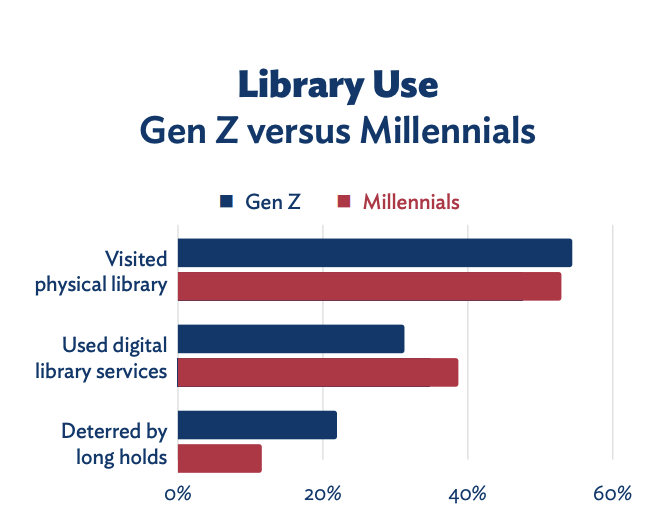
Gen Z vs. Millennials Library Use chart(Berens & Noorda, 2025).
When I was thinking about what I wanted to write for this blog post, one of the points on the lecture slide kept coming back to me. On the “Trendspotting Thoughts” slide, there was a question that asked “What new needs or behaviors are emerging, and how might we design to meet them?” (Stephens, 2025). The word behavior stood out to me and made me think about my generation (Gen Z) and how we have traditionally been labeled as lazy and glued to our phones. As someone who got their first iPhone at age 13, I partly agree. However, the older I have gotten, the more I’ve noticed how my generation is self-reflective. There has been a recent minimalism trend surging through Gen Z, redefining the term in a positive way. Gen Z has popularized intentional spending (i.e. the changing attitudes surrounding thrifting) and taking care of personal well-being (i.e. social media detoxes) (Dash, 2025). This minimalist mindset has also translated back to the public library.
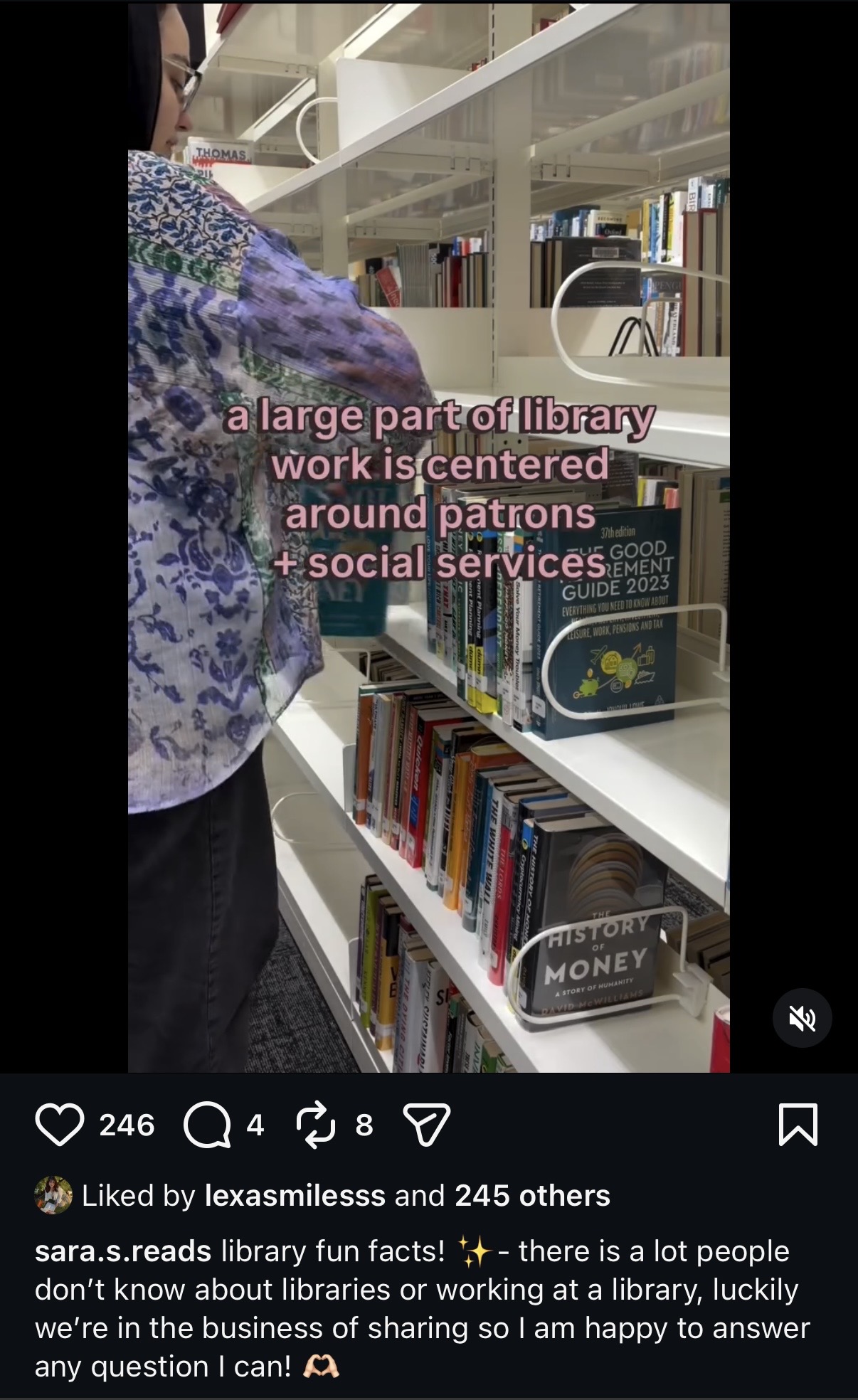
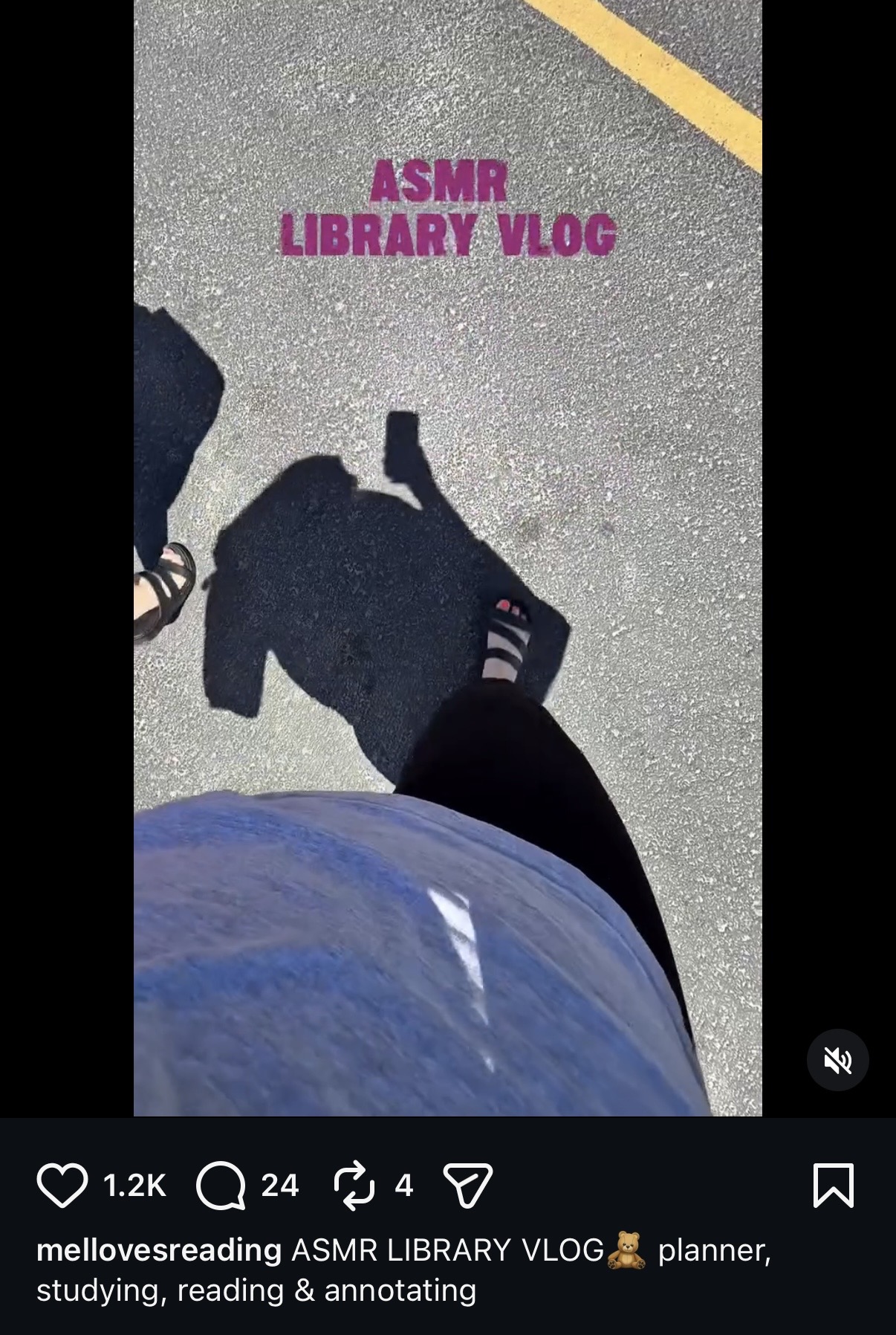
While Gen Z is prioritizing financial and mental health, this includes limited spending on books and getting out into the community. It’s now become a trend to visit the local public library instead of buying books, some people even blog their library visits or hauls. I’ve also seen library workers following this trend by blogging their day at work, breaking the stereotype of what a library worker truly does on a day-to-day basis. Even so, Gen Z patrons are not only searching for affordable reading and education materials, but for human connection that social media cannot satiate (as experienced during the 2020 Covid-19 quarantine). The 2024/2025 updated International Federation of Library Associations and Institutions (IFLA) report indicates that one of the upcoming trends is “people seeking community connections.” Younger generations want to use the library as a third space. There has been a 23% increase in Gen Z program attendance from 2014 to 2019 (Berens & Noorda, 2023). While this is currently trending, I hope that library workers are using this to their advantage to continue library usage from Gen Z if the trend does fizzle out. Even if the present economy does eventually improve, technology will always be there and we will always be searching for a way to “unplug” and connect with others. Finding the right programs for your community members will keep them coming back.
References
Berens, K.I., & Noorda, R. (2023). Gen Z and millennials: How they use public libraries and identify through media use. American Library Association (ALA). https://www.ala.org/sites/default/files/advocacy/content/tools/Gen-Z-and-Millennials-Report%20%281%29.pdf
Dash, C. (2025, September 21). Why Gen z is redefining minimalism in 2025: Less stuff, more impact. Medium. https://medium.com/@cryptodash6/why-gen-z-is-redefining-minimalism-in-2025-less-stuff-more-impact-b43a4072f827
Dezuanni, M., Osman, K. Burton, A. & Heck, E. (2024) IFLA Trend Report 2024: Facing the future of information with confidence: Phase 2. Brisbane: Digital Media Research Centre.
Stephens, M. (2025). New Horizons: Hyperlinked Library Master Lectures 2025. [Lecture video]. San José State University. Panopto. https://sjsu-ischool.hosted.panopto.com/Panopto/Pages/Viewer.aspx?id=2e3054fe-ac9b-4e93-bff9-b314014cb081