Libraries are well known locations for housing stories. Can they also be places where people make stories too? What would that look like? There are so many ways to tell a story and communication is never be static. Perhaps engaging with stories and creating new ones is what library users are looking for in an age where technology seems to touch everything in everyday life. Information professionals that engage with a culture of participation in their community can bring in new creativity, multicultural diversity and build understanding. The International Federation of Library Associations and Institutions (IFLA) emphasizes that the “key to meaningful access to information is the freedom and encouragement to create” (n.d., para. 3). It is not enough to only have books in libraries. There also needs to be the support and resources for people of all ages in the community to learn through exploration and discussion to shape their own ideas. By fostering a receptive culture at the library where users are encouraged to participate in a shared space and make their voices heard, libraries create and facilitate connections. This can happen through programs, services and the library user experience. Libraries may have started as place to store books, but the way for libraries moving forward is much more dynamic and user focused. Learning is a shared experience. It is more meaningful to learn with other people. Learning can happen alongside books, but it can also happen through lived experience by meeting, engaging and connecting with people of all ages.
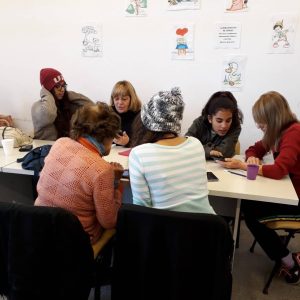
In a time where people may think they do not have the ability to affect change around them, a library staff that listens to feedback and invites conversation will build a new level of connection to the community that is more inclusive and a relationship that is more transparent. Technology has allowed ideas to extend further than ever before, but these ideas are only a concept until participants are invited to engage in a welcoming space where they feel valued (Stephens, 2016). A hyperlinked library is only possible when the library staff focus on the users and continually invite everyone in the community to be creators that shape what the library can be.
Reflecting on How Participation Builds Relationships
K.G. Schneider’s blog post titled, “The User is Not Broken” discusses how participatory service in libraries invites users to experience information in a third space rather than just consume it. They comment that users cannot be changed, but the user experience can be changed to meet the user (Schneider, 2006). As a library professional, I should consider how to add more avenues for user to give feedback about what they want to see in library services and programs to best serve them. As library professionals, it is our responsibility to stay attuned to their interests and invite them to participate in program creation too.
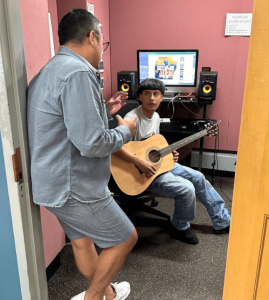
I found the YOUmedia space at the Chicago Public Library (2018) is so inspiring to see young people learning new skills, creating and collaborating by delving into their interests in music, video and mixed media. This space was created with them in mind to discover new interests and provide access to materials and equipment for free. Casey & Stephens’ (2008) post about a dedication to teen services and an intentional focus on the users in this age group reminded me how the age group of preteens can be frequently overlooked too. Nine to twelve-year-olds can feel too old for children’s services, but out of their element in a teen space of mostly high school ages. Teen services are a relatively recent concept for libraries and so there seems to be a service gap for the preteen age group that does not quite fit into children’s services or teen services (Witteveen, 2015). There is large opportunity to engage this age group and encourage them to share what they would want to learn and explore as they bridge the gap between childhood as they become teenagers. Preteens could have a say in programs that allow them to explore new interests and connect with their peers (Witteveen, 2015).
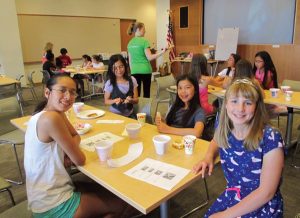
By reflecting on a user focus in my work, this topic of preteen services and programs came to mind. The best way to expand services for preteens would be to invite them to the conversation in how a physical location could become their space in the library and involve them in the creation of programs for their age group. Intentional connection with users and inviting their ideas in every aspect of service is how libraries can best serve their communities.
References
Casey, M., & Stephens, M. (2008, May 15). Embracing services to teens. Tame the Web. https://tametheweb.com/2008/05/15/embracing-service-to-teens/
Chicago Public Library. (2018, April 11). YOUmedia at CPL [Video]. YouTube. https://youtu.be/v8G4nnlgKmk?si=tQ7LpiU3W8Sok6wu
International Federation of Library Associations and Institutions. (n.d.). Supporting cultural participation and diversity. https://www.ifla.org/cultural-participation-and-diversity/
Schneider, K.G. (2006, June 3). The user is not broken: A meme masquerading as manifesto. Free Range Librarian. https://freerangelibrarian.com/2006/06/03/the-user-is-not-broken-a-meme-masquerading-as-a-manifesto/
Stephens, M. (2016). The Heart of Librarianship: Attentive, positive and purposeful change. ALA Editions.
Witteveen, A. (2015, October 8). What do tweens want? School Library Journal. https://www.slj.com/story/what-do-tweens-want