Month: October 2025
Inspiration Report: Self Service Hours
Post-Graduation Continued Learning: A Reflection

As my time in the MLIS program and at SJSU comes to a close, I have begun to ponder what continued learning will look like after I graduate. Librarianship is a second career for me. I began as an elementary teacher, so I am no stranger to professional development and continued education. I love to learn, and I think it is vital to keep evolving, or you will be left behind. One quote stood out to me from Michael Stephen’s lecture:
“We are born to learn, but somewhere along the way many of us pick up the idea that we must be taught in order to learn. We think that if someone doesn’t stand up in front of us and talk to us with either a chalkboard or PowerPoint slides, we cannot learn. We must regain our sense of wonder and our desire to learn.”
— Roy Tennant (2003) and Stephens (2024)
I think this kind of attitude is important to embody, especially with the budget cuts that are happening, and sponsored professional learning tends to be one of the first things on the chopping block. It would be very easy to say, as a librarian who gets professional learning opportunities denied due to cost, to throw up their hands and say, “Well, I guess I am not going to do any professional development”. As Stephens (2024) pointed out, professional learning has expanded from formal conferences to MOOCs, 23 Things, Learning 2.0 with blogs, digital media, and more. This makes professional learning more accessible, not just cost-wise, but also time and location. There are many virtual workshops that one can attend in real-time or recorded through one’s state library, EdWeb, WebJunction, and the American Library Association (ALA).
I know virtual learning is not the same as learning in person with the instructor or presenter, so can we make this a more active learning experience? If you haven’t already figured it out, I am a Strategic Learner (Stephens, 2024). I love to plan out what I am doing, my goals, and how I am going to implement them. In Wholehearted Librarianship, Stephens (2019) notes from his professional learning studies in Australia that learning needs to be active, community-based, and accompanied by reflection (p. 45). Based on this criterion, I created the “Active Continued Learning Infographic” below.
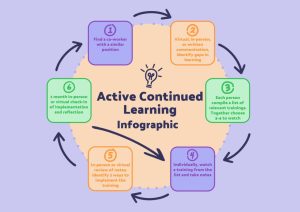
My library system has a wide range of experience, and I would love to learn from my coworkers. This learning cycle is continuous, year-round. It could be two people or a small cohort of people. One cycle is meant to be with one person, and then the next cycle, you partner up with another co-worker. This way, you are exposed to a wide variety of backgrounds, perspectives, and a range of library experiences. However, the same people could repeat the cycle if learning is productive and fruitful.
This model of learning will only be successful if there is administrative buy-in and support. The benefit of this model is that it is free! All workshops will be sourced from reputable sites that will also provide learning education units (LEUs). The model is very flexible in terms of in-person or virtual; however, I think it would be more beneficial if we could meet in person. This requires active engagement from each person, and it is easy to get distracted if you are virtual.
“Being adaptable in a flat world, knowing how to ‘learn how to learn’ will be one of the most important assets any worker can have, because job churn will come faster, because innovation will happen faster.”
–Thomas Friedman (2007) in The World is Flat 3.0
I think this quote is the perfect way to end this reflection. It is on us to strive to be the best librarians we can possibly be with the sources we have. There is always going to be some challenge to overcome, but “A librarian with heart will always find their way” (Stephens, 2019, p. 55).
References
Friedman, T. (2007, August 7). The world is flat 3.0: the brief history of the twenty-first century. Picador. https://www.amazon.com/World-Flat-3-0-History-Twenty-first/dp/0312425074
Stephens, M. (2019). Wholehearted librarianship: Finding hope, inspiration, and balance. ALA Editions. https://www.dropbox.com/scl/fi/ecd6261aqkdgunc1w0ll2/StephensWholehearted_Updated2025v2.pdf?rlkey=f2mblnzua5xtx0hoot5pyergq&e=2&st=0h2niiox&dl=0
Stephens, M. (2024, May 20). Hyperlinked library professional learning experiences_. DropBox. https://www.dropbox.com/scl/fi/5cdfkmhia538v3cux296r/Hyperlinked-Library-Professional-Learning-Experiences_.mp4?rlkey=s5b0443cuo3ne1atnyrleum6h&e=1&st=1mkxsn2j&dl=0
Tennant, R. (2003). INFOTECH-Digital Libraries-Strategies for Keeping Current. Library Journal, 128(15), 28-29.
The Power of Stories

One of my favorite memories of my grandma growing up was when she would tell us stories about her childhood, her hometown, her siblings, or my mom. The stories were not elaborate or showy, but my siblings and I were fascinated by what it was like to grow up during the depression or hearing stories about great aunts and uncles that we didn’t get to meet. Through these stories, we felt connected to our family and learned about the community around us. Even though my grandma has been gone for a while now, these stories still live on in my mom and my siblings, who will bring them up during conversations. I think this illustrates the power of a story. Michael Stephens (2019), in his book Wholehearted Librarianship, says,
“Libraries have always been about access to the stories of the world, collected, cataloged, and placed on a shelf waiting to be discovered.”
(Stephens, 2019, p. 91)

Traditionally, these stories have been written in books and audiobooks that live on shelves. However, these stories are taking a different form as the community evolves. Stories are shared through podcasting, for example, ACPL offers a Pages & Voices Podcast that tells the stories of local authors (Allen County Public Library, n.d.). Another version of storytelling is the Human Library (Wentz, 2013). In the Human Library, the human is the book, and patrons can check out the “book” for a short period of time. The “books” tend to be people who are frequently stereotyped and marginalized in communities. This type of library allows for discourse on a wide range of polarizing topics and the opportunity for people who may not normally cross paths with the individual to talk and ask them questions. This can help address bias.
The Human Library has lost some of its momentum during COVID-19 and social distancing, like my community (Human Library FW, n.d.). However, I wonder if it could be revived. Stories can expand someone’s worldview and change the direction of their life and career (Popova, 2016). There are countless stories, like Storm Reyes, who, after reading stories from the library, had the world opened up to them, and suddenly, they had new dreams of who they could be. Stories can also offer a connection to community and to humanity as a whole (Stephens, 2019, p. 93). The Human Library presents the opportunity to reconnect the community and, in turn, the library to the community.
References
Allen County Public Library. (n.d.). Pages & voices podcast. https://www.acpl.lib.in.us/pages-and-voices-podcast
Human Library FW. (n.d.). Never judge a book by its cover. https://www.humanlibraryfw.com/
Popova, M. (2016, October 16). How libraries save lives. The Marginalian. https://www.themarginalian.org/2016/10/06/libraries-storycorps-bookmobile/
Stephens, M. (2019). Wholehearted librarianship: Finding hope, inspiration, and balance. ALA Editions. https://www.dropbox.com/scl/fi/ecd6261aqkdgunc1w0ll2/StephensWholehearted_Updated2025v2.pdf?rlkey=f2mblnzua5xtx0hoot5pyergq&e=2&st=0h2niiox&dl=0
Wenz, E. (2013, April 26). The human library: Sharing the community with itself. Public Libraries Online: A Publication of the Public Library Association. https://publiclibrariesonline.org/2013/04/human_librar/
New Models: Reimaging the Library Building

This blog post feels like a continuation of my previous blog post about reimaging the library space. In that post, I discussed how different libraries are changing the inside environment of the library to meet the evolving needs of a 21st-century community. This blog post is going to focus on the physical building of the library and how it is being reimagined around the world. We will also touch on how this is impacting how the community uses the library and how patrons interact with each other.
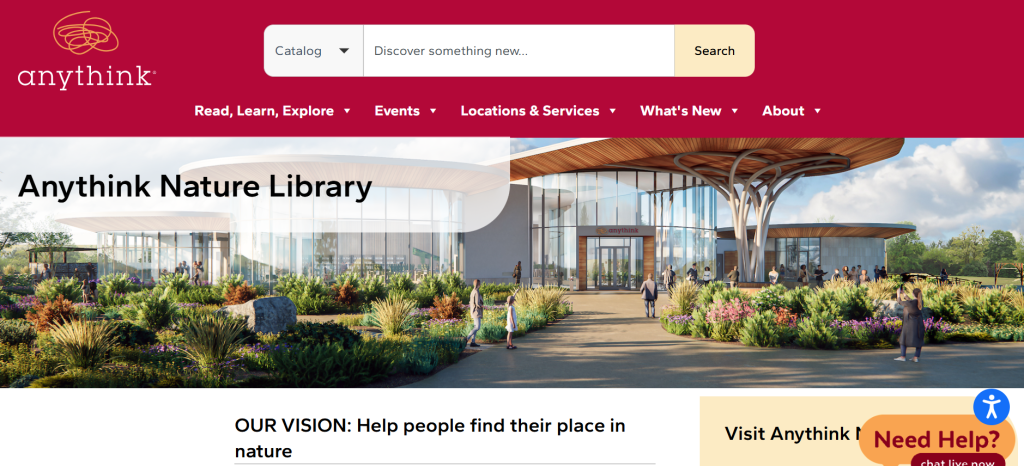
The Nature Library is our first stop on this library building tour (Anythink Libraries, n.d.). This library is located on a natural preserve and exists through a partnership between the library system and the city. It is dedicated to “learning about stars, water, wildlife, and seasonal changes” (Anythink Libraries, n.d.). This library creates access to nature as well as learning about learning about “health and wellness, environmental stewardship, heritage, history and culture, animals, flora and fauna” (Anythink Libraries, n.d.). This opens the traditional library programming to new possibilities, including yoga classes, astronomy, community gardening, and more.

Our next stop is a library that partnered with a local community organization to offer a community garden and related programming (TEDx Talks, 2013). The library also had a herd of 300 goats mow their lawn. This changed the information requests they received from patrons because they wanted to learn about the goats outside of the library. Some patrons brought grass and weeds from their home to feed to the goats!
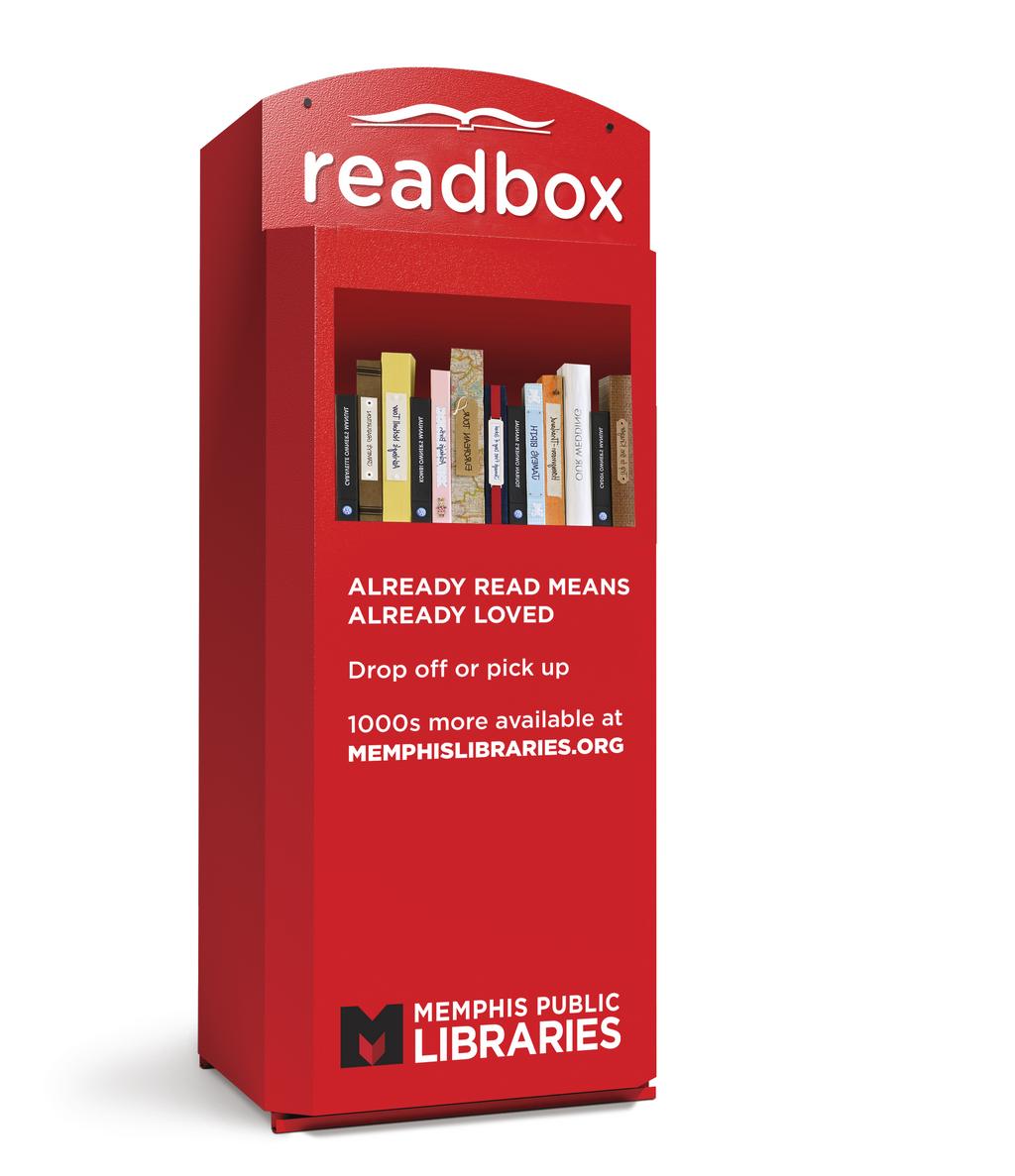
I think about the impact of this on one’s mental health, and how interacting with and being in nature helps to reduce stress and anxiety (Harvard Health Publishing, 2019). This makes access to nature a social issue with lower-income individuals living in areas without green spaces, parks, gardens, and more (Cho & Adjami, 2025). The library system I work for currently partners with the city and a few nature preserves to present a storytime, and then the naturalist takes the families on a hike. What would it look like to build a library on one of the natural preserves or have a Redbox-style vending machine where patrons could check out materials? These materials could be nature-themed or simply offer popular items.

For this next library, we are heading out of nature and onto a train! The Sacramento Public Library (SPL) partnered with the Sacramento Public Transit to include a library train (Sacramento Public Transit, 2022). This traincar includes seating that looks like shelves with books. There are QR codes on the wall throughout the traincar that passengers can scan. These QR codes will take the passenger to the SPL‘s virtual library offerings of books, movies, games, and more.
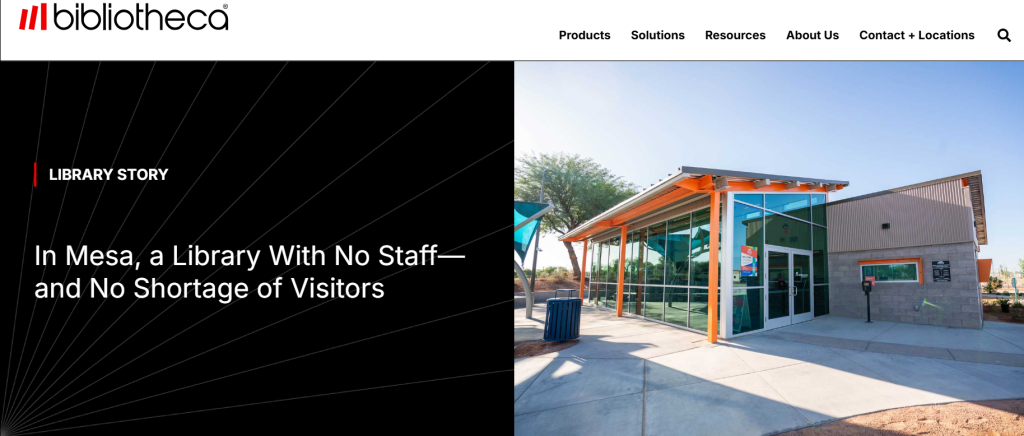
Last on our list of stops is the Mesa Express Library, which is located in the heart of a city park (Bibliotheca, 2024). This library looks like it is a normal library, but this library is not staffed with library employees. Visitors use their library card and PIN to gain access to the library, along with its collection, computers, and printers. The library offers free WIFI, along with a playground for young patrons to play on. You can even borrow a jump rope to skip outside the library in its amphitheater. The library is monitored remotely, and there are tablets available that walk patrons through how the library works, and there is an option to call a staff member virtually if needed.
This makes me wonder how alternative libraries could look in my community. I could see self-service library hours added to some of our branches because patrons want access to their holds and the free wifi sheltered from the outdoors. What if we could add QR codes to some of our public buses for patrons to access our virtual library? We could reach new patrons who haven’t stepped into the library before. These QR codes could also link to short videos of librarians reading books aloud for children to watch and listen to on the bus. Another idea I had was partnering with a local coffee shop. We already do storytimes at a few coffee shops, but what if we expanded that to include library materials? The opportunities seem endless!
References
Anythink Libraries. (n.d.). Anythink announces nature library in partnership with city of thornton. https://www.anythinklibraries.org/news-item/anythink-nature-library?fbclid=IwAR2DgO-k8nU6kNUODo7vTlRXKiEiYSoSeQMC8Aq0QnoLMZoT3d-QKpbSl5M
Bibliotheca. (2024, May 22). In mesa, a library with no staff, and no shortage of visitors. https://www.bibliotheca.com/library-story-mesa-express/
Cho, H., & Adjami, N. (2025, June 24). Where the grass is greener: Disparities in access to parks and trees. Equal Rights Center. https://equalrightscenter.org/green-spaces-heat-islands/
Harvard Health Publishing. (2019, July 1). A 20–minute nature break relieves stress. https://www.health.harvard.edu/mind-and-mood/a-20-minute-nature-break-relieves-stress
Sacramento Public Transit. (2022, August 31). Ride and read on the new sacramento rolling library train. https://www.sacrt.com/ride-and-read-on-the-new-sacramento-rolling-library-train-2/
TEDx Talks. (2013, December 16). What to expect from libraries in the 21st-century: Pam sandlian smith at tedxmilehigh [Video]. Youtube. https://www.youtube.com/watch?v=fa6ERdxyYdo