As I look back on my journey through this course, I am surprised by how much my understanding of libraries has transformed. What began as a child, a simple appreciation for books and quiet study spaces, has evolved into a deep recognition of libraries as dynamic ecosystems of learning, empathy, and connection. Each of my blog reflections represents a different strand of this interconnected web. Together, they form a picture of what the modern library truly is: a living, breathing network of people, stories, and possibilities.

In From Stacks to Stars: Exploring the Library’s Expanding Universe, I began to see libraries not just as repositories, but as responders, or places attuned to the evolving needs of their communities. From libraries lending telescopes to offering social support like diapers or literacy programs, I saw that the library’s power lies in how it serves the community. I really resonated with Casey and Savastinuk’s (2007) vision of Library 2.0, or participatory, ever-changing, and rooted in user voices. This realization marked a shift in my thinking from seeing libraries as static institutions to understanding them as collaborative networks of care.
Later on in The Library Reimagined: A Hyperlinked Environment for Growth and Discovery, I deepened my understanding of Library 2.0 by exploring how design and space shape human experience. Drawing on Skot-Hansen’s (2017) framework, I began to view the library as a constellation of inspirational, learning, meeting, and performative spaces. The example of Memphis’s Cloud901 studio revealed that when libraries blend technology and human connection, they empower people to create culture, not just consume it (Grant, 2021). This insight helped me see that every library space, whether physical or digital, is part of a larger hyperlinked environment, one where creativity and collaboration thrive.

My post on The Next Chapter of Librarianship: Caring for the Whole Person brought me to another facet of the hyperlinked library, or what it means to serve the whole person. The Salt Lake City Public Library’s integration of social work services reminded me that libraries are often the last truly open, public spaces where everyone belongs (Harkins, 2023). Through this example, I began to understand librarianship as both humanistic and hyperlinked, a practice grounded in empathy, equity, and connection. My personal experiences, from being a student who found refuge in the library to now leading storytime, have affirmed this vision. Libraries have always been my home, but now I see them as homes for humankind.

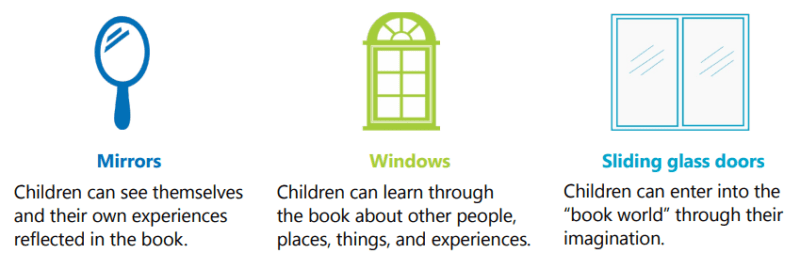
I then found Magic in Every Story when I reconnected with the emotional heart of librarianship: storytelling. Stories are how we make meaning of the world, and libraries are the vessels that carry them. Through concepts like Bishop’s (1990) “mirrors and windows” and the Human Library model (Wentz, 2013), I saw that storytelling is an act of empathy and empowerment. Libraries today don’t just keep stories, they make and share them. This understanding reminded me that every user, every voice, and every narrative has a place in the library’s ongoing story.
Finally, in The Library of Everything: Exploring Infinite Learning in Modern Spaces, I explored how libraries are becoming platforms for lifelong learning and creativity. Whether through makerspaces, flipped learning models, or self-directed discovery, libraries embody Stephens’ (2014) concept of infinite learning, spaces where curiosity never ends. My childhood memory of learning piano from a borrowed book symbolizes this perfectly, since the library is an open invitation to learn, explore, and grow without boundaries.

Across all these reflections, a clear theme emerges in that the library is no longer just a place, but it is a relationship. It is where empathy meets innovation, where stories meet technology, and where communities meet possibility. My vision for the future of librarianship is one where libraries continue to evolve as hyperlinked networks of care. As I move forward in my career, I carry with me a commitment to being both a humanistic and a hyperlinked librarian, or one who leads with empathy, listens deeply, and designs services that reflect the diverse lives of the people I serve. Libraries have always been about connection, but now I understand that connection itself is the service.

References
Bishop, R. S. (1990). Mirrors, windows, and sliding glass doors. Perspectives: Choosing and Using Books for the Classroom, 6(3). https://readteachwrite.com/wp-content/uploads/2019/04/mirrors-windows-and-sliding-glass-doors.pdf
Casey, M. E., & Savastinuk, L. C. (2007). Library 2.0: A guide to participatory library service. Information Today.
Grant, R. (2021, November). How memphis created the nation’s most innovative public library. Smithsonian Magazine. https://www.dropbox.com/scl/fi/3g4juvioz86g1m2uj529i/How-Memphis-Created-the-Nation-s-Most-Innovative-Public-Library-Innovation-Smithsonian-Magazine.pdf?rlkey=25yzrxk37civvks7bg6hwaafs&e=1&dl=0
Harkins, P. (2023, June 20). Salt Lake City downtown library’s new social worker has already helped thousands. The Salt Lake Tribune. https://www.sltrib.com/news/2023/06/20/salt-lake-city-downtown-librarys/
Skot-Hansen, D. (2017, August). Library development: From collection to connection. University of Copenhagen.
Stephens, M. (2014, November 26). Y Library? Making the case for the library as space for infinite learning. https://www.dropbox.com/scl/fi/4zt1yliwb2ffzr8euix2p/YLibraryInfiniteLearning.pdf?rlkey=m0v6lkd43ufilkp5aktawhlpr&e=1&dl=0
Stephens, M. (2019). Wholehearted librarianship: Finding hope, inspiration, and balance. ALA Editions.
Wentz, E. (2013, April 26). The human library: Sharing the community with itself. Public Libraries Online. https://publiclibrariesonline.org/2013/04/human_librar/
Western Governors University. (2020, July 21). What is humanistic learning theory in education? https://www.wgu.edu/blog/what-humanistic-learning-theory-education2007.html