Reflection Blogging – Infinite Learning
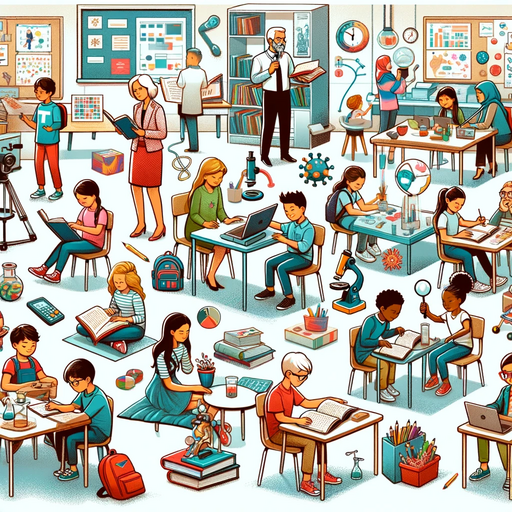
In the hyperlinked library model, libraries are many things, including schools for infinite learning.

Massive Online Open Courses (MOOC) opened a world of learning for me in the last decade. I heard about MOOCs in the mid-2010s and found myself living in France on a visa that didn’t allow me to work. To keep myself busy, I tried a few MOOCs and completed a number of them. I was immediately impressed with the access to and quality of instruction. I also completed these at a time when there were more free options for connecting with other students, which changed when these platforms needed to monetize to keep themselves afloat and peer access became less available to non-paying customers. I started with the popular Learning How to Learn Course based on the book A Mind for Numbers on Coursera. I also took a course on programming in Python. It got pretty hard pretty quick, but I was at least able to finish the first full course. I also learned about Class Central at this time, a site that aggregates and rates MOOCs from all over the world.
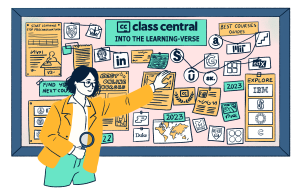
Linkedin Learning is a similar learning type platform, even though the course materials are completed individually without fellow classmates. Khan Academy also offers support for learners of all ages, including test preparation for college entrance exams for those that cannot afford expensive options. These are all infinite learning tools that libraries can and are sometimes funding and highlighting. As Stephens notes in the Heart of Librarianship, we need to think of “librarians as facilitators of learning” (2019).
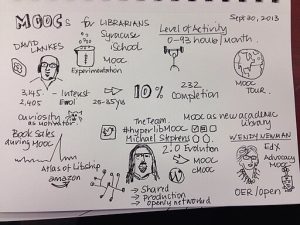
Libraries can also support student MOOC learners by organizing and hosting MOOC clubs. Similar to a book club, a MOOC club can meet to discuss a specific class that all the members do simultaneously, or the club can meet so members can update each other on progress they are making on their own specific learning goals in their own specific classes. I found a reference to a student in the 2014 Hyperlinked Library MOOC creating a proposal for a club at Oregon’s Corvallis Benton County Public Library (Schwartz, 2014). There are many challenges to encourage students to continue a MOOC through to completion. Because the barriers to MOOC enrollment are usually quite small, it can be easy to start, but take a lot more effort to finish. For many, that has dampened what was once a considerable amount of enthusiasm for MOOC learning. One consideration for revisiting the MOOC moment is that many believe the issue of reskilling will be critical in the coming years as artificial intelligence starts to take on many tasks that white collar workers have done. This may be an incredibly disruptive time for workers and education generally, and low-cost, high-access tools will be essential. Libraries need to be ready to meet this moment and as it has been said, librarians can be facilitators for this learning.
Educause has some great resources for MOOCs, including an interesting article about how to limit attrition for those taking MOOCs. This resource also highlights Massive Open Online Interventions (MOOI) for mental health support that also offer some of the same promise and some of the downsides as MOOCs. Some of the suggestions for encouraging participation to a course’s conclusion include gamification, bonding with others (like in a Club or small groups) and paying for the courses (2020). Libraries can again be critical supports to help alleviate attrition and enhance these opportunities.
MOOCs once held great promise for democratizing education and spreading knowledge around the globe. While the enthusiasm has faded somewhat, the opportunity to rethink and retool this resource is here for libraries and all those interested in lifelong learning.
Aboujaoude, E., Gega, L. & Saltarelli, A. (2020, August 3). From MOOCs to MOOIs: Attrition as law in Online learning and Online Therapy. EDUCAUSE Review. https://er.educause.edu/articles/2020/8/from-moocs-to-moois-attrition-as-law-in-online-learning-and-online-therapy
Class Central. (2025, November 4). Class Central • Find the best courses, wherever they exist. https://www.classcentral.com/
Schwartz, M., Sutton, L., Anderson, R. and White, M. (2014). “If the University Is in the Computer, Where Does That Leave the Library? MOOCs Discovered” Proceedings of the Charleston Library Conference. http://dx.doi.org/10.5703/1288284315232
Stephens, M. (2019). Infinite Learning.The Heart of Librarianship, p. 119 – 128.




One Comment
Lisa Hach
Matthew, I appreciate your thoughts on this. I am most familiar with Khan Academy, especially for helping my kids with SAT prep and I also took Yale’s “The Science of Well Being” course during Covid. As you mentioned, it was easy to start but hard to finish. I love the idea of a MOOC club. On Instagram I have seen friends organize a social nights where a few people present slide decks about an area of special interest. This could be a fun library program, but there might have to be a buzzer for time. ha! I think your insight about the shifting job market and the need to train quickly and cheaply. There could definitely be a roll for libraries.