Reflection Blogging – The Power of Stories
Everything is story. The life one lives is a story. The things one consumes make up a story. The things people leave behind tell a story. The library has always been the place where one connects with the stories of other humans, either fictional or true. Alaskan libraries often have special collections of items related to Alaska, because those are the stories of our unique home. They sometimes tell of explorers and people who settled and homesteaded in the state. They also tell the stories of Alaska native peoples, their traditions, worldviews and their ways of life.
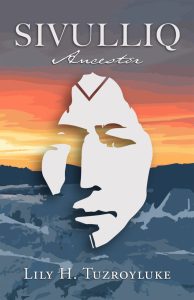 The Alaska Center for the Book has created the Alaska Reads program where a book is chosen for a two year period to promote throughout the state in schools and libraries. The book this cycle is by an Alaskan author, Lily Tuzroyluke, of Inupiaq, Tlingit, and Nisga’a descent called Sivulliq: Ancestor. Her story is an historical fiction account of contact between indigenous peoples and non-native bowhead whale hunters. This difficult, painful story has been well-received and widely read in our community. Our library had already highlighted Lily’s story before her visit and reading this past Spring where she talked about her writing process and her work.
The work of Storycorps was also highlighted in this module. Storycorps makes an effort to work with libraries and communities to preserve the stories of their people. In early 2024, a Storycorps story was created from a woman in our community who had been a painter and a poet. She had traveled and lived extensively in Alaska and had settled in our community in her later years and was active in the arts and library community. She had been diagnosed with an eye condition that would eventually lead to blindness. She chose to travel to Switzerland for euthanasia because as an artist a life without sight was not an acceptable quality of life for her. There were only a handful of people who knew of her plans, including her estate attorney who recorded the Storycorps story for her. Upon the story’s release, it seemed as if her story and the choices she chronicled in it were the only thing people in our town were talking about. She had clearly thought deeply about what she was doing and shared her thought process in her story. People’s reactions ranged widely and many of us talked and talked about her story and ideas for weeks.
As our country celebrates its 250th anniversary next year I can’t help but think this is an important time for libraries to discuss and talk about the story of our country and its founding. Many books are being published on our founding. There are clearly partisan divisions and different ideas about what is our shared story and understanding and connection is only going to come from confronting some of the different stories we tell about who we are. The New York Public Library has extensive programming next year on our country’s anniversary and hopefully many other libraries will follow their example and help us all tell our country’s story.
Alaska Center for the Book – Promote literacy in Alaska. (n.d.). https://www.alaskacenterforthebook.org/
Eberhart, G. M. (2018). Sharing People’s Stories: StoryCorp Partners With Public Libraries. https://americanlibrariesmagazine.org/blogs/the-scoop/sharing-peoples-stories/
Going, J. (2024, January 15) In Full Color with Jo Going. StoryCorps Archive. https://archive.storycorps.org/interviews/in-full-color-with-jo-going/
New York Public Library. (2025). Celebrating 250 years of the United States at NYPL | The New York Public Library. (n.d.). The New York Public Library. https://www.nypl.org/spotlight/250-years-united-states
Stephens, M. (2019). “Telling Stories” in Wholehearted Librarianship, p. 91


You May Also Like
Reflection Blogging – Hyperlinked Communities

Reflection Blogging – New Horizons
